By the tiswa editorial team, from the official sources listed at the end of this guide. How we write our guides
A first-year student asked an older classmate about “pharmacy programs” and was given the name of a paid drug-reference app, when what the student wanted was the study plan for the major. The scene is an example, but it repeats because the phrase holds two meanings, and misreading one costs money or time.
What do pharmacy programs mean: a degree or tools?
The first is a degree programme: a Doctor of Pharmacy or a bachelor’s in pharmacy inside a college of pharmacy, sometimes with tracks and bridging routes. The second is tools: drug databases, classification references and calculation sheets. This guide is for a student deciding, not a clinical reference, so do not base decisions about a patient on it. For the study side, read the pharmacy major guide.
What grade average does the pharmacy major need, and what else should you ask?
Admission requirements and cut-offs change between universities and between years, so we give no figure. Read the requirements on the university’s own portal, then ask about what a grade average does not show. In English the name is Pharmacy or Doctor of Pharmacy, abbreviated Pharm.D. at some universities, so search with both names for bridging and transfer.
- Ask for the study plan
Open it on the college website or request it from admissions. Look at the chemistry, biology, pharmaceutical sciences and practice courses.
- Ask about the internship
How long is it, where does it take place and how are places allocated? For the first courses, read first-year pharmacy courses.
- Ask about professional classification
The Saudi Commission for Health Specialties publishes registration and classification pages. Check the requirements on its site, then ask the department how its curriculum relates.3
- Ask about labs
What does the lab provide and what must you buy? The answer is in pharmacy student supplies.
- Ask about transfer
If you are on a diploma or moving from another major, read the bridging programmes guide and ask the receiving university which courses are credited.
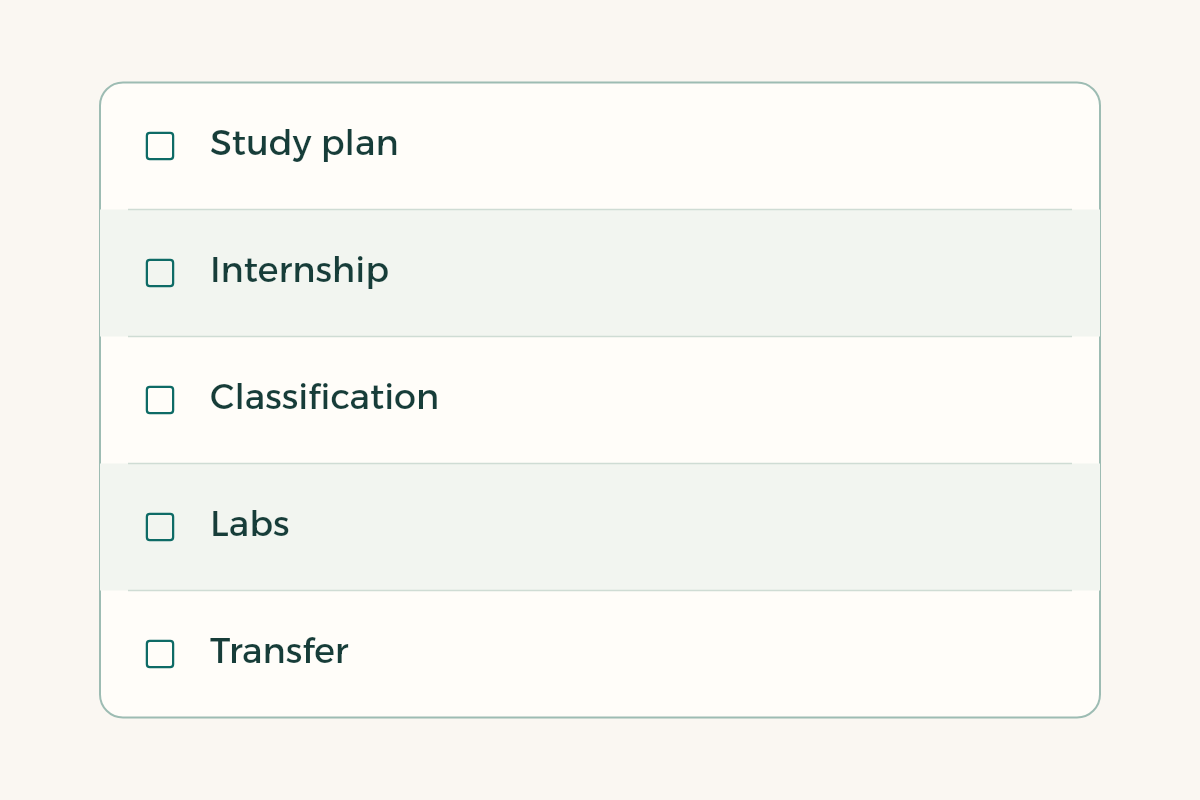
These are questions to put to the college, not facts about your university. If the answer is not published, write to the department and keep the reply.
Which reference tools does a pharmacy student actually need?
Begin with free official sources. The WHO Collaborating Centre for Drug Statistics Methodology publishes the ATC/DDD Index, where you can search a substance and see its class,1 and the Saudi Food and Drug Authority publishes drug information and official alerts on its site.2 These suit learning; for the large commercial references, ask the department whether the library or lab offers access before you pay.
| Need | What usually covers it | What to ask before buying |
|---|---|---|
| Classifying a drug | An official classification index | Does the course use a particular system? |
| Official Saudi drug information | The regulator’s website | Is the information current at its source? |
| A commercial interactions reference | Library access | Does the department or library provide it? |
| Dose calculations in a course | A calculator and a spreadsheet | Does the course want a particular format? |
The table is a way of thinking, and your course is the reference. Practise building tables in Excel for students if you need to.
How do you learn drug classes in a ten-minute exercise?
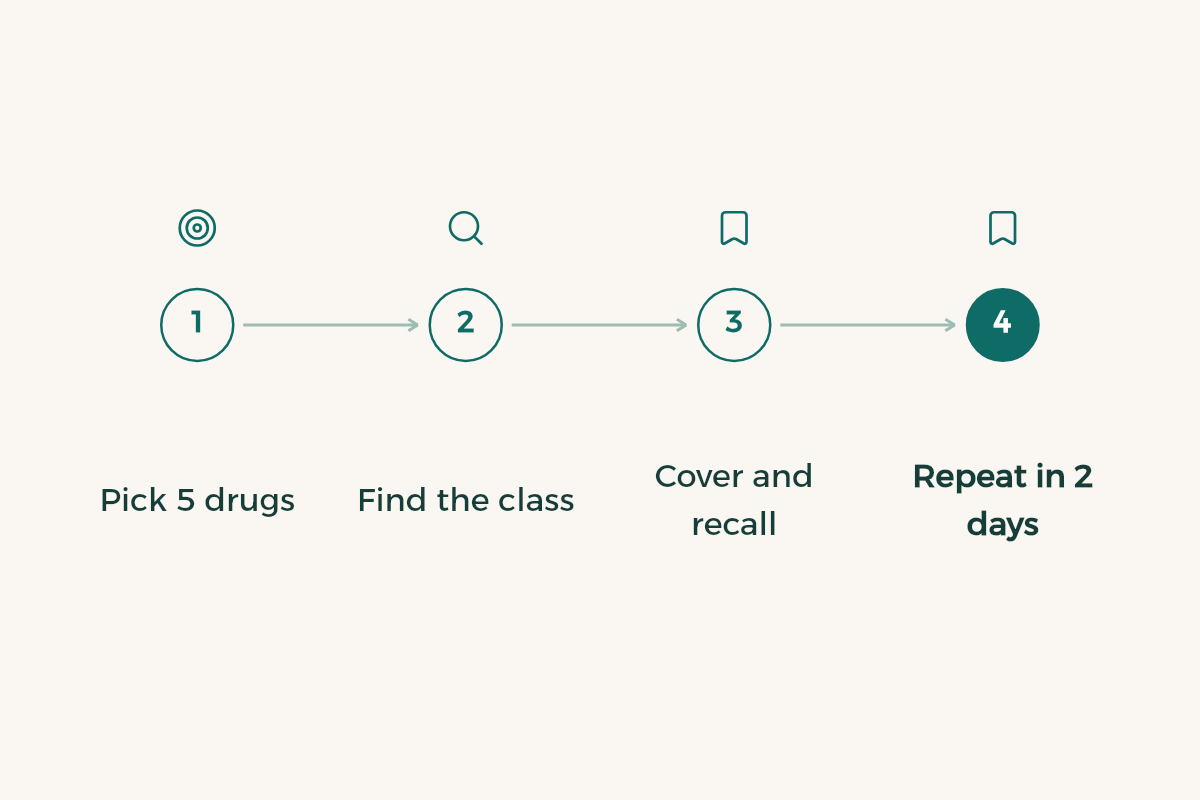
An example: pick five drugs your lecturer mentioned this week. Search each active substance in the classification index and write its main and sub-class in a table. Then cover the class column and try to recall it from the drug name, then check. Repeat two days later with five new drugs and five old ones. After two weeks the similar-looking names begin to fall into classes.
Can AI help a pharmacy student?
It can simplify an idea or write practice questions on what you have studied, but it is not a reference for doses or interactions, because it can be wrong and sound sure. Check any drug fact against an official source, and never use it for a decision about a patient. The details are in AI for pharmacy students.
What mistakes do pharmacy students make with tools?
Memorising a brand name and not knowing the active substance. Relying on one app without knowing its source. Mixing dose units. Treating a study tool as if it were a clinical reference. Give every drug note a line that names the source, and ask your lecturer when two references disagree.
How do you compare two degree programmes?
Put the two options in a table with five rows: courses, internship, professional classification, what you must buy, and who you ask to confirm. Score each row out of five. If you are thinking ahead to the end of the degree, read the pharmacy graduation project guide to see what is asked at the finish, since some of these tools come back then.
One habit pays off early: keep a running page of every drug you meet, with its active substance, class and the source you checked. By the final year that page is a personal reference built from sources you trust, and it saves hours before exams and during training.