
By the tiswa editorial team, from the official sources listed at the end of this guide. How we write our guides
A first-week studio student told a classmate she had paid for a year of 3D modelling software, and then the first brief asked for one hand-drawn board and a single section. The scene is an example, but it repeats: someone searches “interior design programs”, gets a mix of software adverts and university pages, and cannot tell which one they meant.
What do interior design programs mean: a degree or software?
The first meaning is a degree programme: a bachelor’s or diploma in interior design inside a college of arts, architecture or design. The second is software: what you draw plans with, build models with and produce images with. We start with the degree, because the study plan decides the second question. It tells you what you will be asked to draw.
Is interior design an arts or a science major, and what do you ask before registering?
Students ask this often. The practical answer is that the label follows the college that houses the department at your university, and the courses mix drawing, light mathematics, materials and writing. Do not rely on the word “arts” or “science”; open the plan instead. The English name is usually Interior Design, and some universities call it Interior Architecture, so search for both when you compare plans.
- Ask for the study plan
Open it on the college website or request it from admissions. Count the studios and the computer-representation courses in it. That number tells you how much of your week goes to drawing.
- Ask about accreditation
Academic programme accreditation works to standards that the Education and Training Evaluation Commission publishes. Ask the department whether the programme is accredited and what its status is now, rather than relying on what students say.1
- Ask about labs
Are computers and software provided in the college lab, and can you use them outside lecture hours? The answer decides whether you buy a powerful laptop or manage with an ordinary one.
- Ask about training
When does co-op training start and what is expected? To prepare, read the guide to co-op training for interior design.
- Ask about transfer
If you are moving from another major, ask which courses are credited. The general steps are in the university transfer guide.
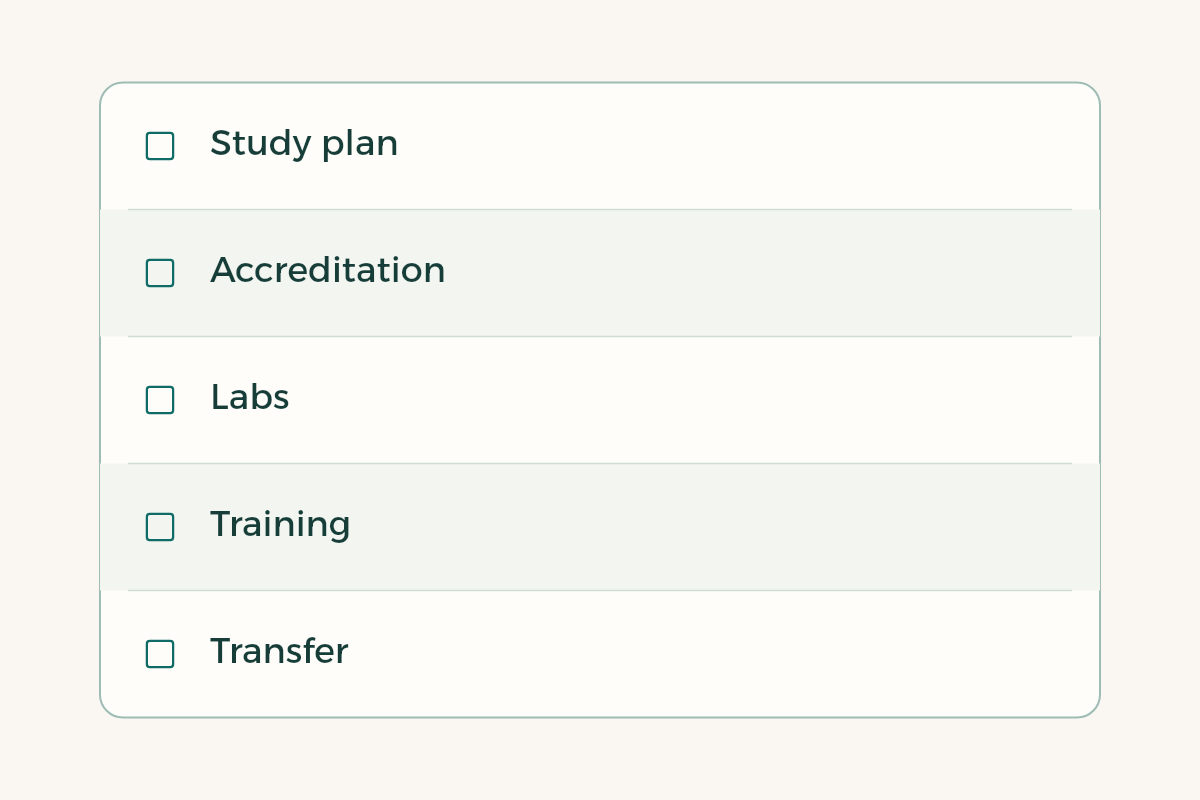
These are questions to put to the college, not facts about your university. If the plan is not published, write to the department and keep the reply in writing.
Which interior design software do you actually need in studio?
Split the project into stages: plan, then section and elevation, then a 3D model, then a final image, then a presentation board. Each stage has a type of tool, and many students need only a 2D drawing tool and a 3D tool in the first semester. For 3D models and images there is an open-source option, Blender, whose licence page describes it as free software you may use and modify, which is enough to test the idea before paying for anything else.2
| Project stage | Type of tool | What to ask before buying |
|---|---|---|
| Plan and section | 2D drawing | Does the lecturer want a specific file format? |
| Model of the space | 3D modelling | Is it in the lab? Is there a student licence? |
| Final image | Rendering | Does the course use simple images or full rendering? |
| Presentation board | Layout and presentation | Is the board printed or handed in as a file? |
| Site measurement | Measuring | Is a laser measure or a phone app enough? |
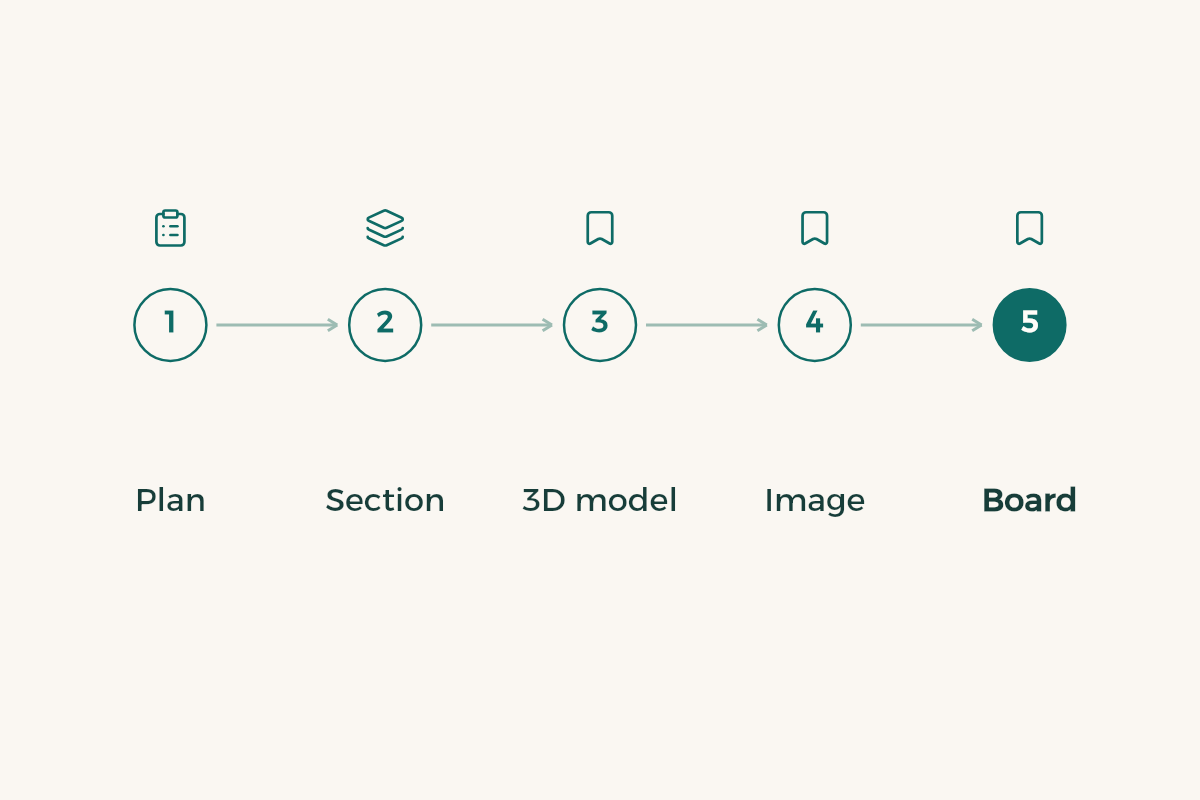
The table is a way of thinking, and the project brief is the reference. An example brief: turn a small majlis corner into a study space. It asks for one plan, one section and one board, so full rendering is not needed. For measuring, Apple’s support pages explain how the Measure app on iPhone takes dimensions, which can stand in for a measuring device at the start.3
How powerful a laptop does an interior design student need?
Do not choose the laptop before you know the software. If you want a safe rule, write down the system requirements the software maker publishes on its support page, compare them with the machine you already own, then ask a student a year ahead what they use. The architecture student laptop guide shows how to read requirements, and laptop storage planning shows how to estimate file sizes. Model files grow fast, so set aside space for backups from the first day.
Can AI help with interior design projects?
It helps with early ideas and with wording the project description, and it does not replace a measured plan. Treat what it produces as an idea, not a hand-in, and tell the lecturer you used it if your college asks. For more, read AI for architecture and design students.
What mistake do interior design students make most with software?
The most common one is learning five programs over the break and then discovering the lecturer wants one of them, in a specific file format. The second is working on a single file with no backup, so the model is gone a day before the deadline. The third is polishing the final image while the plan is still unmeasured, when lecturers mark the plan first. Start with a correct, dimensioned plan, build the model on it, and leave the image for last. If you study in Jeddah or Riyadh and share a lab computer, keep your files on storage of your own rather than only on the lab machine.
How do you compare two degree programmes or two tools?
Put the two options in a table with five rows: courses, studios, training, what you must buy, and who you contact to confirm. Score each row out of five and write beside it who confirmed the answer. If the totals tie, pick the one that costs less to learn, not the one that costs less to own. And do not copy a friend’s choice, because their project is not yours.
If you have finished a diploma and want the bachelor’s, ask about bridging and the credited courses, and read the bridging programmes guide for the general questions. The receiving university’s answer is the one that counts.