
By the tiswa editorial team, from the official sources listed at the end of this guide. How we write our guides
A final-year secondary student types “veterinary programs” into their phone and gets a page about degrees, a page about clinic software and a third that has nothing to do with either. This is an example, but it happens: the phrase carries two meanings, and anyone who does not separate them reads half of what they need and buys half of what they do not.
What do veterinary programs mean: a degree or software?
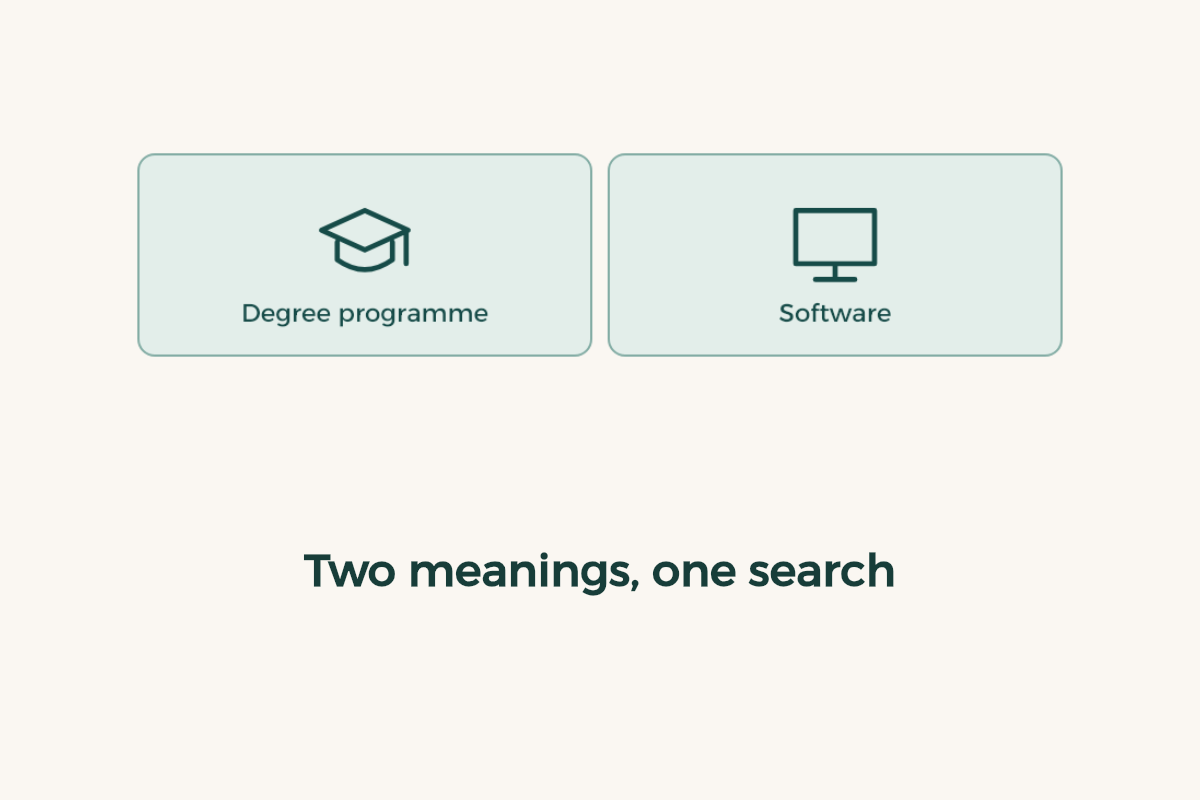
The first meaning is a degree programme: a bachelor’s in veterinary medicine, or one close to it, taught by a college inside a university. The second is software: what you open on your laptop to write a report, crunch herd numbers or organise your reading. The first decision is the bigger one, so it comes first.
What should you ask a college before enrolling in a veterinary programme?
Skip the college’s reputation and the group chat. Ask for the written study plan, then count the practical and lab courses in it and note where they are taught. Check the language of instruction too, since much of the scientific literature in this field is in English. The World Organisation for Animal Health publishes standards and material on animal health that show you the profession’s vocabulary before you enter it.1
- Ask for the study plan
From the college website or the deanship of admission and registration. Count the practical and lab courses; they set your real hours.
- Ask where practicals run
On a teaching farm or hospital owned by the college, or at an outside site? Will you need to travel every day?
- Ask about professional registration
Put the question to the department in writing: which body handles graduate registration, and which plan courses map to it. For the regulation of livestock, read what the Ministry of Environment, Water and Agriculture publishes.2
- Ask about training
When does field training start, and which sites take students? If you are weighing this against another science, read our biology major guide.
- Ask about research
Does the department involve undergraduates in projects? Start with our guide to undergraduate research.
These are questions for the college, not facts about your university. If the plan is not published, email the department and keep the reply.
Which software does a veterinary student actually need?
Ask the course lecturer first: what is required, and what does the college lab provide? In year one the answer is shorter than you expect. You need a word processor, a spreadsheet, a tool that organises the papers you read and a notes app. Clinic management software, imaging and 3D anatomy come with later courses, and the college often supplies them in its labs.
| Need | Usually enough | Move on when |
|---|---|---|
| A lab report | The word processor your university provides | The lecturer demands a specific template |
| Herd or sample numbers | Excel and a tidy sheet | The course names a statistics package |
| References and papers | A free reference manager | Your supervisor requires another format |
| Anatomy and imaging | The college lab | The college issues you a teaching licence |
| Lecture notes | Any app you can open in seconds | You need to search a year of notes |
The table is a way of thinking, not a shopping list. What your course requires is the reference, and if it asks for nothing beyond Excel, keep your money.
How do you build a course spreadsheet in one week?
This small exercise teaches more than any advert. In this example, imagine you logged the weights of twenty animals over four weeks. Make a sheet with one column for the animal ID, one for each week and one for the average. Microsoft’s support page lists Excel functions by category, including the statistical ones you will use here.4
- Lock the headings
Type the column names in row one and freeze the row so it stays visible as the table grows.
- Enter numbers as measured
Do not round while typing. Leave rounding to the display format.
- Add average and standard deviation
Use the average and standard deviation functions, then check one row by hand.
- Draw the chart
A line chart of weight across the weeks shows an outlier animal at a glance.
- Write one explaining line
What does the chart say? That single line is what a lab-report marker looks for.
How do you organise references from year one?
Veterinary courses send you into more papers and chapters than you expect, and the worst moment is two years later, staring at a sentence in your essay with no idea where it came from. Zotero publishes a quick start guide that shows how to save a source from the browser and build a bibliography from your library.3 Our Zotero guide for students has more steps, and if your department demands a format, see the APA guide.
What mistakes do students make when choosing veterinary programs?
The first is buying a powerful laptop before seeing the courses. The second is trusting old reviews of clinic software that you will not meet until year four. The third is handing in a ready-made file downloaded from a forum, which becomes a problem under academic integrity rules. The fourth is leaving backups until the machine dies; try the plan in our backup guide.
Storage has its own rule. Lab and imaging photos fill a drive fast, so read how to plan laptop storage before you pick a size.