By the tiswa editorial team, from the official sources listed at the end of this guide. How we write our guides
A final-year pharmacy student in Dammam wanted to compare the stability of two brands of an antibiotic under outdoor conditions. A good idea. But the lab opened only three days a week, the reference material took weeks to arrive, and nobody had been asked before the plan was written. In week five he had a title and no material. Pharmacy differs from fields that run on a questionnaire alone, because it touches materials, instruments, stores and records.
What tracks exist for a pharmacy graduation project, and what does each need?
There is no single split across universities, so treat these examples as rough. Ask your department which tracks are accepted and what assessment form each uses.
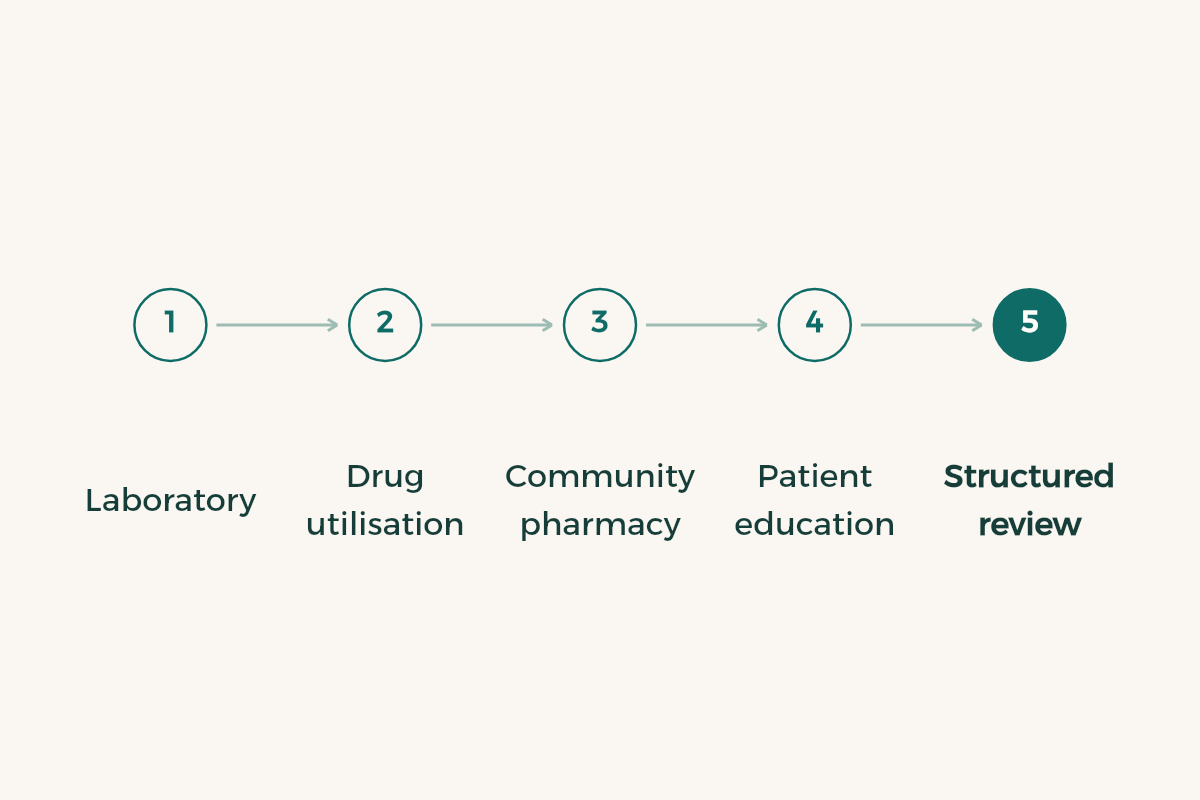
| Track | Example (illustrative) | What usually holds you up |
|---|---|---|
| Laboratory | Comparing tablet content from two makers against a published standard | Lab booking, availability of a reference material, solutions and instruments |
| Drug utilisation | Describing prescribing of acid-reducing drugs at a university clinic using a standard classification | Access to records and confidentiality of patient data |
| Community pharmacy | A questionnaire for visitors to a neighbourhood’s pharmacies on how well they follow leaflet instructions | Pharmacy permission, enough responses, clear questions |
| Patient education | Comparing a written leaflet with a short video for understanding of how to use a medicine | Ethics approval, follow-up, a design your supervisor accepts |
| Structured review | Comparing studies on adherence to treatment in one chronic disease | No approvals, but it needs systematic searching and quality appraisal |
In a drug utilisation track it helps to learn the Anatomical Therapeutic Chemical classification and defined daily dose system that the World Health Organization publishes, the international standard for describing and comparing medicine use between places.2 For anything about a medicine’s licensing or registration in the Kingdom, the official source is the Saudi Food and Drug Authority.1
How do you pick a pharmacy graduation project step by step?
- Ask about the doors first
Write a list: what materials does the department supply, which days is the lab open, who holds any records, which pharmacy manager do you know? Your title will come out of the answers.
- Pick one track
Do not combine a lab study with a questionnaire in one semester unless your supervisor advises it. Each track needs its own time and its own analysis.
- Define the group or material
“Tablets from two marketed makers” or “visitors to the pharmacies of one neighbourhood”. The narrower the choice, the better the odds of finishing.
- Choose a reference measure
A published standard to compare with, a short understanding scale, or a standard classification of use. Do not invent a measure unless your supervisor agrees.
- Book and secure approvals
The lab and materials in the first two weeks, and the pharmacy’s or facility’s permission before any collection. Ask for permission in writing.
- Prepare a fallback
If the material or the approval fails, which nearest question can you still answer? Write it in the plan from the start.
Should you use a ready-made pharmacy graduation project pdf?
You can read an earlier project to see the order of chapters, how tables are shown and how the methods were written. Copying from it is a double problem in pharmacy: figures, concentrations and references must be right, and an error you carried over from another project shows up at the defence. Never move doses from one project to another; a study measures, it does not prescribe treatment.
Read a sample like a reviewer. Which source did it use for the standard? How was the sample collected? What are the limits of the results? Then build yours on what you can reach. Review the guides on APA citation and avoiding plagiarism before you write the references.
How do you write the objectives of a pharmacy graduation project?
Write one main objective with a measurable verb: compare, describe, measure. Add sub-objectives, no more than three. Avoid verbs that cannot be measured, such as understand or explore. Check each objective against the result you will show in a table: if it has no table or figure, it is a surplus objective. For more on writing the proposal see the guide to the research proposal.
How do you prepare for the pharmacy project defence?
The jury expects you to explain why you chose this material or group, how you made sure your measurement was accurate, and what could have changed your result. Prepare a short answer to each, and bring one slide with a single table for the main result. If your project is lab-based, keep your lab notebook tidy and dated, because the jury may ask to see it.
Practise at your real time limit. The guide to presentation tips helps you divide the minutes between question, method and result.
When should you change track after starting?
Change it if the reference material is more than two weeks late, if a pharmacy refuses your questionnaire, or if approval does not come by mid-semester. Do not wait until week ten to admit the route is closed. Move to the nearest track whose doors are open, and keep the general question if you can: compare, describe or measure.
What mistakes ruin the numbers in a pharmacy project?
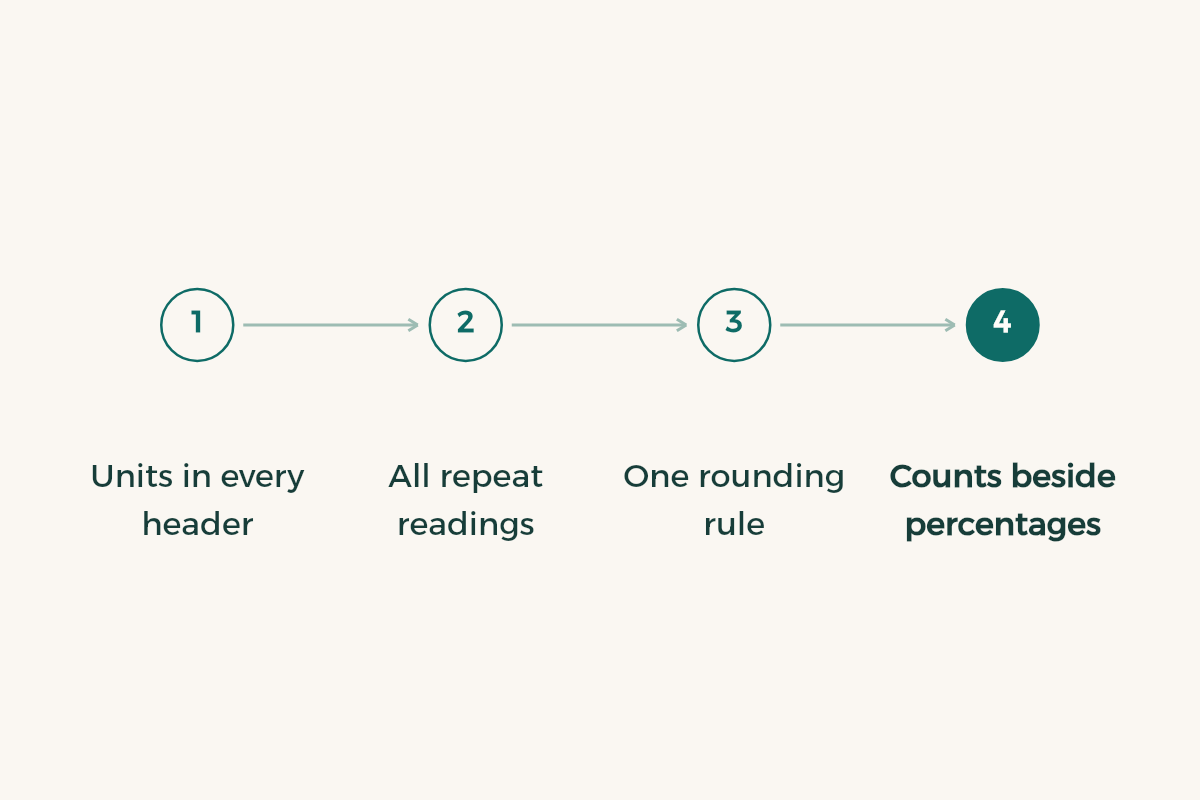
The first is units. Someone who writes milligrams in one table and micrograms in the next, then compares them, makes an error a juror sees in seconds. Put the unit in every column header and never mix two units in one column. The second is repetition: a single measurement per sample is not enough for anyone to defend, so ask your supervisor how many readings your lab accepts, and record all results, not only the best.
The third is rounding. If one table has two decimals and another four, the project looks uncontrolled. Agree one rule with yourself at the start. The fourth is ignoring the odd reading: do not delete it quietly, say why you excluded it or kept it. These small details raise the jury’s trust in everything after, whether your project ran in a lab in Riyadh or in a pharmacy in Jeddah.
If your project is a questionnaire, the matching mistake is showing percentages without the real count. Say eight of twelve, not just sixty-seven per cent, because a small count makes a percentage misleading. Check every number once more before you send the draft to your supervisor.