By the tiswa editorial team, from the official sources listed at the end of this guide. How we write our guides
Picture a final-year student resting a hand on the metal cover of a machine in a Dammam lab an hour after switch-on, thinking it is far too hot. He writes in his notebook: does changing the fin shape lower surface temperature without adding weight? It is not a project yet, but it has what many titles lack: a part he can make, a number he can read from a thermometer, and two designs to compare.
How do you choose a question for a mechanical engineering graduation project?
Mechanical projects fall mostly into four areas: design and manufacturing, heat transfer and fluids, energy, or materials and stress. Each has something you build or simulate and a number you measure. Write the number before you write the title, and name the instrument that will read it.
- Write the problem as you saw it
“The casing gets hot after an hour of running.” No solution yet.
- Choose what you design and compare
One fin shape against another, or one material against another, with everything else held constant.
- Fix the measure and the instrument
Temperature with a thermocouple, strain with a gauge, or flow rate. Ask the lab technician what exists and how accurate it is.
- Book the workshop and the material
Draw one part with a clear manufacturing drawing. Imported material can take weeks, so ask what is in stores.
- Simulate, then measure
Run a simple simulation to learn the expected range, then compare it with your reading. The difference is what you will explain to the committee.
- Write the question in one sentence
“How much does the surface temperature of a heat sink at a fixed load drop when straight fins are replaced by angled fins of the same area and material?”
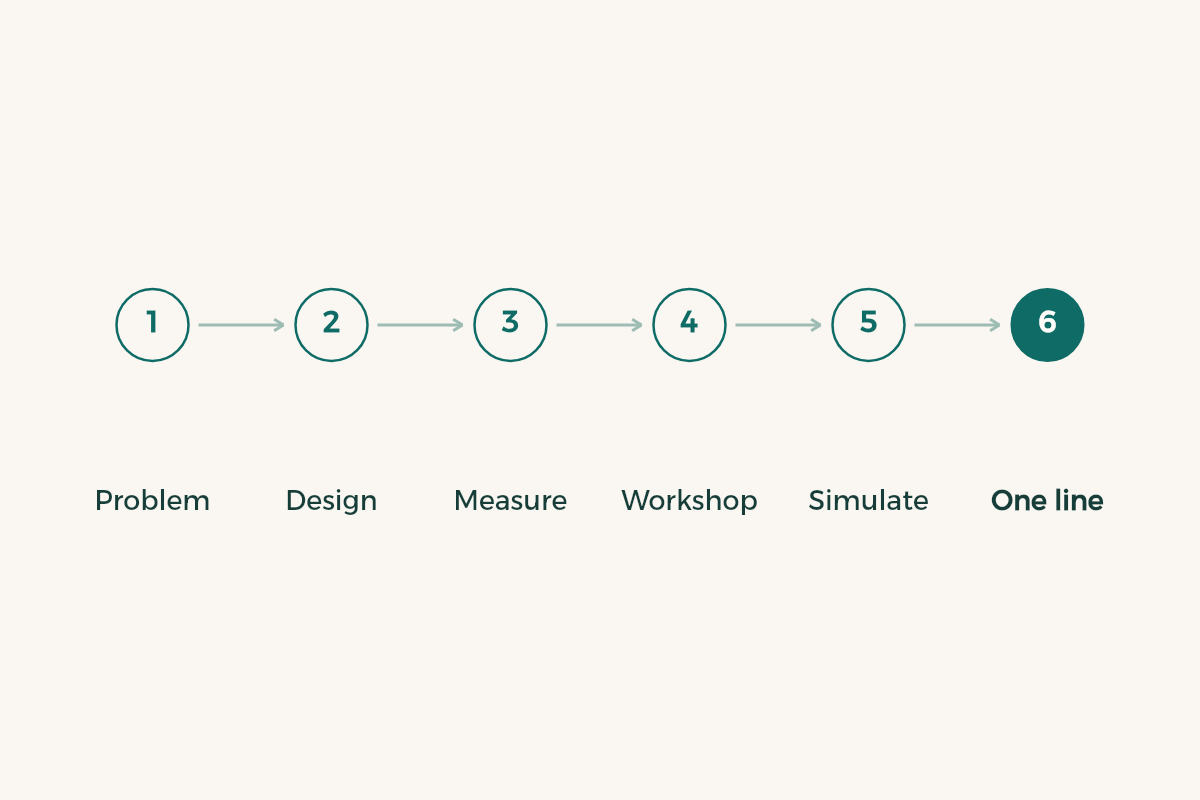
The example above is illustrative and only shows how a question is built. It may not suit your lab, so copy the structure, not the title.
What makes a mechanical project safe and acceptable?
Machines, heat and pressure hurt people. Before any test, ask about workshop rules and who supervises you, and wear protective equipment. The American Society of Mechanical Engineers publishes engineering ethics principles that put public safety and honest reporting of data first.1 Measurement itself has an international guide to the expression of uncertainty, issued by a joint committee for guides in metrology, and its core idea is that every number you report needs an error margin showing how far to trust it.2 The Saudi Council of Engineers regulates the profession in the Kingdom, so ask how your university’s rules apply to your project.3
| What you want to do | What it needs | Watch out for |
|---|---|---|
| Make a small prototype | Supervisor approval, a workshop slot and available material | Shared machines can have waiting lists of weeks |
| Run a thermal or mechanical test | Rig booking and protective equipment | Record the accuracy of each instrument |
| Run a finite element or fluid simulation | Software and a university licence | Needs checking against a measurement or hand calculation |
| Work with high pressure or temperature | Direct supervision and lab approval | Your department may forbid it, so ask before buying material |
Use this table as a thinking aid. The department and the workshop decide the real procedure, so if a row is unclear, ask before you start.
Is a simulation-only mechanical project enough?
Some departments accept simulation alone and others require a built model, so ask your supervisor for the assessment form. If both are allowed, our advice is to make a small part and measure it, because committees often ask why your reading differs from the simulation, and a good answer shows you understood the physics and not only the software.
Always compare two numbers: what you calculated or simulated and what you measured. The gap, however large, is the richest part of your project if you can explain it with causes such as surface roughness, instrument error or a simplification in the model.
What are good mechanical engineering graduation project ideas?
Ideas that stay close to reality: comparing two fin shapes on a heat sink, testing a beam of two materials in bending, redesigning a bracket to cut weight while stress stays under a limit you set, or comparing an air cooler with one fan against two. Pick an idea you can measure on an instrument your lab owns.
To see what the major covers and where it leads, read the guide to mechanical engineering as a major, and for narrowing a broad idea to a question see the graduation project ideas guide.
How do you write the introduction to a mechanical engineering project?
Begin with the problem you saw in two sentences, then what others have done, then your question. Keep it to one page and skip the history of the engine. The guide to the research introduction has the details, and writing the methodology section shows how to describe the part and the instrument so another student could repeat your work. For referencing, see APA citation.
What questions will the committee ask you?
Four questions keep returning in mechanical defences. First: why this design? The answer is the story of the problem you saw. Second: how accurate is your measuring instrument? The answer is the figure from the datasheet or your calibration. Third: why did the measurement differ from the simulation? The answer explains the gap plainly. Fourth: what are the limits of your result? The answer is a sentence saying it applies to one shape, one material and one load.
Write the four answers on a card a week before the defence and rehearse with a classmate playing the examiner. Prepare for a fifth question too: what would you change if you did it again? An honest answer raises your mark. You might say you would have ordered the material a month earlier. For slides, read the guide to graduation project defence slides.