By the tiswa editorial team, from the official sources listed at the end of this guide. How we write our guides
Twenty CVs from pharmacy students reach a supervising pharmacist at a hospital in Dammam, and nearly all say “works well in a team” and “learns fast”. This is an imagined case, but it matches what happens when applications look alike. The CV that stops the pharmacist says: “Wrote a one-page counselling leaflet for diabetes patients, based on my clinical pharmacy course.” One sentence about one piece of work outweighs a page of adjectives.
Which skills should you show for pharmacy co-op training?
The site changes, from a hospital to a community pharmacy to a drug company, but four skills turn up in almost every pharmacy. Pick the ones you can prove, and do not list a skill you could not tell a story about in the interview.
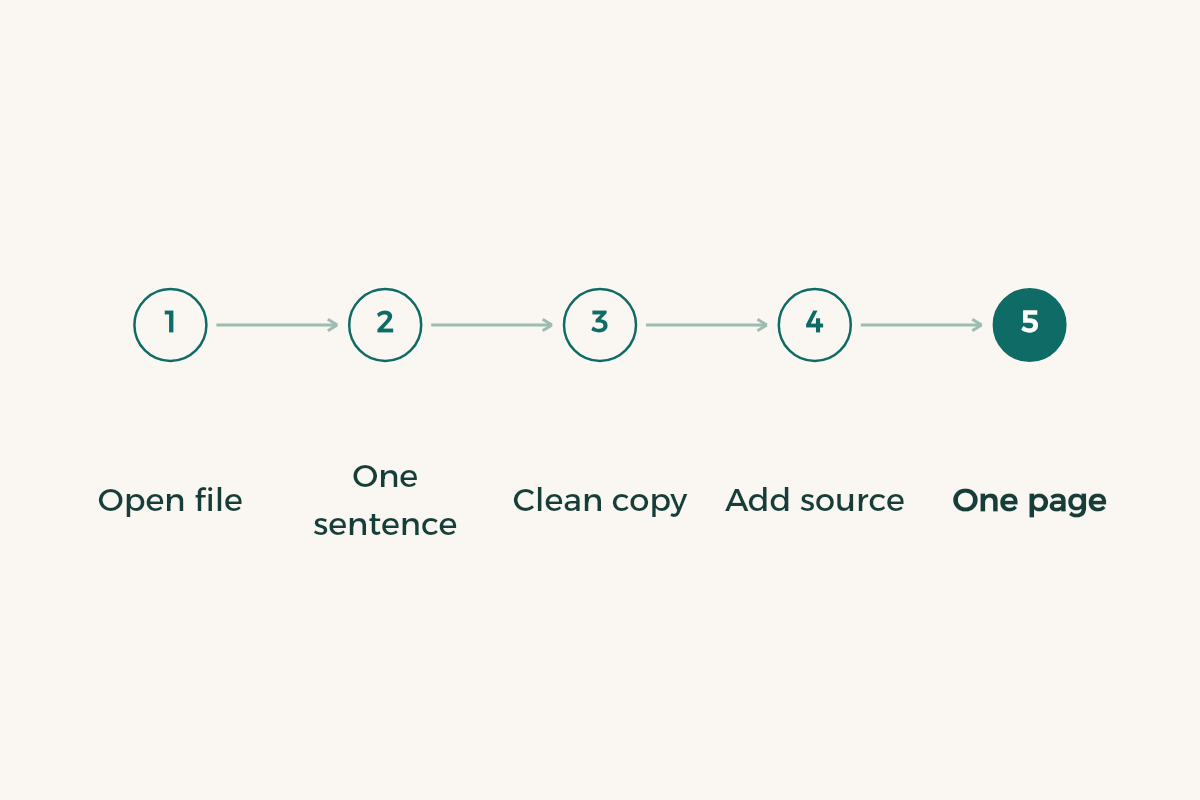
| Skill | Course that supports it | Evidence that fits a CV |
|---|---|---|
| Dispensing accuracy and checking | Pharmaceutics and pharmacy practice | Review of 20 practice prescriptions against a checklist of dose and name errors |
| Patient counselling | Clinical pharmacy | A one-page leaflet on a long-term medicine in plain language |
| Drug-information searching | Pharmacology | A drug question you answered from a trusted reference, with the source named |
| Stock and expiry control | Pharmacy management | A tracking sheet of expiry dates for a training stock |
The examples in the last column are illustrative, so replace them with what you really did. Do not state numbers that have no basis, and do not write “experience” you have not had.
How do you build proof for each skill before you apply?
Start a full semester before applying if you can. Proof does not need special permission when it comes from your courses and from training material, but never do anything with real data from a patient.
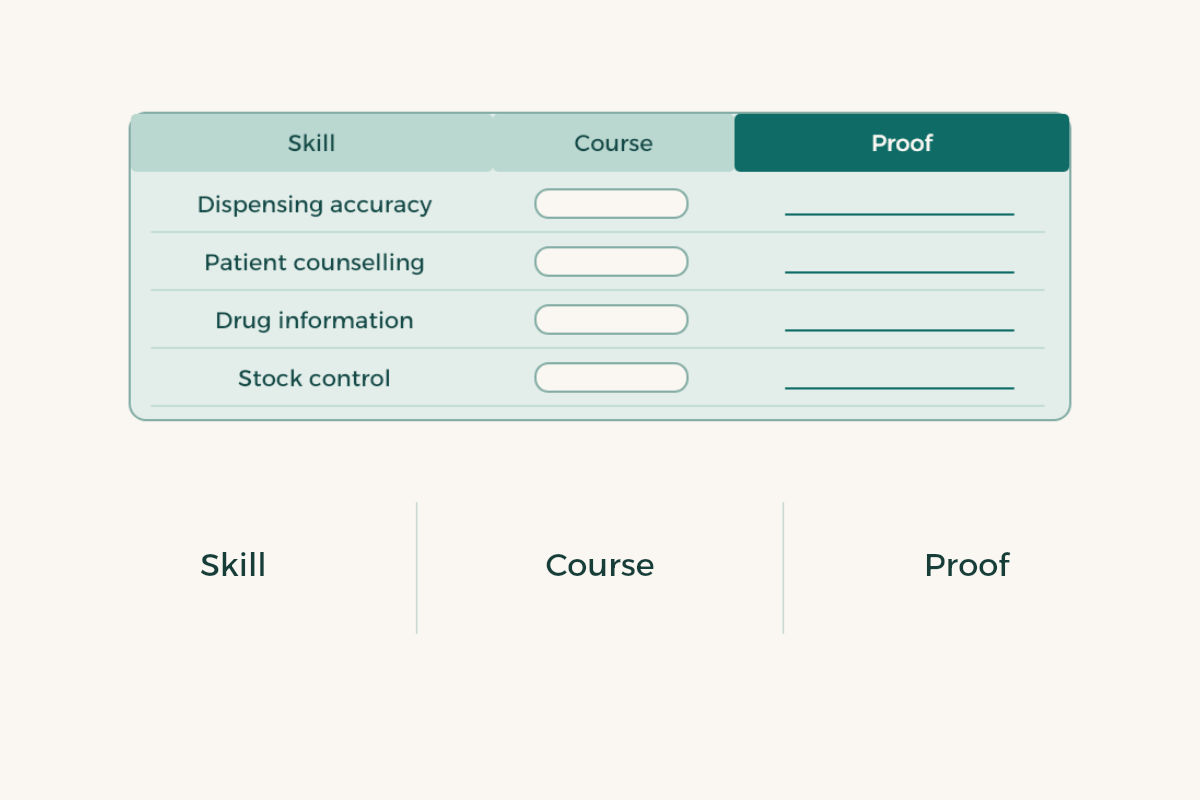
- Open the course file
Choose one of the four courses above and note the last project or case you submitted in it.
- Turn the project into one sentence
“Analysed a renal-failure case and reviewed interactions among five drugs.” Write the verb first, then the subject, then the number.
- Ask for a clean copy
If the project holds case data, ask your lecturer for a copy with every name and number removed before you put it in your file.
- Add a source
Every drug fact in your file should trace to an approved leaflet or a scientific reference, not to a general website.
- Gather it on one page
Four sentences, one per skill. The page works for the CV and for the interview.
Keep the original project in a separate folder, because the supervising pharmacist may ask you to explain how you worked.
Is pharmacy co-op training different in a hospital and a community pharmacy?
Yes, and the difference is in what you learn more than in how hard it is. In a hospital pharmacy you come close to doses, interactions and the files of admitted patients, and you work inside a medical team, where calling the doctor is part of the day. In a community pharmacy you deal with the public and hear questions such as “can I take this with my other medicine?”, and you learn to explain in plain words without going beyond your role.
Choose by what you lack. If you are strong on paper but weak at talking to people, a community pharmacy trains what your whole career will need. If you want clinical pharmacy or a specialty after graduation, the hospital experience opens that door. And if the one you want is not on offer, do not refuse the other: nearby experience beats absent experience.
What should you check with your university and the training site?
Rules differ between universities: some fix the length, timing and place of training, and some decide who accepts the request and how hours are logged. Ask your faculty’s training coordinator three things before you send anything: do you need an introduction letter from the faculty? Does the university accept any site or only an approved list? And who assesses you at the end of the semester?
On the legal side, the decision on student training issued by the Ministry of Human Resources and Social Development governs the relationship between student and employer, and the guide to co-op training walks through it.3 Health professions are regulated by the Saudi Commission for Health Specialties, pharmacy included, so find out what a trainee may do and what is reserved for the licensed pharmacist before you accept any task.1 The Saudi Food and Drug Authority oversees medicines in the Kingdom, so when someone asks where a drug fact came from, answer with an approved leaflet, not a forum.2
What mistakes do pharmacy students make in training applications?
The first is a CV that lists every course in the study plan. The supervising pharmacist does not read a list of courses; it is on every transcript. Show what you did with them.
The second is putting real data in your file: a photo of a prescription, a patient’s name or a file number, even from an earlier placement. That is a professional error, and it can sink the application at a glance. Use training cases or anonymised copies only.
The third is applying at the last minute. Many sites open applications months before the semester, and hospital places fill before small pharmacies do. Prepare your file early, and if you miss the first round, ask when the next one is instead of waiting.
The fourth is neglecting the interview. When you are asked “tell me about a case you learned from”, the ready answer is your file. Rehearse it with a classmate, because someone who has never heard their own voice explain a case cannot do it when nervous. For more preparation see the guide to job interview questions, and for a clear CV the guide to the student CV.
A fifth mistake is rarer but costly: accepting the first offer without asking what you will actually do. Some sites need a trainee for office tasks only, and you would return after a full semester with no dispensing or dosing experience. Ask plainly, before accepting, about the daily tasks and who supervises you, and write down the answer.