By the tiswa editorial team, from the official sources listed at the end of this guide. How we write our guides
A final-year physical therapy student at a university in Riyadh is asked in a placement interview to measure knee range of motion on a classmate while the supervisor watches. This is an imagined case, but it repeats in many forms. The student who had practised the measurement ten times in the skills lab finished in two minutes and explained why they started with the unaffected side. The one who had only read the method froze at the first step.
What skills do supervisors look for in a physical therapy trainee?
Placement units differ, from orthopaedics to neurology, paediatrics, intensive care and sport, but four skills run through most of them. We will link each to a course and to what you can say in the interview.
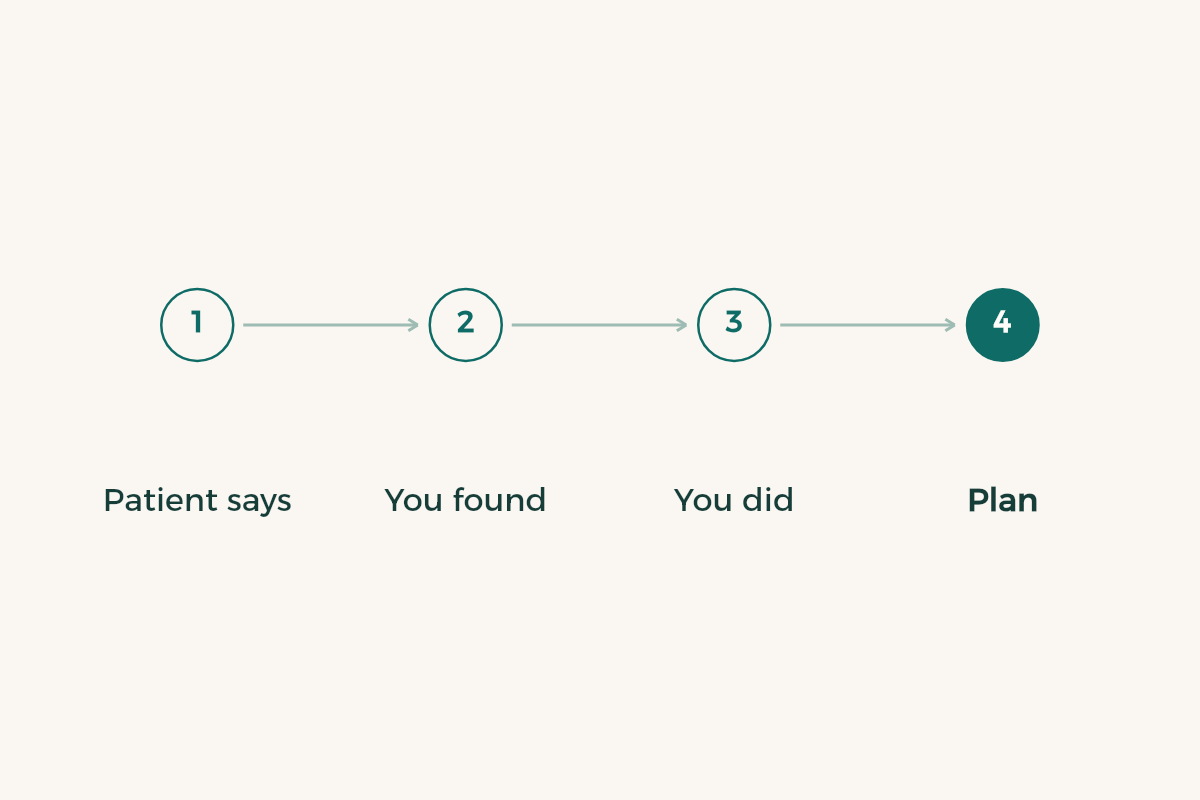
| Skill | Where you learned it | What you say or show |
|---|---|---|
| Movement assessment and measurement | Clinical assessment and anatomy | Measuring joint range with a goniometer on a classmate, explaining the positioning |
| Prescribing and teaching exercise | Therapeutic exercise | A programme of six exercises for an imagined case, with simple pictures |
| Clinical notes | Clinical courses and the skills lab | A short note in a fixed order: what the patient said, what you found, what you did, the plan |
| Patient communication | Professional communication course | Explaining an exercise in plain words and asking the patient to repeat it back |
These examples are illustrative; do not copy them. Pick from what you have really done, and never name a skill you have not practised.
How do you practise a clinical note to put in your application?
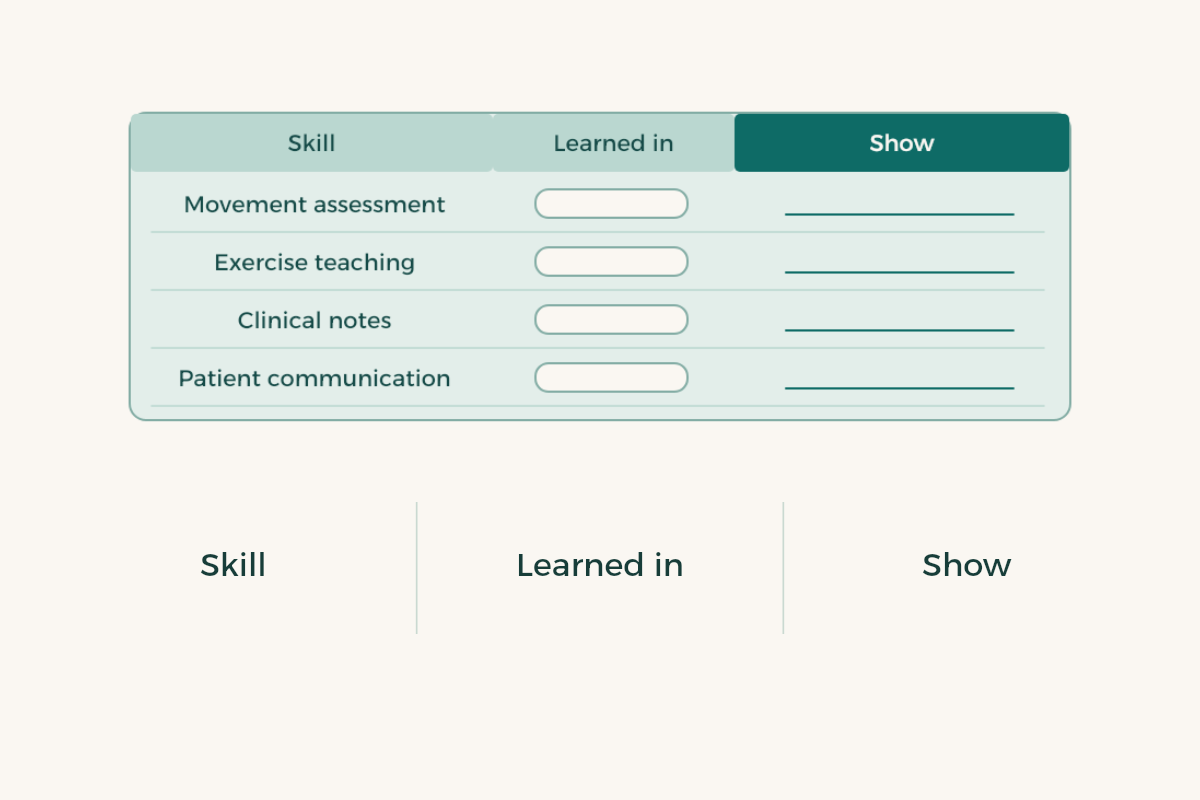
A short, ordered note is a skill supervisors notice in the first week of any unit. Many practitioners use a fixed four-part order, so you can drill it at home with a completely imagined case.
- Choose an imagined case
For example a man of forty, two weeks after an ankle sprain. Do not take a case you saw in a hospital, even without a name.
- Write what the patient says
“Pain going down stairs, five out of ten.” One sentence in the patient’s words, not yours.
- Write what you found
Mild swelling, limited ankle bend, less strength on one side.
- Write what you did or will do
Two range-of-motion exercises and one balance exercise, with clear counts and repetitions.
- Write the plan
Review after one week, and what should bring the patient back sooner.
Ask your skills-lab tutor or lecturer to read it; early criticism from them is far cheaper than criticism from a clinical supervisor. And do not mix what you saw with what you interpreted, the most common mistake in beginners’ notes.
Can you do co-op training in any physical therapy unit?
In the details, yes. In orthopaedics there are many measurements and strengthening exercises; in neurology you learn patience and fine movement detail; in paediatrics you need play and communication with parents more than anything else. Read the unit description before you apply, and change the first sentence of your file to match it.
If the university lets you choose, pick the unit that adds something. Strong at measuring but weak at communication? Start with paediatrics. Planning to work in sports centres later? Orthopaedics and injuries sit closer. If you do not know what you want, a general unit with a wide mix of cases shows you your leanings quickly.
What should you check before a co-op internship in Saudi Arabia?
Universities differ in the units on offer, the rules, and who assesses you. Ask your faculty’s training coordinator three things: are the sites fixed in advance or do I choose? Do I need an introduction letter? And how are placement hours logged and who signs them?
The Saudi Commission for Health Specialties regulates the health professions, physical therapy included, so find out what a student may do and what only a licensed practitioner may do.1 World Physiotherapy publishes standards for the profession that you can read to understand what is expected of a professional practitioner.2 The relationship between you and the site is governed by the Ministry of Human Resources and Social Development’s decision on student training, and the guide to co-op training explains what it means for you.3
How do you show your skills in the CV and the interview?
In the CV write each skill as a sentence that starts with a verb: “Measured knee and ankle range of motion on 10 classmates in the skills lab”, not “I have measuring skills”. In the interview, prepare three short stories: a time you made a mistake and corrected it, a time you explained an exercise to someone who did not understand, and a time you had to ask for help. The CV opens the door and the stories keep you in the room.
Before sending, read the guide to the student CV, and if the interview is close, try the questions in the guide to job interview questions. And if you are weighing how your placement fits with your final project, see the guide to the physical therapy graduation project.
What mistakes cost you a good placement?
Photographing patients comes first. Even for study, do not photograph a patient or send their picture to a class group. Ask for written permission as the site requires, and if it is not given, do not photograph.
Lateness comes second. Supervisors note it before any skill. An absence without notice is forgotten at university after the semester, but not by the person who will write your reference.
Third is stepping outside your role. A patient will sometimes ask about their diagnosis or medicine, and you may know the answer. The answer belongs to the licensed practitioner, so say “I will ask my supervisor” and pass the question on. That sentence shows more maturity than any correct answer given outside your role.
Fourth is ignoring your own fitness. Physical therapy is physical work, and standing, lifting and handling patients drains your energy. Get comfortable shoes, watch your sleep, and ask about the real hours in a day before you agree.