By the tiswa editorial team, from the official sources listed at the end of this guide. How we write our guides
Your supervisor’s reply lands in week three: send a title and a question by the end of the month. You type the first thing that comes to mind, “the effect of therapeutic exercise on low back pain”. Your friend reads it and says it is great. Your supervisor reads it and sends back one line. Which exercises? Which patients? How many weeks? How will you measure pain? The title was not bad. It was wider than two semesters can hold.
What makes a physical therapy project question workable?
Five tests are enough. A question passes all of them or gets reworded. Do not use them to defend a title you already love; use them to choose between three titles.
| Test | The question to ask | Red flag |
|---|---|---|
| Sample | Who takes part, how many, and who gets me to them? | You need 60 patients and have access to one clinic |
| Measurement | Which tool measures the outcome, and who has used it before? | “Improvement” with no named scale |
| Time | Do my available weeks cover the follow-up? | An outcome that needs six months in a one-term project |
| Ethics | Does it touch a patient or patient data? | Nobody knows who has to approve it |
| Contribution | What does a reader learn if the result is flat? | A summary any textbook already gives |
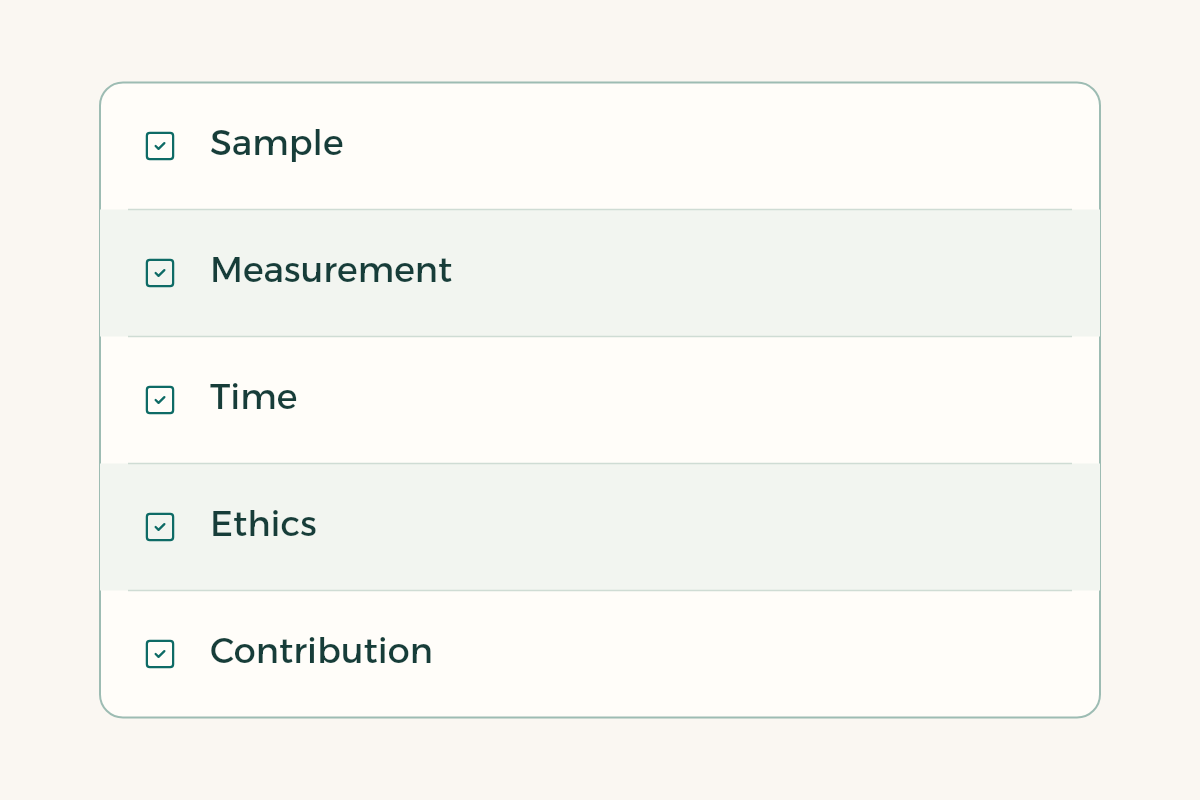
An example, for illustration only: a title like “shoulder rehabilitation” fails four of the five. “Comparing one exercise with another for range of motion in adults over fifty-three” passes if you find a supervisor and a site. Notice that the second is narrow, and that the narrowness is what makes it assessable.
How do you word a graduation project question step by step?
- Name the patient
One group, stated tightly: a rough age band, one condition, one care setting. “Knee patients” is loose; “after total knee replacement” works.
- Name the intervention
One exercise, technique or tool. If you wrote “and” between two interventions, you have written two projects.
- Name the comparison
Against what? Usual care, another intervention, or the same people before follow-up. Without a comparison there is no question.
- Name the outcome
One main measure, with a name, a written way to administer it and a fixed time to take it.
- Write it in one line
Put the four in a single sentence. If you need two sentences, the question has not narrowed yet.
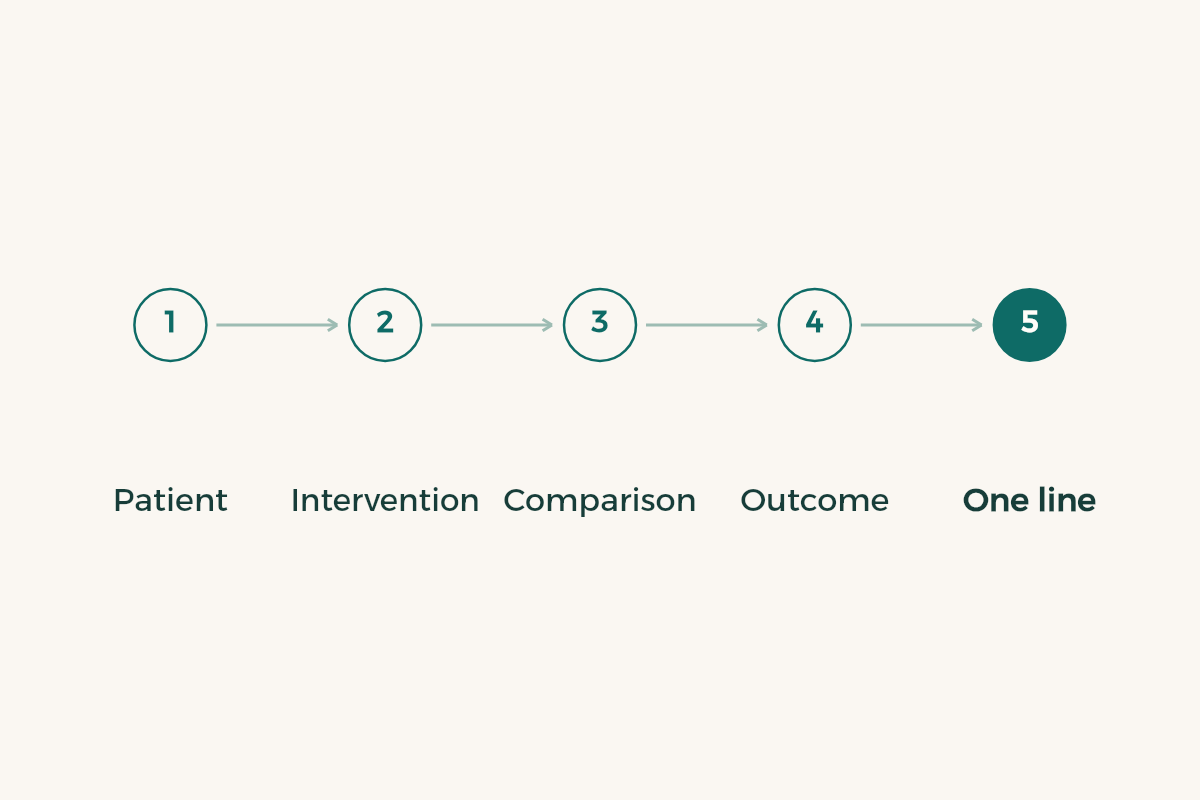
This is the patient, intervention, comparison and outcome frame used across clinical research. Your project may not need all of it. A review of published studies uses it for inclusion criteria, and a practitioner survey uses a lighter version. It still forces precision, whichever you choose.
Do you need approval before working with patients?
Ask before you start, not after you have collected data. Any work that touches a real patient, a medical file or an image normally goes through your supervisor and the ethics committee at your college or the training site. Rules differ by university and hospital, and they set the timing and the paperwork, so ask your supervisor for the form in week one. Never collect “trial” data from a patient before you know the answer.
If your project needs interviews with practitioners, check that the person is registered. The Saudi Commission for Health Specialties offers a service to verify a practitioner’s registration.1 And if you are already thinking about life after graduation, the SCFHS exam guide is a useful read.
Which kinds of physical therapy project fit one or two terms?
| Project type | What it needs | Risk |
|---|---|---|
| Systematic review of one narrow question | Databases and written inclusion criteria | Low, but time slips if the question is wide |
| Survey of practitioners or students | A tested tool and enough responses | Medium: few responses weaken it |
| Patient education material with evaluation | A supervisor and expert review | Medium |
| Study protocol without running it | Skill in writing methods | Low, and only some departments accept it |
| Small experimental study | Approval, a sample, a measure and time | High inside one term |
A practitioner survey looks easy, but 25 replies cannot say anything about “therapists in Saudi Arabia”. State your sample’s limits plainly in the conclusion. A review has its own trap: the database search alone takes weeks. Open the Google Scholar guide and the Saudi Digital Library guide in week one, not the last week.
How do you know your topic matters to the field?
Look at the profession’s own priorities. World Physiotherapy publishes a document on global research priorities for the profession, which tells you which questions the field is still waiting on.2 It does not bind you to a title, but it keeps you from picking a question answered years ago.
For the Saudi context, look at the health, population and disability figures from the General Authority for Statistics. They give your introduction a documented background.3 To see how a whole proposal is written, read the research proposal guide and the literature review guide.
What mistakes sink a physical therapy graduation project?
First, a sample that rests on a spoken promise. “My friend at that hospital will send me his patients” is not a sample. Get the approval in writing. Second, a measurement tool whose original paper you never read, so you apply it to the wrong group. Third, three questions in one project because you hate to lose any. Pick one.
One more shows up at the end of term: copying a table from a paper and presenting it as your result. Plagiarism checks catch it, and you do not need it anyway. Read the plagiarism guide and the APA citation guide before the first paragraph, not a week after submission.
How do you put your question in front of the supervisor?
Send one page, not ten: the question in a line, the sample, the measurement tool, the timeline and what you know about approval. It saves two weeks of back and forth. The email to professor guide helps if you do not know how to open the message. End it with a closed question: which of these two titles do you prefer?
When you need to present to the committee, the presentation tips cover it. The graduation project ideas guide gives a wider look at other majors. And the student discounts in Saudi Arabia are worth a look for printing and stationery in submission season.