By the tiswa editorial team, from the official sources listed at the end of this guide. How we write our guides
Graduate development programs in Saudi Arabia are one of the shortest routes from university to a large employer. You will see them under different names: graduate programme, young leaders programme, professional development programme, or GDP. The idea is broadly the same: a company hires a cohort of fresh graduates and trains them through a structured plan before they settle into a specific role. This guide separates company programmes from the government Tamheer product, explains where openings appear and how to prepare for each selection stage.
Two different things with one name
"Graduate development" in Saudi Arabia means two different things, and mixing them up costs students opportunities:
| Company graduate programme | HRDF Graduate Development (Tamheer) | |
|---|---|---|
| Who runs it | The company itself | The Human Resources Development Fund with registered employers |
| Nature | Usually a job with an employment contract from day one | On-the-job training, not employment |
| Length | Varies by company and is stated in its announcement | 3 to 6 months |
| Pay | A salary set by the company | A monthly stipend paid by HRDF |
| Where to apply | The company careers site and official accounts | Your HRDF account |
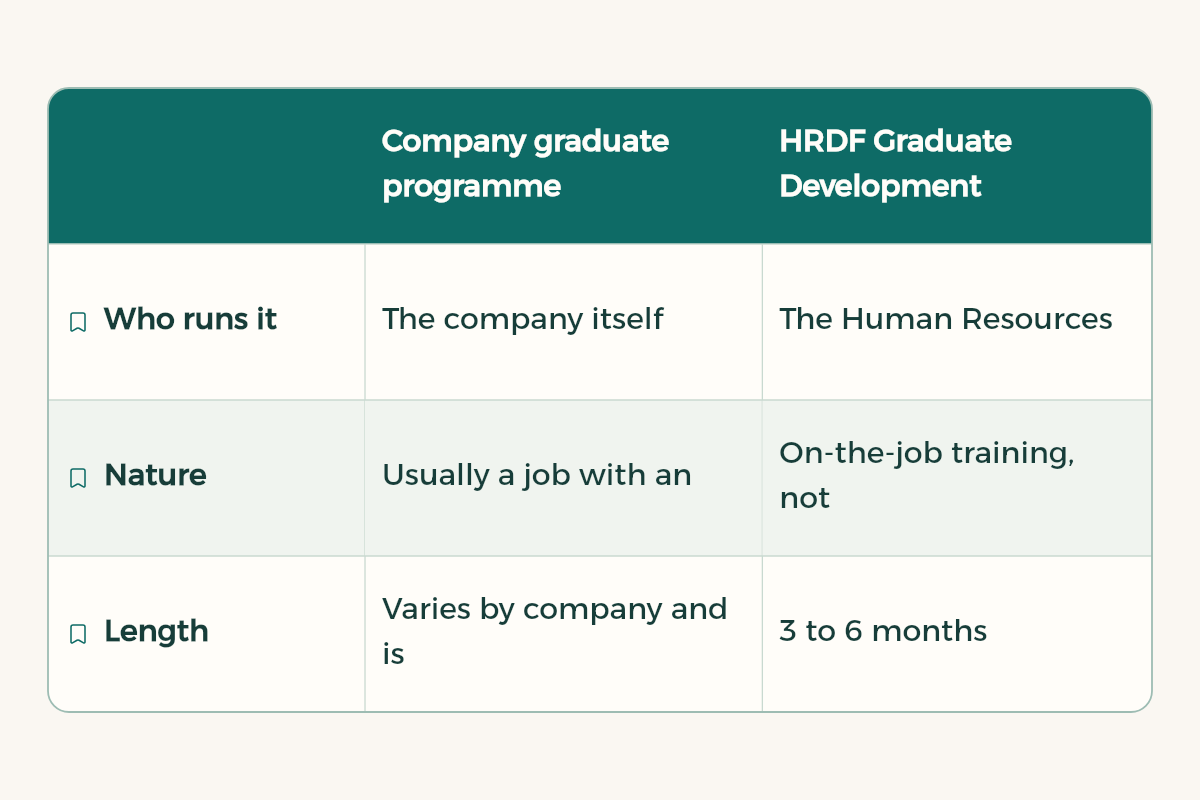
Tamheer's conditions and stipend calculation are in the Tamheer program. This guide focuses on company programmes, because getting in works differently and needs earlier preparation.
How company programmes usually work
Every company sets its own details, so always read the official announcement. Most programmes share a similar structure, though:
- One or two cohorts a year, with an application window that closes on its deadline or when places fill.
- Rotations across departments, so you try several roles before settling in one.
- Internal classroom training alongside real work, sometimes with a final project presented to management.
- A mentor or manager responsible for your development, and regular reviews that shape where you land.
Where to find graduate programmes
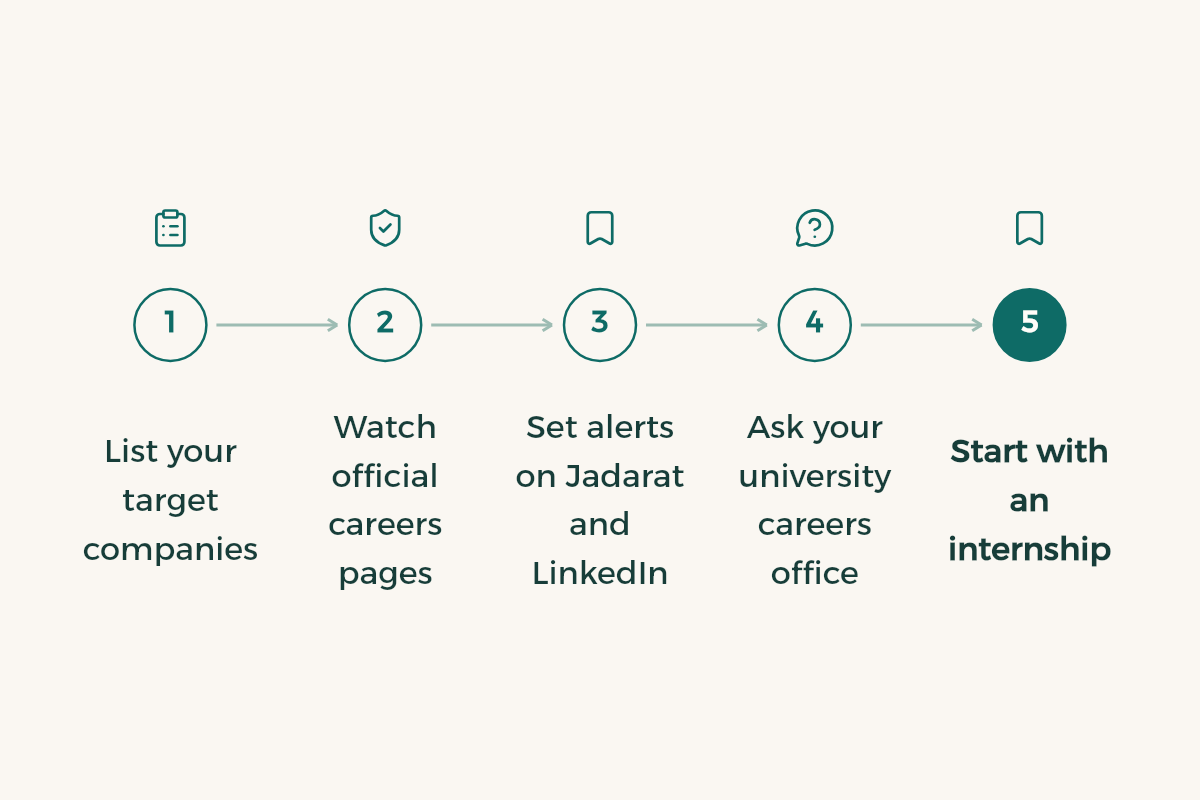
- List your target companies
Pick 15 companies in your field: banks, energy, telecoms, retail, consulting or whatever suits your major. Large programmes tend to come from employers that hire in volume.
- Watch official careers pages
Open each company's Careers page and look for a graduates or students section. Many let you register for alerts.
- Set alerts on Jadarat and LinkedIn
Jadarat is the national unified employment platform, and many programmes are posted on LinkedIn. Save searches for terms such as Graduate Program and برنامج الخريجين.
- Ask your university careers office
Careers units receive employer announcements and run job fairs, and some companies visit campuses before applications open.
- Start with an internship
Many companies favour candidates who trained with them. A summer or co-op placement at a target company makes your name known before you apply.
A practical example: the Aramco university internship has clear GPA and document requirements, and applying on time puts you inside the company while you are still a student.
The usual selection stages and how to prepare
Stages differ between companies, but this is the most common order, with what to prepare for each:
| Stage | What they assess | How to prepare |
|---|---|---|
| Online application and CV | GPA, major and activities | A one-page CV that leads with achievements, plus a short cover letter |
| Aptitude tests | Verbal, numerical and logical reasoning | Practise free timed samples and revise ratios and tables |
| Language test | Usually English | Practise writing and speaking; see STEP vs IELTS |
| Recorded or live interview | Communication, motivation, behaviour | Prepare STAR stories and practise a job interview in English |
| Assessment centre | Teamwork, presenting, analysis | Rehearse a 5-minute presentation and a case discussion with classmates |
What raises your chances before graduating
- A GPA comfortably above the company's threshold, because many programmes screen applications by GPA first.
- At least one placement in your field, even four weeks from Hadaf programs for students.
- Real leadership: a student club, a volunteering project, an event you organised. Record your hours on the national volunteering platform.
- English good enough to hold a full interview without hesitation.
- A complete LinkedIn profile with a clear summary, because recruiters search for candidates there.
I am a [major] graduate applying to the graduate development programme at [company] in the [sector] sector. About me: [3 lines on your experience and activities]. Ask me 8 behavioural and motivation questions that graduate programme assessors typically use, one at a time. After each answer I write, score it out of 10 for clarity of situation, action and result, and suggest a stronger wording without inventing achievements I did not mention.
"Why this programme?" is half the offer
Most assessors ask some version of it: why our company, and why this programme in particular? A generic answer such as "a leading company where I can grow" does not separate you from hundreds of applicants. A strong answer links three things: what you know about the company from its own sources, what you have actually done in a related area, and what you want to learn on the rotations.
- Read the annual report or "about us" page and pick one project or business line that interests you, and name it.
- Link it to a course, graduation project or placement where you worked on something similar.
- Finish with what you want to build in the programme, not what you want to get from the company.
The same idea goes into your cover letter if one is requested. The full method is in how to write a cover letter, and introducing yourself in the first minute of the interview is in tell me about yourself.
Mistakes that knock you out early
- Applying on the last day. Systems sometimes fail, and some programmes review applications as they arrive.
- One CV for every company, without adjusting the objective and skills lines to the announcement.
- Ignoring email. Test invitations have short deadlines and can land in spam.
- Relying on one company. Apply to several programmes at once, with Tamheer as a backup.
If the season ends without an offer, that is not the end of the road. A regular first job at a mid-sized company gives you experience that can move you into a programme or a bigger role later; the full plan is in first job after graduation.