By the tiswa editorial team, from the official sources listed at the end of this guide. How we write our guides
Tell me about yourself is how most interviewers open, and a "tell me about yourself" answer is where many students freeze, because the question feels endless. It is actually an opportunity: one minute in which you choose what the interviewer learns about you, and steer the rest of the interview. This guide gives you a simple three-part structure, ready examples by major in Arabic and English, and common mistakes to avoid.
Why they ask it
The interviewer does not want your life story, nor a reading of your CV. They want three things: who you are now, what you have done that relates to the role, and why you are here. They are also watching how you speak: whether you are organised, know yourself, and have read about the role. So a good answer is short, structured and ends with a sentence linking you to the job.
The structure: present, past, future
- Present: who you are now
One or two sentences: your major, your year or graduation, and your focus. For example: I'm a final-year information systems student focusing on data analysis.
- Past: what you have done that relates to the role
One or two experiences only: a placement, a graduation project, a club role or volunteering. Give one result, with a number if you can.
- Future: why this role
A sentence linking the above to the job: That's why I'm looking for an internship in a data team, and what I read about your projects made me excited about this opportunity.
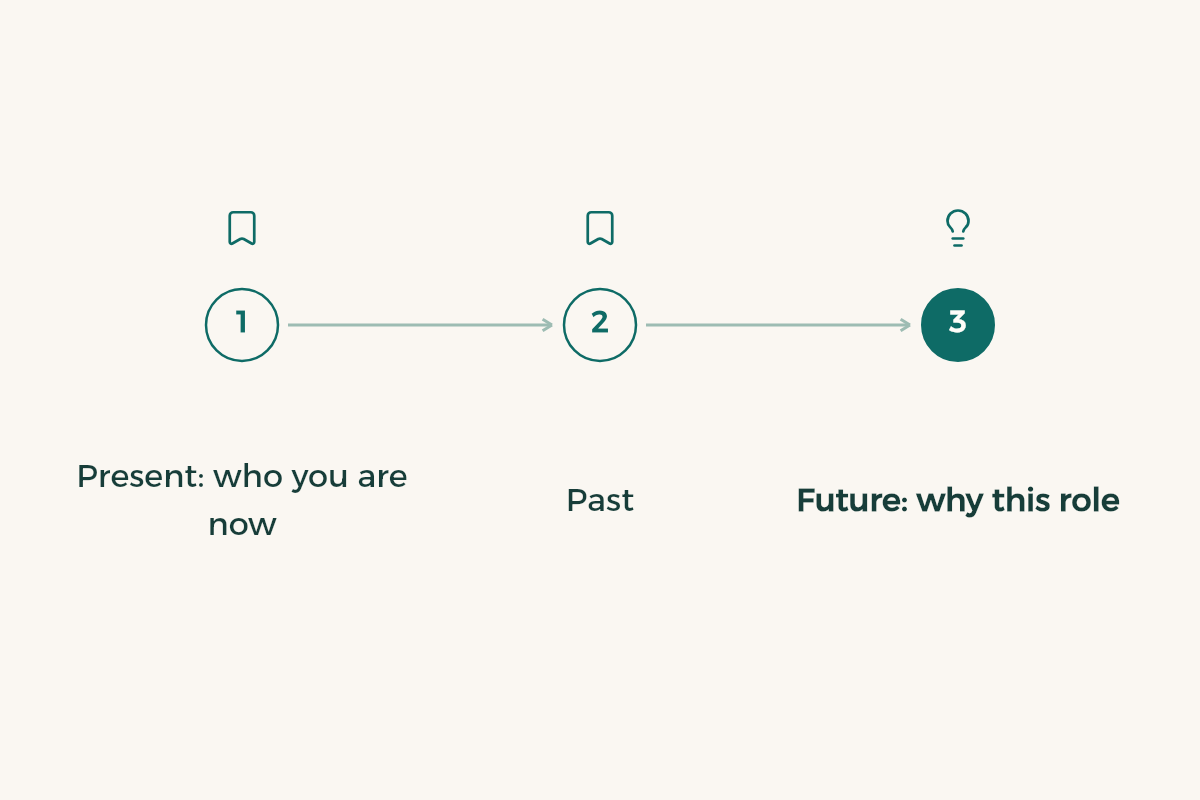
This order ends your answer at the job, so the next question is usually about something you mentioned. That is the point: you lead the interview towards your strengths.
How long should it be?
Roughly one to one and a half minutes, about 120 to 180 words. Shorter sounds unprepared; longer loses the interviewer. Say your answer with your phone timer running and cut any sentence that does not serve one of the three parts.
Examples by major
| Major | Present | Past | Future |
|---|---|---|---|
| Mechanical engineering | Recent graduate, graduation project on cooling systems | Eight-week co-op placement in preventive maintenance | Looking for a graduate development programme in operations |
| Business | Final year, marketing focus | Led a student club campaign that raised attendance | Wants an internship in a digital marketing team |
| Health sciences | Internship year or graduating soon | Volunteered in health awareness campaigns | Looking for a role in health education or care quality |
| Computer science | Third year, enjoys web development | Built a study-planner app classmates used | Wants an internship in a software team |
| Accounting | Recent graduate with a strong GPA | Summer placement in a finance department, prepared bank reconciliations | Looking for a junior accountant role |
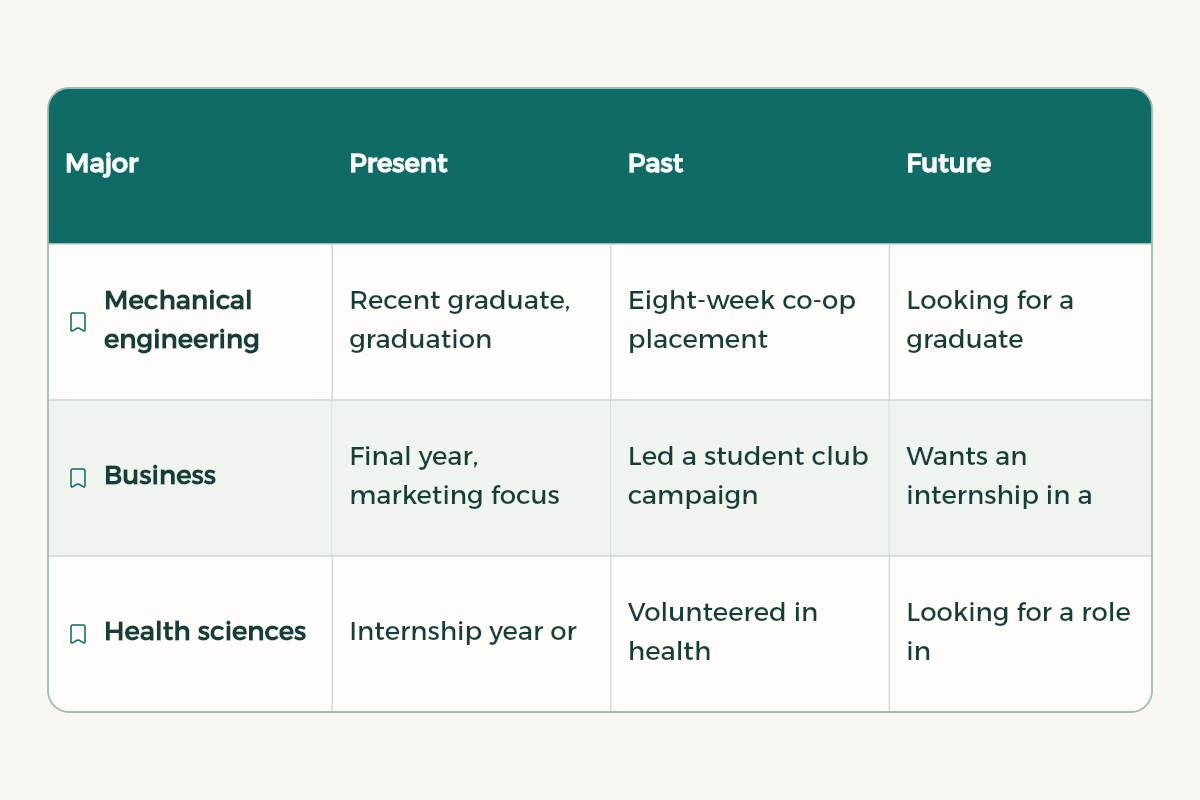
Notice each example names one experience clearly instead of a long list. The other details will come out in later questions.
A full example in English
I'm a final-year business student focusing on digital marketing. Last semester I led marketing for our university entrepreneurship club, and our campaign clearly increased attendance at our events compared with the semester before. It taught me how to write short content and measure its results. That's why I'm looking for an internship in a digital marketing team, and your recent campaigns made me keen to learn with you.
The Arabic version of the page has the same answer in Arabic for interviews held in Arabic. For the rest of your preparation in English, see job interview in English.
Help me write an answer to "Tell me about yourself" for an interview for a [job title] role at a [type of company]. My details: major [major], year [year], one key experience [experience and result], why I want the role [reason]. Write it in clear spoken English in about 150 words, in the order present, past, future. Do not add any experience or number I did not give you, then write an Arabic version with the same meaning.
Common mistakes
- Starting from childhood or secondary school. Start from university.
- Reading your CV line by line. They have the CV; they want the story.
- Sharing personal details unrelated to work, such as marital status.
- A generic answer that fits any job. Name the role or team in your last sentence.
- Memorising word for word and rushing. Memorise the three points and speak naturally.
- Underselling yourself with "I have no experience". Talk about what you did, even if it was a university project.
Adapt the answer to each role
The structure stays the same, but the middle and last sentence change. Before each interview, read the advert and choose the experience closest to what they ask for. For a customer-facing placement, choose an experience dealing with people; for an analysis role, a project with data. If you still need an experience to talk about, co-op and summer training are the best sources, covered in co-op training. The questions that follow are collected with how to answer them in job interview questions.
When the question comes in another form
The interviewer may not say tell me about yourself word for word. They may ask: introduce yourself, walk me through your studies, or what brought you here. All of them want the same answer, so use the same structure. In a group interview with several candidates, keep it slightly shorter, around a minute, and focus on one experience that sets you apart. In scholarship and university interviews the question leans towards your academic goals, so tie the last part to the programme, as in personal statement.