By the tiswa editorial team, from the official sources listed at the end of this guide. How we write our guides
Flexible work in Saudi Arabia is the easiest way for a student to earn and gain experience without putting studies on hold. You work by the hour, at times that suit you, on a documented contract that protects your rights. The Ministry of Human Resources and Social Development (HRSD) lists male and female students among the groups this work pattern is meant for, so it was close to designed for you.
What flexible work is
According to the HRSD page on flexible work, it is a work pattern where pay is calculated by the number of hours worked, with the hour as the smallest unit of pay. It does not require full-time hours, has no probation period, and lets you hold more than one contract with different organisations without conflict. HRSD documents the relationship between you and the employer through the flexible work platform and says the pattern has recorded more than 700,000 documented contracts.
The conditions: do they apply to you?
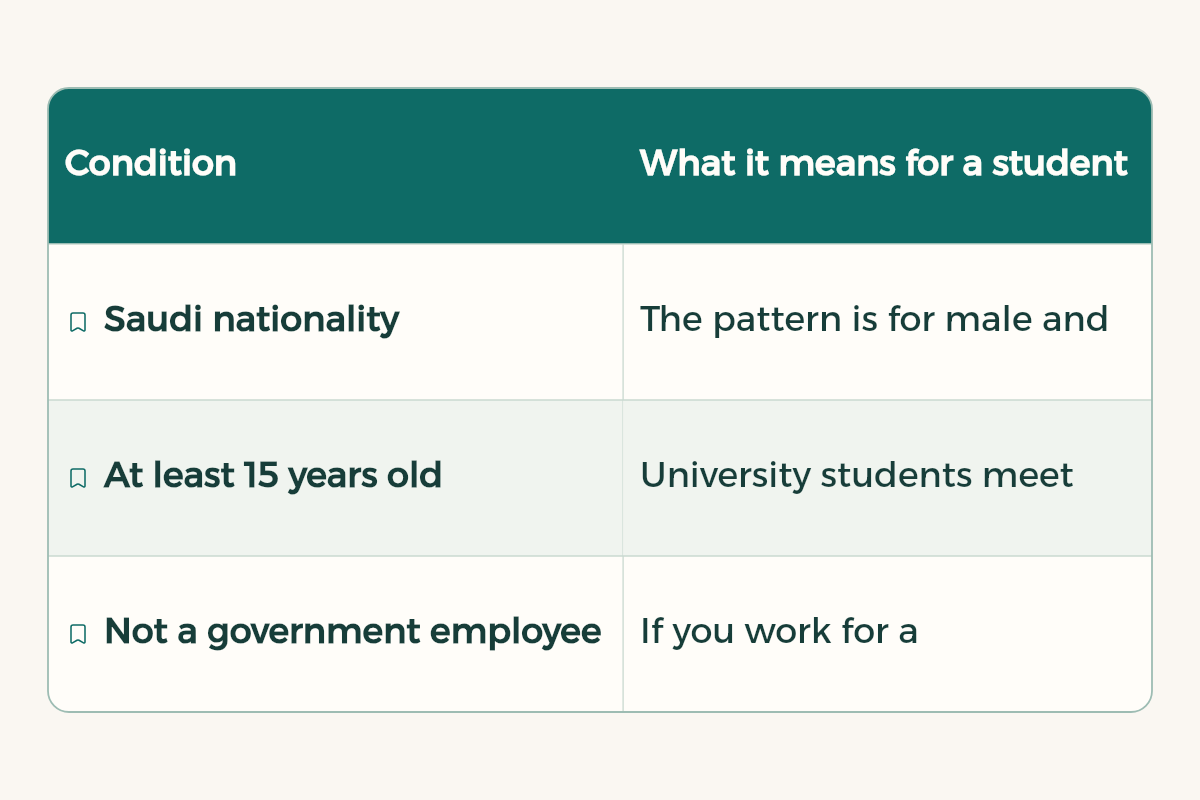
HRSD sets clear conditions for workers in this pattern. Check them before you start:
| Condition | What it means for a student |
|---|---|
| Saudi nationality | The pattern is for male and female citizens |
| At least 15 years old | University students meet this, as do secondary students from that age |
| Not a government employee | If you work for a government body, this pattern is not for you |
| Not the owner of an establishment | If you registered a business in your name, check your status first |
| Not an optional participant in social insurance | If you registered optional GOSI contributions, you are not eligible |
| No full-time contract at the same organisation | You cannot combine a full-time and a flexible contract with one employer |
How many hours can you work?
HRSD raised the maximum flexible hours at a single organisation to 160 a month. Since contracts with different organisations do not conflict, the cap applies per organisation. Remember, though, that your week includes lectures, study and exams, and 160 hours a month is close to a full-time job. As a student you are better off starting with far fewer.
The cap has a reason: an organisation earns a full localisation point in the Nitaqat programme when one worker or a group of workers reaches 160 flexible hours a month there. That explains why many organisations are keen to hire students by the hour, as covered in Saudization and Nitaqat.
Where to find flexible work
- Restaurants, cafes and retail, especially in seasons, holidays and weekends.
- Events, exhibitions, and entertainment and sports seasons.
- Customer service and sales in shopping centres.
- Warehouses, delivery and order packing for online shops.
- Temporary office work at companies during busy periods.
Search the flexible work platform itself, company pages and job groups at your university. If you are after part-time work on a different kind of contract or office roles, see jobs for university students and part-time work under the Labour Law.
Getting started
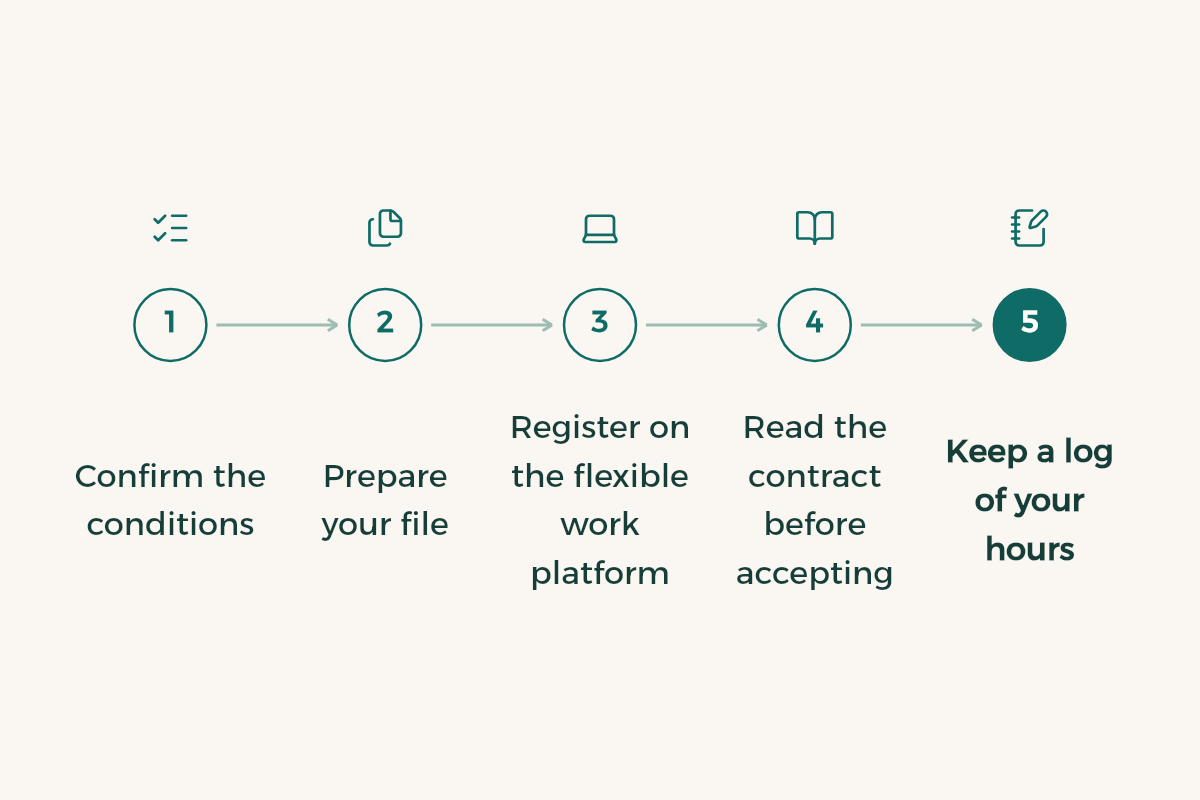
- Confirm the conditions
Check the table above, especially if you have optional GOSI contributions or a business in your name.
- Prepare your file
A one-page CV, contact numbers and a weekly table of your free time. The template is in CV for students with no experience.
- Register on the flexible work platform
Sign in with your unified account, complete your details and search for openings in your city.
- Read the contract before accepting
The documented contract sets the wage, how agreed entitlements are paid and your working hours. Do not start before you have seen it.
- Keep a log of your hours
Note each work day and its hours on your phone and compare them with what you are paid.
How to balance work and study
The biggest student mistake is taking on too many hours in the first month and then falling behind. Set limits from the start:
- Set a weekly hour cap, tell your employer at the outset and cut it in exam weeks.
- Choose work slots after your timetable is out, not before.
- Keep one day a week free of both work and classes.
- Use the tools in time management apps.
- Save a fixed share of every payment, as in student budget and a personal financial plan.
I am a university student in Saudi Arabia. My weekly lectures are: [days and times].
I want to do hourly flexible work for at most [number] hours a week, and I need [number] hours of study a week.
Build me a weekly schedule showing the best slots for work, study and rest, with one full day off.
Then suggest how to adjust it during midterm and final exam weeks.
Your rights and duties when working by the hour
Flexible work is real work, with rights and duties like any job. Keep to these points from day one:
- Only work on a contract documented on the platform, since it is the record of the agreed pay and hours.
- Know when and how you will be paid before you start, and ask for it to be clear in the contract.
- Be on time and tell your manager early if your timetable changes; your reputation there is the key to future contracts.
- Ask for safety instructions in field and warehouse work, and do not take on a risky task you have not been trained for.
- If there is a pay dispute, go back to the documented contract first, then to the official HRSD channels.
If flexible work starts taking more time than you have, ask to reduce your hours rather than quitting suddenly. An early, polite conversation keeps the door open for you to return in the holidays.
What you gain besides money
Flexible work gives you real experience for your CV: customer service, working under pressure, punctuality and teamwork. These are the soft skills employers ask about in every interview. Many students see their flexible job turn into a full-time offer after graduation, because the organisation already knows and has tested them.