By the tiswa editorial team, from the official sources listed at the end of this guide. How we write our guides
Soft skills are how you work with people and with yourself: how you communicate, work in a team, handle pressure and solve a problem you did not expect. Your degree shows you know your field, but soft skills are what make an employer pick you out of ten applicants who know the same field. The good news is that they are learned by practice, and university is the best place to practise.
Why soft skills matter more than before
The World Economic Forum's Future of Jobs Report 2025 expects 39% of the core skills required in jobs to change by 2030. While technology and AI skills are growing fastest, the report puts analytical thinking at the top of the core skills employers want, alongside resilience, flexibility and agility, and leadership and social influence. The smarter the tools get, the more valuable the person who can think, communicate and lead.
In the Kingdom, the Human Capability Development Program under Vision 2030 sets future skills as a clear goal, so that citizens can compete globally. Read jobs of the future in Saudi Arabia to see which sectors are growing.
The most important soft skills for students
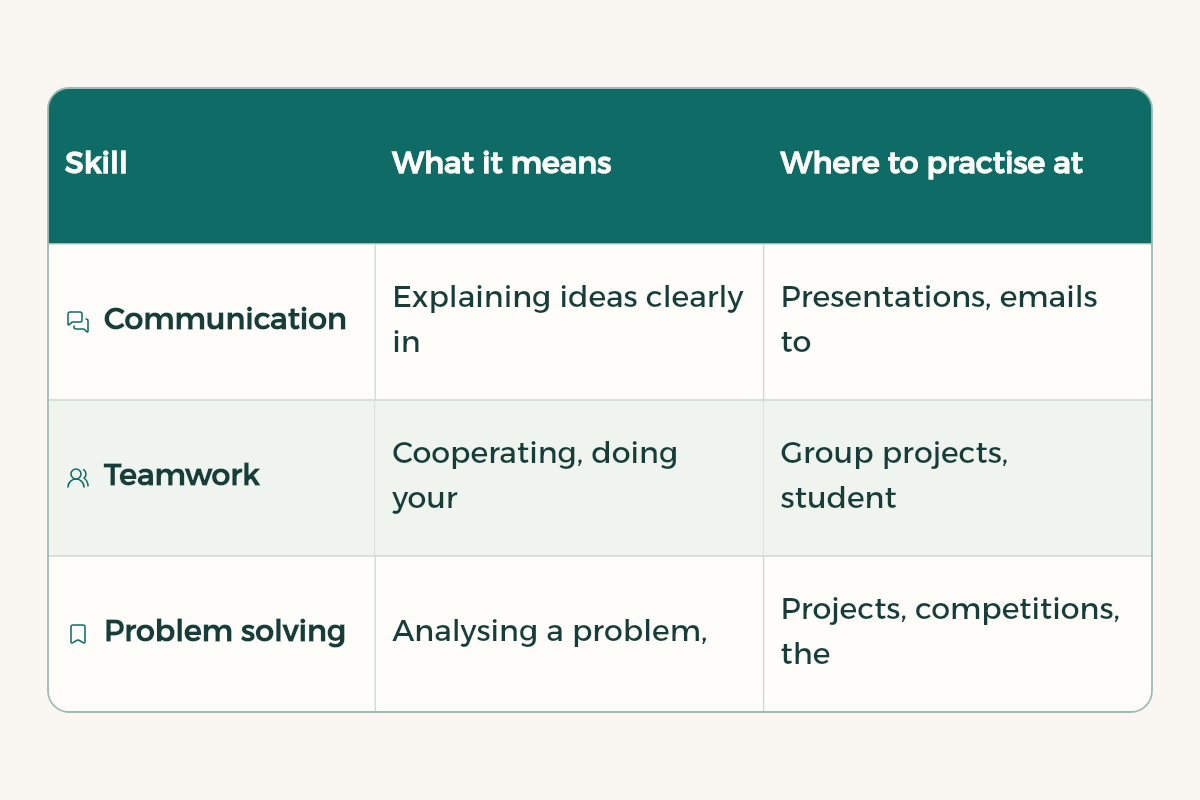
| Skill | What it means | Where to practise at university |
|---|---|---|
| Communication | Explaining ideas clearly in writing and speech, and listening well | Presentations, emails to professors, class discussion |
| Teamwork | Cooperating, doing your share and settling disagreements calmly | Group projects, student clubs |
| Problem solving | Analysing a problem, proposing solutions and choosing the best | Projects, competitions, the graduation project |
| Time management | Setting priorities and delivering on time | Assignments, exams and part-time work together |
| Adaptability | Adjusting to change and learning from mistakes | Schedule changes, an unexpected grade, a project that stalled |
| Leadership | Organising others towards a goal without imposing | Leading a club, project team or event |
| Critical thinking | Asking why and telling opinion from evidence | Reading research, writing reports |
Communication drills
- Volunteer to present part of every group project, even if you are hesitant.
- Before emailing a professor, read it aloud and cut every sentence you do not need.
- In discussion, summarise what a classmate said before replying. It trains listening.
- Read presentation tips and apply one tip each time.
Teamwork drills
- At the first project meeting, suggest a written task split with clear deadlines.
- If a teammate falls behind, calmly ask whether they need help before complaining.
- Join a student club and take on a small responsibility at an event.
Time management drills
- Plan your week every Sunday in ten minutes.
- Try the Pomodoro technique when studying.
- Use one of the time management apps to track deadlines.
Problem solving and adaptability drills
- When something goes wrong, write three lines: what happened, why, and what you will do differently.
- Enter a competition or hackathon even if you do not win. Time pressure is the best training.
- Try a small side project, as in side project ideas for students.
How to prove your soft skills to employers
Writing "excellent communication skills" on a CV convinces no one. An example does. Use the situation, task, action, result method: describe a real situation, what was asked of you, exactly what you did and the outcome. For instance: "I organised a team of five students for a graduation project and split tasks with a weekly schedule, so we delivered a week early." This kind of example works on a CV and in an interview.
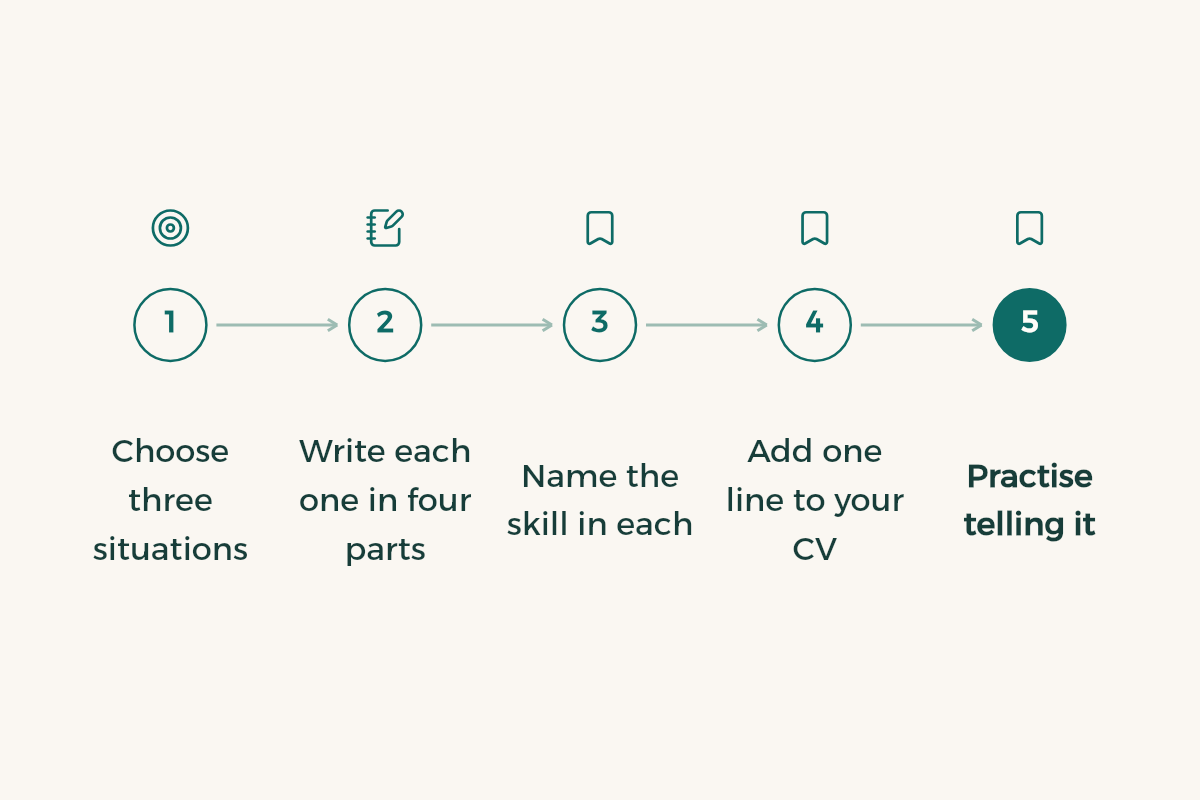
- Choose three situations
From your projects, part-time work or student activities.
- Write each one in four parts
Situation, task, action, result.
- Name the skill in each
Communication, teamwork, problem solving, leadership.
- Add one line to your CV
As in the student CV.
- Practise telling it
In one minute, ready for job interview questions.
I will describe a situation from university or work: [description].
Rewrite it using situation, task, action, result in four short sentences.
Name the soft skill it shows, and write one CV line from it and a one-minute version to say in an interview.
Do not add figures or outcomes I did not mention.
Common mistakes
- Believing soft skills are traits you are born with and cannot learn.
- Avoiding presentations and group activities for fear of mistakes.
- Listing skills on a CV without any example.
- Neglecting them in favour of grades alone. Your GPA matters, but it is not everything.
Part-time work and volunteering: the real skills lab
University gives you exercises; real work gives you a test. When you work hourly in a shop, restaurant or office, you deal with upset customers, a manager who needs something urgently and colleagues from different backgrounds. These situations build communication, adaptability and time management faster than any course. To start, read flexible work in Saudi Arabia. Volunteering at university or community events gives you the same chance with more flexible hours.
Ask others for feedback
It is hard to see your own soft skills from the inside. After each presentation or group project, ask a classmate you trust two questions: what did I do well, and what one change would have made it better? Write down the answers and revisit them before the next project. Over time you will spot patterns, and those patterns are what to work on.
How to talk about your skills in an interview
Saying "I am a people person and I love teamwork" convinces no one, because everyone says it. What convinces is a short, specific story that proves the skill. Use the STAR method explained in the guide to common interview questions: situation, task, what you did, result.
- Situation
A group project in a course where two members fell behind on their parts a week before the deadline.
- Task
I had to make sure the whole project was submitted without it turning into a conflict.
- What I did
I set up a short meeting, split what was left into small tasks with daily deadlines, and offered to help with the hardest part.
- Result
We submitted on time, and the instructor asked us to present the project to the cohort.
Prepare a story like this for each of the key skills: communication, teamwork, problem solving and time management. Keep them in a file you review before every interview, and update it whenever you have a new experience in part-time work, volunteering or student activities.