By the tiswa editorial team, from the official sources listed at the end of this guide. How we write our guides
A student budget in Saudi Arabia does not need complicated software or a big income. It needs one rule: decide where each part of your money goes before it arrives, not after it is gone. This guide uses percentages instead of amounts, so it works whether your income is the university stipend, an allowance from family, part-time wages, or a mix.
Know your real income
Add up everything that lands in your account each month. For regular students at public universities the monthly stipend is often the main source, and the amount depends on your major and university, as on the King Saud University and King Faisal University pages. The expected payment day each month is in student stipend dates. Add any fixed allowance or wages, and leave irregular money like Eid gifts out of the monthly figure.
How much allowance does a university student need?
There is no single number for every student, because a student allowance depends on the city, whether you live with family or in student housing, and how far you travel to campus. So do not compare your amount with a classmate's. Ask instead: does what I receive cover the essentials, and is anything left to save? The method below answers both.
Split your income by percentage
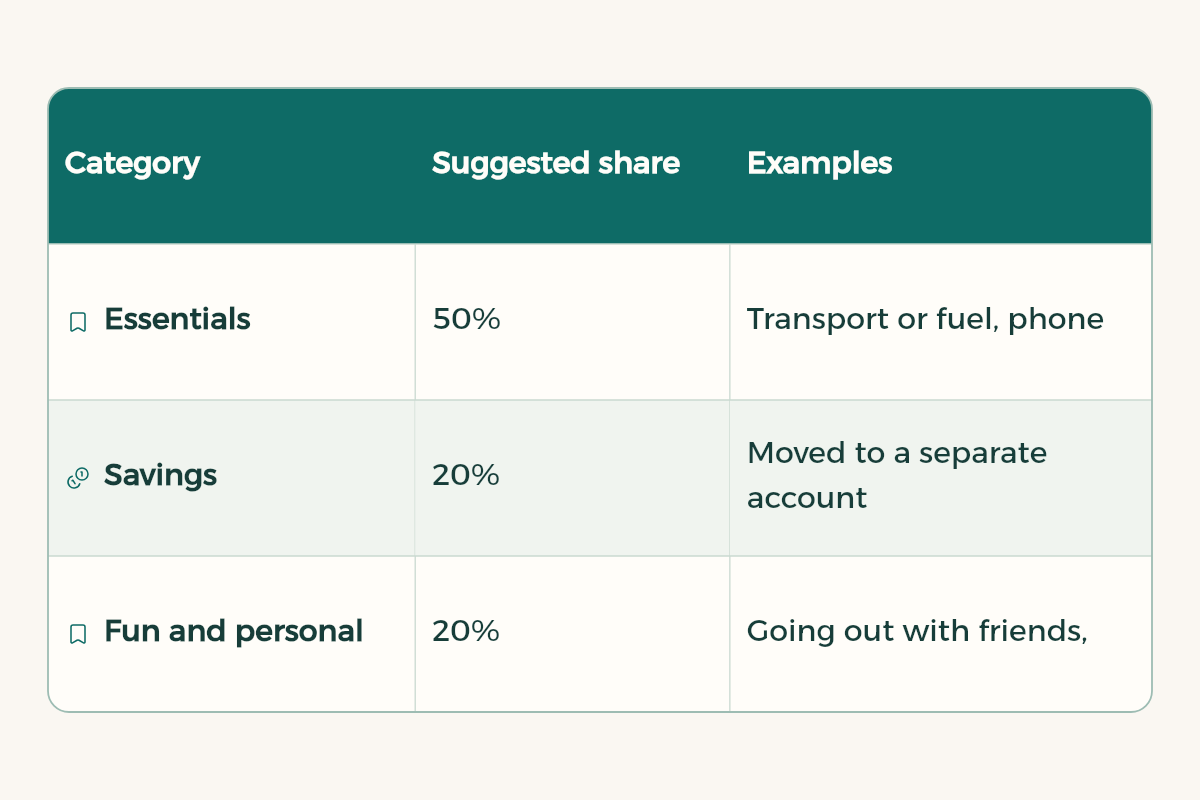
This split suits a student living with family or in university housing. Adjust it to your situation, but keep the total at 100%:
| Category | Suggested share | Examples |
|---|---|---|
| Essentials | 50% | Transport or fuel, phone plan, food on campus |
| Savings | 20% | Moved to a separate account the day your income lands |
| Fun and personal | 20% | Going out with friends, subscriptions, clothes |
| Study | 10% | Printing, books, supplies, a course or certificate |
Build your budget step by step
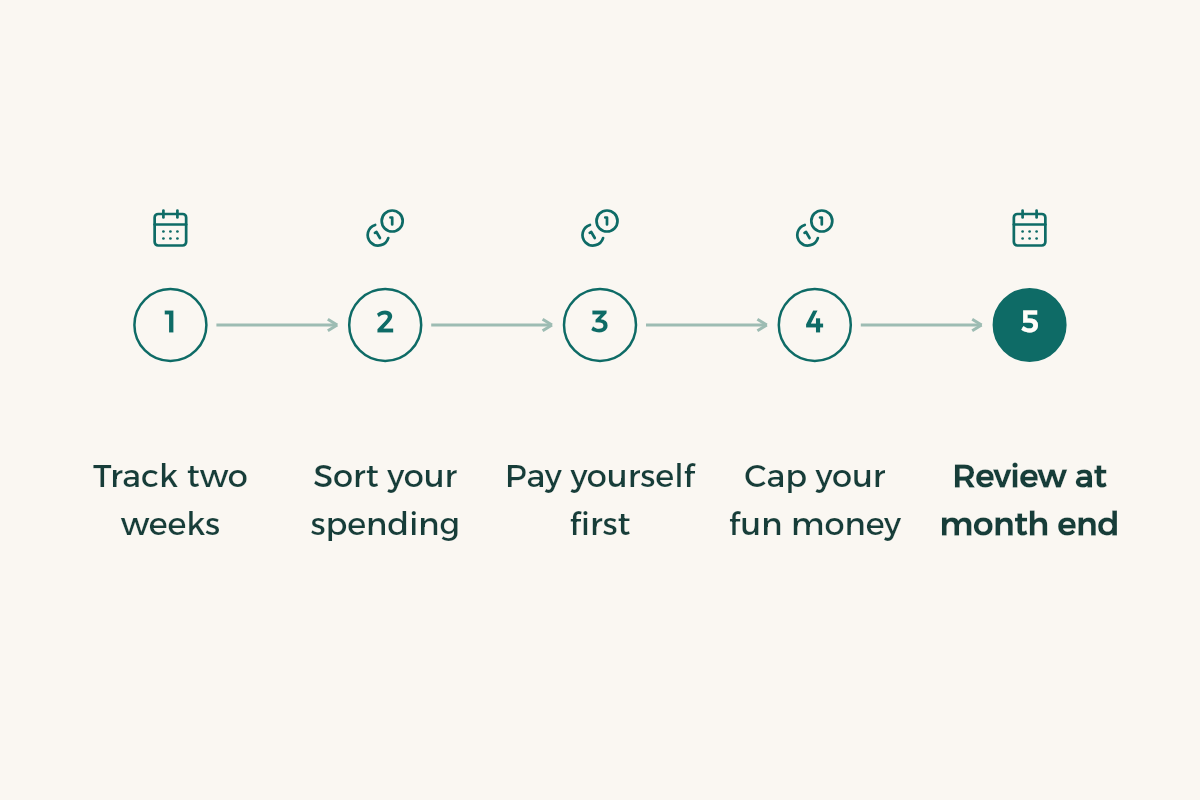
- Track two weeks
Write down everything you spend for two weeks without changing your habits. Most banking apps show spending by category, or use a note on your phone.
- Sort your spending
Put each item into one of the four categories. Food, delivery and subscriptions are usually bigger than you expect.
- Pay yourself first
On stipend day, move your savings share to a separate account before you spend anything. What stays in your main account is the month's budget.
- Cap your fun money
Work out your fun share and divide it by the weeks in the month so you know your weekly limit.
- Review at month end
Five minutes before the next stipend: where did you go over, and what can you cancel or pay less for?
Where money usually leaks
- Forgotten subscriptions you pay for monthly and never open.
- Delivery: fees on small repeat orders add up faster than a full meal.
- A daily coffee on campus.
- Paying full price for things with a student price, like devices, software and subscriptions.
Example: from 5% saved to 15%
A student tracked two weeks of spending and found delivery alone took 18% of her income, she paid full price for three subscriptions, and she saved no more than 5%. Here is what she changed without going without:
| Category | Before | After | What changed |
|---|---|---|---|
| Delivery | 18% | 8% | One bigger weekly order instead of small daily ones |
| Subscriptions | 6% | 3% | Cancelled one she never used and moved the rest to student prices |
| Coffee | 6% | 4% | Campus coffee three days a week instead of five |
| Savings | 5% | 15% | An automatic transfer on stipend day |
Her income did not change and she still went out. She only changed the order: savings first, then everything else.
Cut essentials with student prices
The fastest way to grow your savings share is to pay less for what you already buy, not to go without:
| Category | Where to save |
|---|---|
| Phone | Student or value plans, compared in student mobile plans from stc, Mobily and Zain |
| Transport | Student fares and discounts in student transport discounts and Riyadh Metro student fares |
| Software | Mostly free with a university email, as in free software for students |
| Subscriptions | Spotify, YouTube Premium and Anghami have student prices, with the saving shown in the cards below |







Big expenses: do not let them surprise you
A new laptop, start-of-term kit, or a holiday trip. Divide the expected cost by the months left until you need it and make that a fixed part of your savings share. If a device is the goal, compare student prices first in iPad and laptop student prices, and see the full list in university essentials.
An AI prompt for your budget
I am a university student in Saudi Arabia. My monthly income: [stipend, allowance, job].
Here is my spending for the last two weeks:
[paste it from your banking app or notes]
1) Sort it into essentials, savings, fun and personal, and study.
2) Work out each category as a percentage of my income.
3) Suggest a percentage split that keeps at least 20% for savings, and name three expenses I could cut without missing them.
Do not quote prices I have not given you.
Small rules that protect your budget
- The 24-hour rule: for any non-essential purchase above a limit you set, wait a day before buying.
- Pay with one card so tracking is easy.
- Do not borrow for fun spending, and remember buy-now-pay-later is borrowing too.
- Keep a small emergency fund separate from long-term savings.
The 30-day challenge: track before you split
Most budgets fail because they are built on guesses. Before fixing percentages, track every riyal for a full month without changing your habits, then build the budget on real numbers:
- Log each expense the same day
In Notes or a simple sheet: amount, what you bought and a category. Leave it to the weekend and you will forget half.
- Use five categories only
Food, transport, subscriptions, university supplies and fun. Too many categories make you give up.
- Work out each category's share of income
At month end, divide each category total by your monthly income. You may find eating out takes a far bigger share than you thought.
- Pick one category to cut
Do not change everything at once. Cut one category next month and leave the rest.
Review your subscriptions each term
- List every monthly subscription: music, streaming, storage, apps and your phone plan.
- Ask of each: did I use it this month? If not, cancel or pause it.
- Look for a student version before renewing: many services have a clear student discount. See student music subscriptions and student mobile plans.
If your main income is the university stipend, read the stipend guide to plan around it.