By the tiswa editorial team, from the official sources listed at the end of this guide. How we write our guides
A personal financial plan is not a complicated spreadsheet only accountants understand. It is a clear answer to four questions: how much comes in, where it goes, what you protect and where you want to get to. Whether you are a student on a monthly stipend or a graduate with a first salary, this guide helps you build your first plan in one sitting. It is general education, not personal investment advice.
Step one: know your real income
Write down every monthly income source: the university stipend, salary, part-time or flexible work income, and any allowance from family. Use the amount that actually reaches your account, not the figure before deductions. If your income varies, as with hourly work, take the average of the last three months and use the lower figure to be safe. Stipend details are in the student stipend.
Step two: sort spending into three buckets
Go through your bank statement for the last two months and put each expense into one of three buckets:
| Bucket | Examples | The question to ask |
|---|---|---|
| Needs | Housing, transport, basic food, phone, books | Could I live without it? |
| Wants | Eating out, subscriptions, new clothes, entertainment | Was it worth what I paid? |
| Savings and goals | Emergency fund, a short goal, longer saving | Am I paying myself first? |
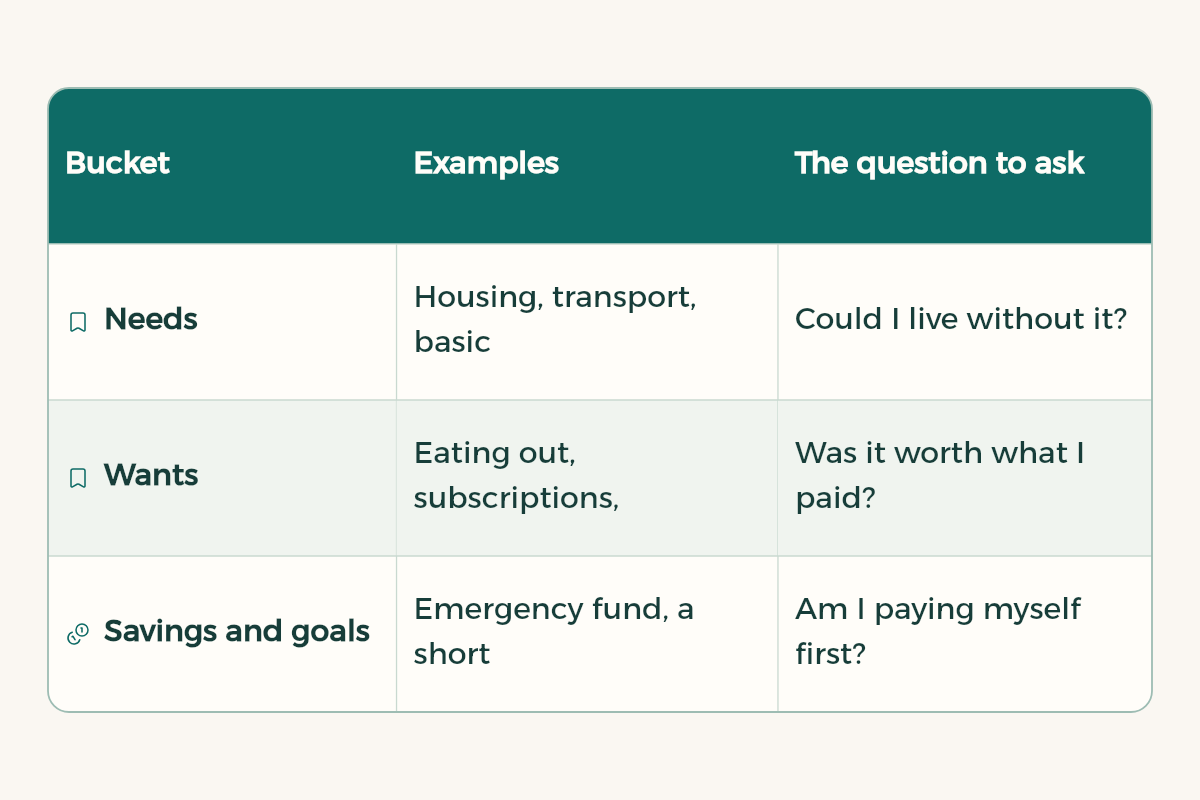
There is no single perfect split for everyone. A student living with family differs from one paying rent. What matters is knowing your current share in each bucket and deciding what to change. For a practical template, read the student budget.
Step three: an emergency fund before anything else
An emergency fund is money kept for the unexpected: a broken phone, an urgent family trip, a month with less income. Start with a reachable target, such as one month of essential costs, then grow it gradually. Keep it in a separate account that is easy to withdraw from, and do not use it for wants. This fund is what stops you borrowing at the first surprise.
Step four: set goals with amounts and dates
A clear goal says how much, by when and why. For example: a new device for study within six months, a professional course before graduating, or money for marriage or housing in a few years. Divide the amount by the number of months and you know what to set aside each month. If the goal is a device, compare prices and student discounts first, as in iPad and laptop student prices.
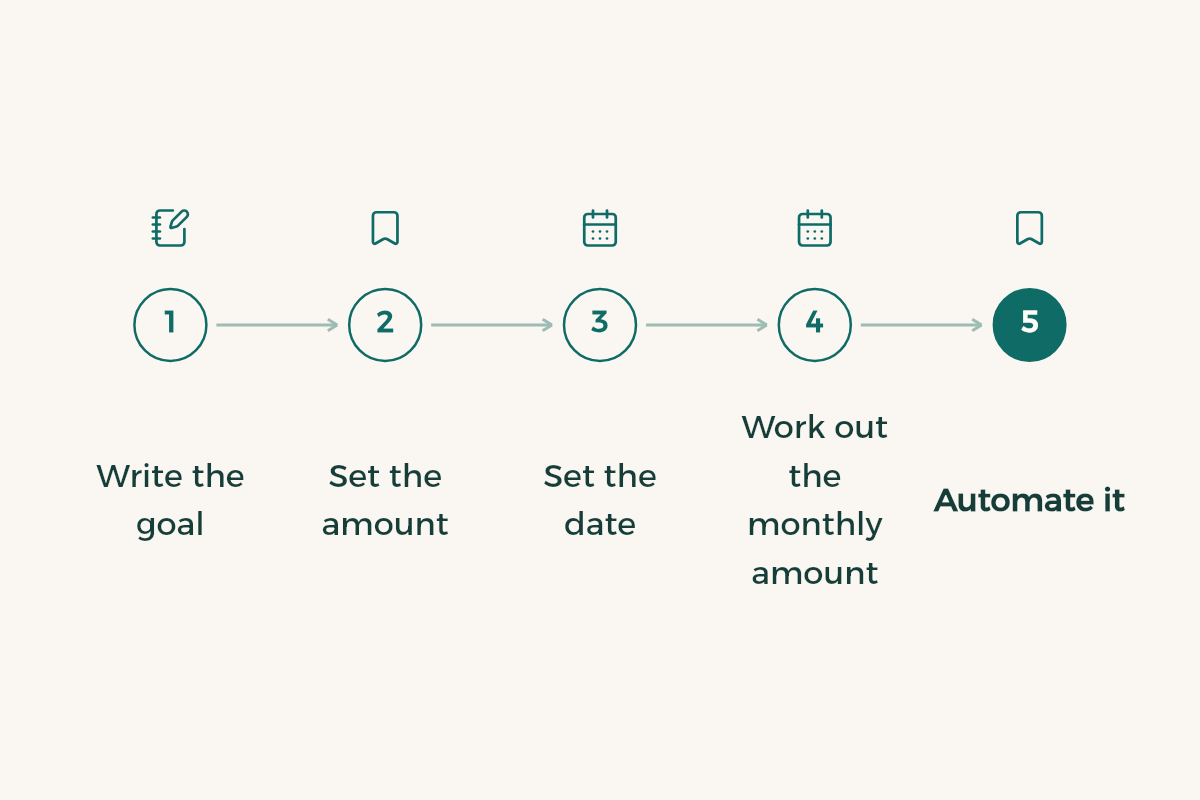
- Write the goal
One sentence: what you want and why.
- Set the amount
A realistic estimate based on official prices.
- Set the date
A month and year.
- Work out the monthly amount
The total divided by the number of months.
- Automate it
Make the transfer to savings happen on the day income arrives.
Step five: review the plan every month
Set aside fifteen minutes at the end of each month. Compare what you spent with what you planned, and see where spending rose and why. Do not blame yourself for a bad month; adjust the plan so it is realistic. Over time the review itself cuts unplanned spending, because you know where your money goes.
Help me build a simple personal financial plan.
My monthly net income: [amount], from: [stipend / salary / part-time work].
My essential costs: [list with amounts].
My wants: [list with amounts].
My goals: [goal + amount + date].
Suggest a realistic monthly split, a starting emergency fund size, and three habits to start this month. Do not suggest specific investment products.
Debt and cards: be careful from the start
The easiest way to wreck a financial plan is debt whose cost you do not know. Before any credit card, financing or instalment purchase, know the full cost and every payment date. Read credit card basics to see how cards work, and the SIMAH credit report to see why your credit record matters now.
After the emergency fund: where savings go
Once the emergency fund is in place, you can save for longer goals. Options include bank savings accounts and government savings products such as Sah sukuk. Each has its own terms and term length, and the decision is yours after reading the official terms. If you need personal advice for your situation, ask a firm licensed by the Saudi Central Bank or the Capital Market Authority.
Do not forget zakat
If your savings reach the nisab and a lunar year passes, zakat is part of your plan. Read zakat on savings for the basics, and ask scholars about your own case.
Small habits that make a difference
- Pay yourself first: move savings on the day income arrives.
- Wait a full day before any unplanned purchase.
- Cancel subscriptions you did not use last month.
- Use student discounts on every purchase you can.
- Never share bank details or verification codes. Read financial fraud in Saudi Arabia.
A worked example: a student with a stipend and hourly work
Imagine a student who lives with family, receives a monthly stipend and works some hours in the holidays through flexible work. He writes down his net income, then sees from his statement that eating out is his biggest want. He does not stop it; he gives it a monthly limit and uses student discounts at the places he likes. He moves a fixed amount to the emergency fund on stipend day. Three months later he has a small fund and knows exactly where his money goes. Notice that the plan leaves room for enjoyment: a plan that bans everything collapses within weeks.
Common mistakes in a first financial plan
A first plan is rarely perfect, and that is normal. But some mistakes come up again and again and make many students drop their plans after a month or two. Knowing them in advance saves you starting over:
- A plan so strict it leaves nothing for fun, so it collapses at the first outing with friends.
- Overestimating income, for example counting part-time hours you have not yet confirmed.
- Forgetting yearly or termly costs such as books, subscriptions and activity fees, then being caught out.
- Saving whatever is left at the end of the month instead of moving a fixed share at the start.
- Stopping tracking when you go over budget, when that is exactly the moment to track.
The fix is usually the same: a realistic plan you adjust every month, not a perfect one you abandon. If you overspend on one line, do not scrap the plan; move money from another line and note why. Use the student budget template, look for suitable part-time jobs if you need extra income, and remember that every discount you get eases the pressure on your plan.