By the tiswa editorial team, from the official sources listed at the end of this guide. How we write our guides
An internship notice arrives from an engineering firm and you open your old CV to add to it. It holds your GPA, a list of course names and one line about “working in a team”. Imagine you are the engineer reading fifty applications after lunch. What do you learn about this student? Close to nothing. That gap is the difference between a file that gets set aside and one that gets a call.
What does an organisation look for in an engineering internship application?
It looks for signs that you can do useful work inside a team that does not know you. ABET’s accreditation criteria describe outcomes graduates are expected to reach, including applying engineering design, communicating effectively and working in a team.2 A hiring engineer may never read those criteria, but they point at the kind of evidence any engineer values: a problem you defined, a solution you chose, a way you measured it, and how you explained it to someone else.
There are also plain practical signals. Do you write clearly? Did you read about what the organisation does? Can you start on the dates requested? Many applications fall at those questions before anyone reaches the GPA. If you are applying to firms in Riyadh, Jeddah or the Eastern Province, say in the first paragraph which city you can work in and from when.
How do you choose two projects that work as evidence?
You do not need ten. Choose two that prove different things. The first is a course or lab project where you worked with your hands: a measurement, a model, a program, a design. The second is a team project or activity in which your own part was visible among others. If your graduation project is still running, describe it only as far as you have actually got, and never write results that have not appeared. Our guides to the electrical engineering graduation project and the mechanical engineering graduation project show how to describe engineering work in plain terms.
| Question to put to the project | Example answer (illustrative only) | Why it matters |
|---|---|---|
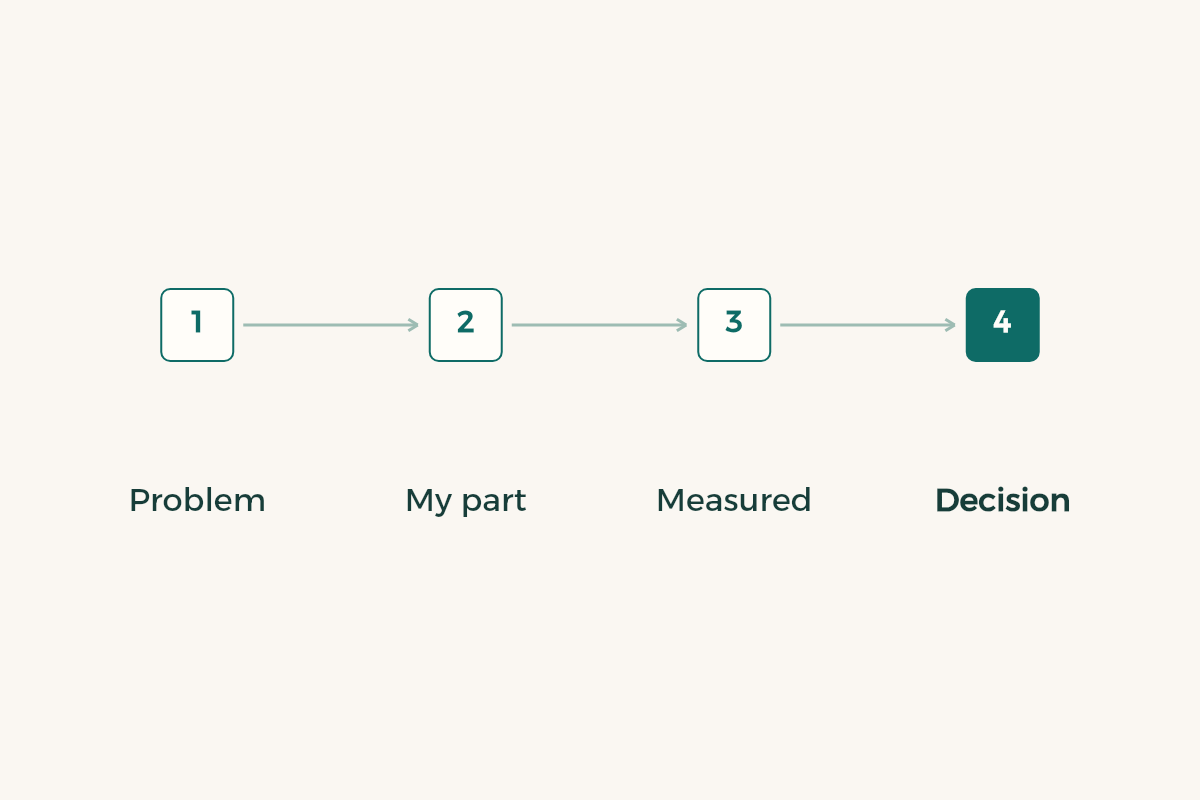
| What was the problem? | A small building overheats at midday and the cooling bill is high | Shows you start from a need, not a tool |
| What was your role? | Logged temperatures and built the comparison table | Separates your work from the team’s |
| What did you measure? | Readings at three times a day for two weeks | Shows the claim rests on data |
| What did you decide, and what came of it? | Proposed roof insulation because that difference was largest | Shows you make a call and can defend it |
The example in the table is illustrative. Replace it with your real project and your real numbers. Nothing exposes a copied application faster than a figure its owner cannot explain in the interview.
How do you write the project into your CV?
Give each project two or three lines, each starting with a verb and each holding something checkable. Purdue’s writing lab advises tailoring a CV to the target employer and ordering sections so the strongest material is seen first.1 So if your practical experience is thin, put Projects above coursework.
- Title it in the organisation’s language
“Load-profile model for a residential building” reads better than “Control course project”. The reader does not know your course codes.
- Name your part with a precise verb
Designed, measured, analysed, tested, wrote. Avoid “participated” and “contributed” unless you say what you did.
- Add one real number
The count of readings, an error percentage, the number of cases tested. If there is no number, describe the scale accurately.
- Put the tool after the result
The software or instrument goes at the end of the line, not the start.
- Read the line aloud
If you cannot explain it in thirty seconds, shorten it or drop it.
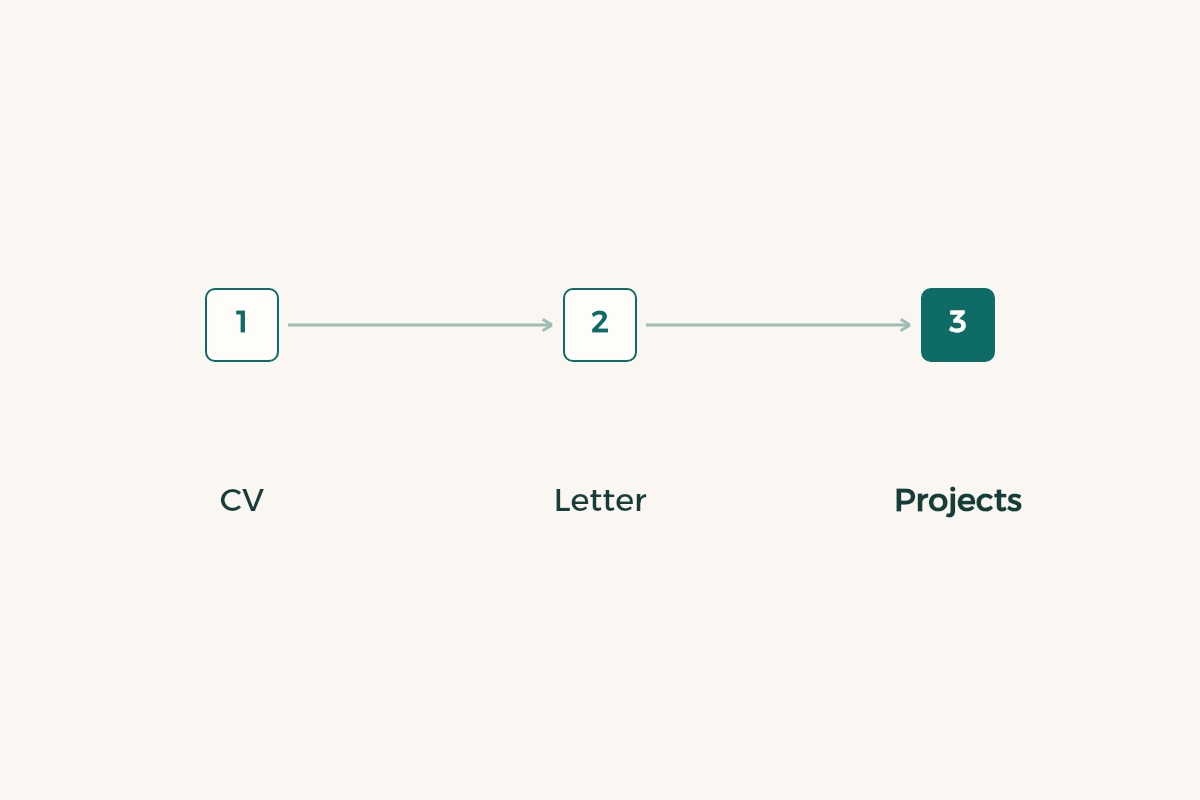
For the page itself, see our guide to the student CV, and for a quick way to test that the file can be read, the Canva resume guide.
How do you write a cover letter for an engineering firm?
Three short paragraphs are enough. The first says which internship you are applying for and for which period. The second takes one of your two projects and links it to what the organisation does: if the firm works on electrical maintenance, write about the project that touched measurement or protection. The third says what you can contribute in the first weeks and what you want to learn. Do not paste the organisation’s own description back at it; whoever wrote it will notice.
Read the organisation’s page and the internship notice closely before you write. The Saudi Council of Engineers is the professional body for engineering in the Kingdom, and its site is a good place to see how the profession itself is organised and presented.3 Your own university’s rules, such as hours, accepted employers and registration papers, come only from your college or its co-op office, so we give no figure here. For the weeks before you apply, see our guide to co-op training.
Which mistakes sink an engineering internship application?
The first is sending the same file to ten organisations. The second is an attachment named “final CV 3” that tells the recipient nothing. The third is an application made entirely of course content, and the fourth is naming a project whose details you do not understand. A fifth small one costs a lot: an informal email address, or a university address you never open. Every one of these can be fixed in a single evening.
When you have sent it, do not leave it unattended. Following up a co-op application covers how to ask after a few days without being a nuisance, and explaining your project in an interview prepares you for the call.