By the tiswa editorial team, from the official sources listed at the end of this guide. How we write our guides
Nine at night, a midterm the day after tomorrow. Your roommate has come back from the gym with two friends and decided the room is a good place to laugh. That exact scene may not happen to you, but anyone in a shared dorm has a version of it. The question that keeps coming back is how to study when the room does not belong to one person.
What is the right way to study at university in a shared room?
Three supports: a fixed time, a clear place and an open agreement. The UNC Learning Center advises you to find the noise environment that suits you; some people focus with a little background noise, others need silence, and a silent library may distract someone used to a low buzz.1 So try two or three places rather than assuming the room is the answer.
For the session itself, aim for about forty-five minutes and then a break. The same centre notes that hours of unbroken self-testing wear down attention, while a short focused session protects it.1 If you want smaller blocks, try the Pomodoro technique on the session where you expect interruptions; an interruption in the middle of a short block costs you less.
How do I agree study times with my roommate?
- Pick a calm moment
Do not raise it the day before an exam or after an argument. The first week is best, over coffee or after dinner.
- Ask before you ask for anything
“When do you like to study?” opens the conversation and shows your roommate has needs too. You may find you prefer different hours anyway.
- Write three things only
Quiet hours, when guests can come, and what happens in exam weeks. One sheet on the wall beats a spoken deal that one of you forgets.
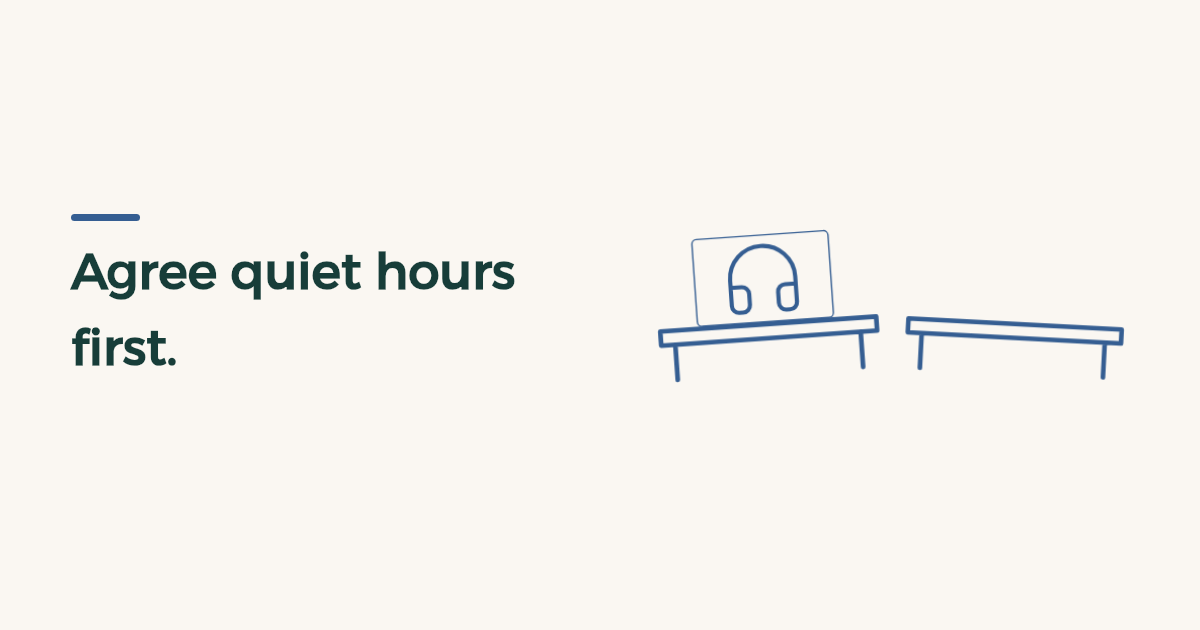
- Agree a simple signal
Headphones on or a note on the door means: no talking now. A signal spares you a sentence that might sound rude.
- Revisit it in exam weeks
Exam weeks change what people need. Agree longer quiet hours for those weeks in particular.

If the agreement does not work, go to your university’s housing office, which sets the procedures available such as changing rooms; do not rely on what other students say about it. For the housing side itself and first-weeks advice, see the university housing guide.
How do I cut interruptions while studying in my room?
| Interruption | What helps | What does not |
|---|---|---|
| Roommate talking or hosting | An earlier agreement and a clear signal | Waiting for them to notice |
| Phone notifications | A focus mode and the phone out of arm’s reach | Relying on willpower alone |
| Corridor noise | Noise-cancelling headphones or quiet music without lyrics | Turning the volume up to cover it |
| The pull of the bed | Studying at a desk, sitting upright | Studying lying down |

On an iPhone, see Focus mode for studying to silence notifications during a session. Music has limits that the guide on studying with music lays out.
Where do I study if my room is not working?
Keep a backup place before you need it: the university library, a study hall in your college, or a quiet café nearby in daytime hours. The common mistake is starting to look for one on the night before the exam. Better to try it once in a quiet week, so you know when it fills up and how far it is from the dorm.
Remember that a library can be more silent than you need. UNC suggests trying the lower floors, where there is a little background buzz, if total silence distracts you.1 If you study with others, read group study to see when it helps and how to run it.
How do I protect sleep and study in a shared room?
Sleep is the first thing to suffer in a shared dorm, and cutting it for one more late session loses you more than it gains. The Learning Scientists place spacing and retrieval practice at the top of the strategies with the most evidence, and both rely on spreading sessions over days, not one night, which also protects sleep.3 Put the hard session before dinner and leave light review for after.
An example, labelled as one: a session before your first lecture, a forty-minute session between lectures in your college library, an evening session in the library or the room after dinner, then a break and less screen before bed. It is not a rule, but it shows the room is not needed for every session. For more on sleep, read sleep and studying.
An example week before a midterm, with illustrative numbers: Sunday, a forty-minute session in the college library between lectures; Monday, an after-dinner session in the room with headphones; Tuesday, ninety minutes in the university library in two blocks; Wednesday, a light twenty-minute review; Thursday, a practice test on yourself. Adjust it to your lectures. What matters is that sessions spread across at least two places, so one ruined night in the room does not sink the week.
Which mistakes ruin studying in a dorm?
The first is waiting for quiet to arrive: in a shared dorm it may not. The second is accepting an interruption in the middle of a short session because saying no feels awkward, and the session turns into an hour of chat. The third is making the room the place for study, fun, sleep and meals all together, so your brain stops linking the place with focus.
The ladder stays the same: do not get angry first. Start with a calm word, then the signal, then the written agreement, then the housing office. That order protects the friendship and your study time.