By the tiswa editorial team, from the official sources listed at the end of this guide. How we write our guides
Seven in the evening. The dishwasher is running, one flatmate is on a video call, another is grilling something in the kitchen, and you have an organic chemistry handout and three days left. This is an invented example to show the method, though it resembles student flats in Riyadh, Abha and Khobar. The usual answer is “I will revise at night”, and it is usually the worst one, because it spends the sleep you cannot get back.
How do you find out when your flat is actually quiet?
Do not trust your impression. Take a sheet, divide the day into four-hour slots, and mark each one quiet, medium or loud. Do it for three days, then count. You will usually find two windows: two or three hours early in the morning, and an hour after dinner. That map is the raw material for the whole timetable.
Watch what the ear misses too: when a flatmate gets back from work, laundry days, the nights friends come over. They repeat weekly, so once you log them they stop surprising you.
| Type of hour | Right task | Example |
|---|---|---|
| Quiet | Recall from memory and problem solving | 10 problems from chapter three, no book |
| Medium | Reviewing errors and rewriting answers | Redo 5 wrong answers from an old quiz |
| Loud | Light tasks that need little focus | Sorting flashcards, copying formulas, filling a summary grid |
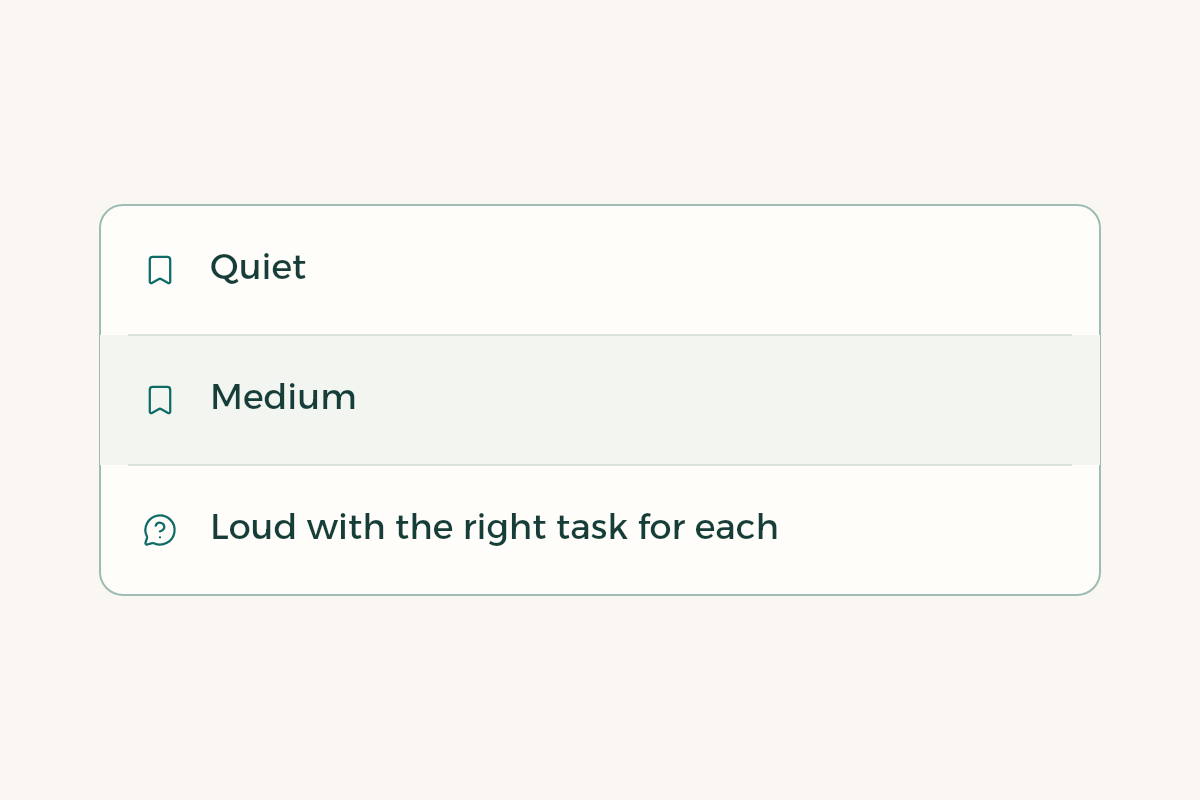
The table shows the idea with sample tasks. Choose yours from your own exam subjects.
Study tips for last-minute revision: what do you do first when the flat is full?
Order the topics before the hours. List everything the exam covers and score each topic from 1 to 3: 1 for “I don’t know it”, 2 for “I know part of it”, 3 for “I could explain it”. Start with the 1s. We naturally begin with what we know because it feels comfortable, and that is where time gets lost.1 Put the 1s in your quiet hours, since they need your clearest head.
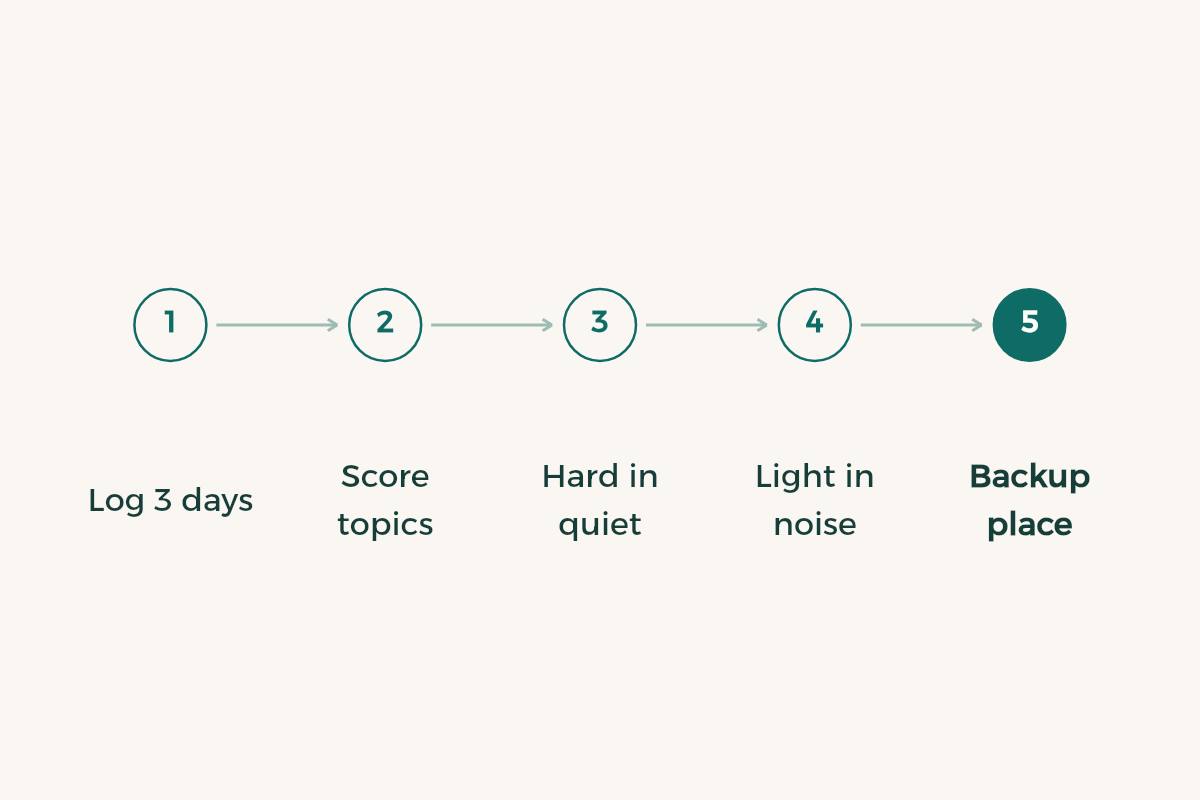
- Log three days
Mark each four-hour slot quiet, medium or loud, and do not change your habits while you log.
- Score topics from 1 to 3
Use the course outline, lectures and earlier quizzes.1
- Pair the hardest with the quietest
Each score-1 topic gets a quiet hour and ends with recall from memory.
- Put light tasks in the noise
Flashcards, copying and error review can survive interruptions.
- Choose a backup place
A library, a study hall, a prayer room or a calm café, and go there on heavy days without debating it.
Where should you revise: a café, the library or the flat?
The answer depends on the task, not your habit. The library or a study hall suits hard problems, because the room forces silence. A café suits light revision; its steady hum is less irritating than a conversation that starts and stops every ten minutes, though coffee and the trip both cost something. The flat suits work where you write and correct by hand with your things around you.
One error we see often is going to a café and coming back with half of what you planned because the session had no target. Write what you will produce (ten problems, a one-page summary) before you leave, and do not leave without it. If you live in university housing, read studying in a university dorm first for the session system; this guide adds the exam-week layer.
Which study apps help revision when the flat is noisy?
Apps help only after the plan exists. A timer that blocks your phone for 25 minutes protects a quiet hour better than any playlist. Noise-reducing headphones help if you already own a pair; if you do not, foam earplugs cost less and you can test them before the heavy week. Our overview of study apps lists what is worth installing. Paper mind maps work well here too, because they need no screen and no sound.
What do you ask your housemates for?
Ask for something small and exact: two quiet hours, say nine to eleven in the morning, for exam weeks only. Put it in the group chat and add what you offer in return, such as cleaning the kitchen on Thursday or keeping quiet during their hours. “I need silence” changes nothing. An exact request gets done or refused clearly.
If your housing has a written quiet-hours rule, ask the housing office or your landlord for it rather than assuming. We do not quote any one building’s rules, because they differ from place to place.
How do you protect your sleep when the noise never stops?
Sleep is part of revision. The NHS advises regular sleep and wake times and keeping phones and screens away for an hour before bed.3 If the noise is at night, test earplugs before the heavy week so you are used to them. The UNC Learning Center notes that good breaks restore focus and that scrolling on your phone is not one of them.2 Ten minutes of walking does more than half an hour on a screen.
Do not schedule a full revision session right before sleep during exam week. End the last block an hour early and write on a card what you will start with in the morning. That card settles your head more than an extra hour would. For the final hours before a paper, the night before an exam covers what to do and what to skip.