By the tiswa editorial team, from the official sources listed at the end of this guide. How we write our guides
Sleep and studying is a link most students ignore. When time runs short, sleep is the first thing to go: an hour here, two hours there, a whole night before the exam. The logic seems sound, since every hour asleep is an hour not studying. But official health bodies and university learning centres say something different: sleep is not a break from studying, it is part of it.
This guide gathers what official sources say, from the US National Heart, Lung, and Blood Institute (NHLBI), the CDC, the NHS and Cornell University's Learning Strategies Center, and turns it into habits and a schedule you can use this week. It is general information, not medical advice.
What sleep does for your memory
The NHLBI explains that sleep helps your brain work properly and supports learning and the forming of long-term memories. The same page links lack of sleep to trouble focusing, making decisions and controlling emotions.
In student terms: what you studied today needs sleep to stick. Without enough sleep, you also struggle to focus in the next lecture and the next study session. Staying up costs you twice: once in locking in what you studied, and again in the quality of what you study tomorrow.
How many hours do students need?
| Age | Recommended sleep | Source |
|---|---|---|
| 13 to 17 | 8 to 10 hours | CDC |
| 18 to 60 | 7 or more hours | CDC |
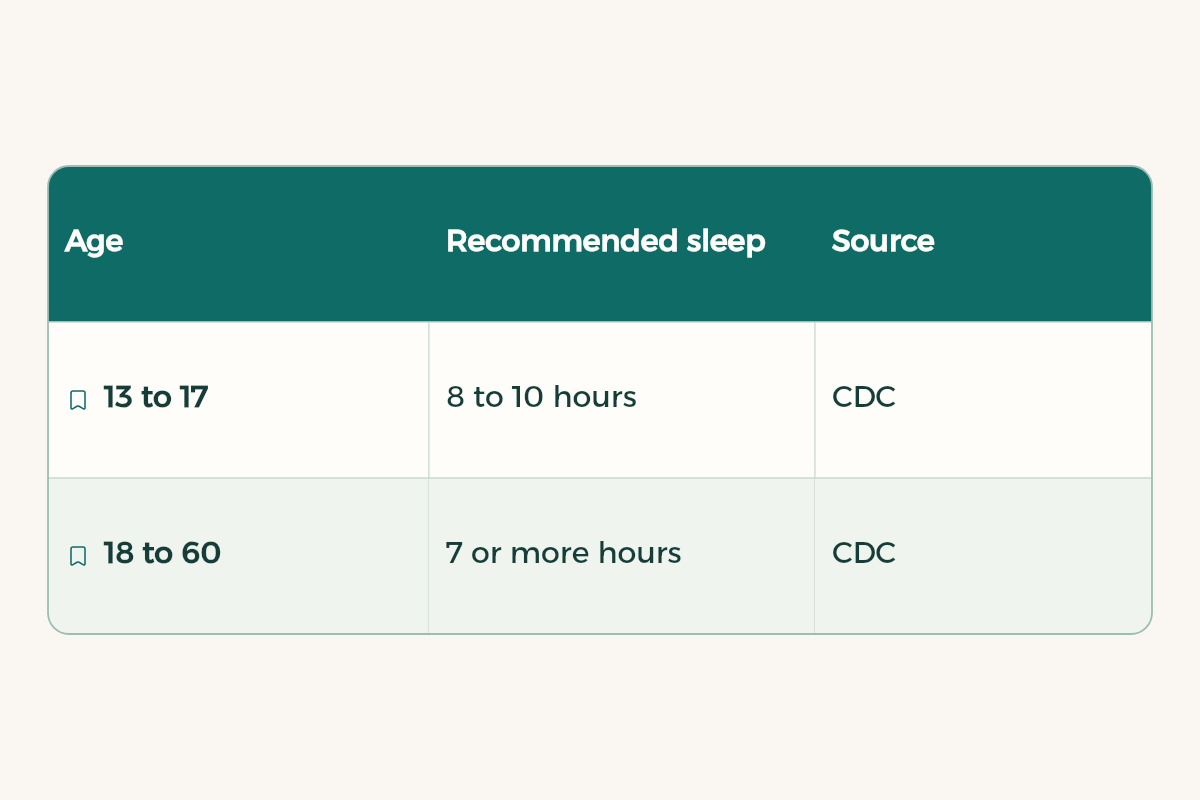
Most university students fall in the second group: 7 or more hours a night. Count back from your wake-up time. If your lecture is at 8 and you wake at 6:30, bedtime is before 11:30, with extra time because sleep does not come instantly.
All-nighters: what universities say
Cornell's Learning Strategies Center lists sleep among effective study strategies and says plainly that all-nighters do not help. It recommends spreading study over spaced sessions instead of cramming in one night. Cramming and staying up usually go together: put study off and you have to stay up; stay up and you walk into the exam tired.
So the answer is not "how to stay up without getting tired", but a plan that makes staying up unnecessary. Use our study plan template to spread the material across days, and read night before exam tips for the last night.
Sleep habits from the CDC and NHS
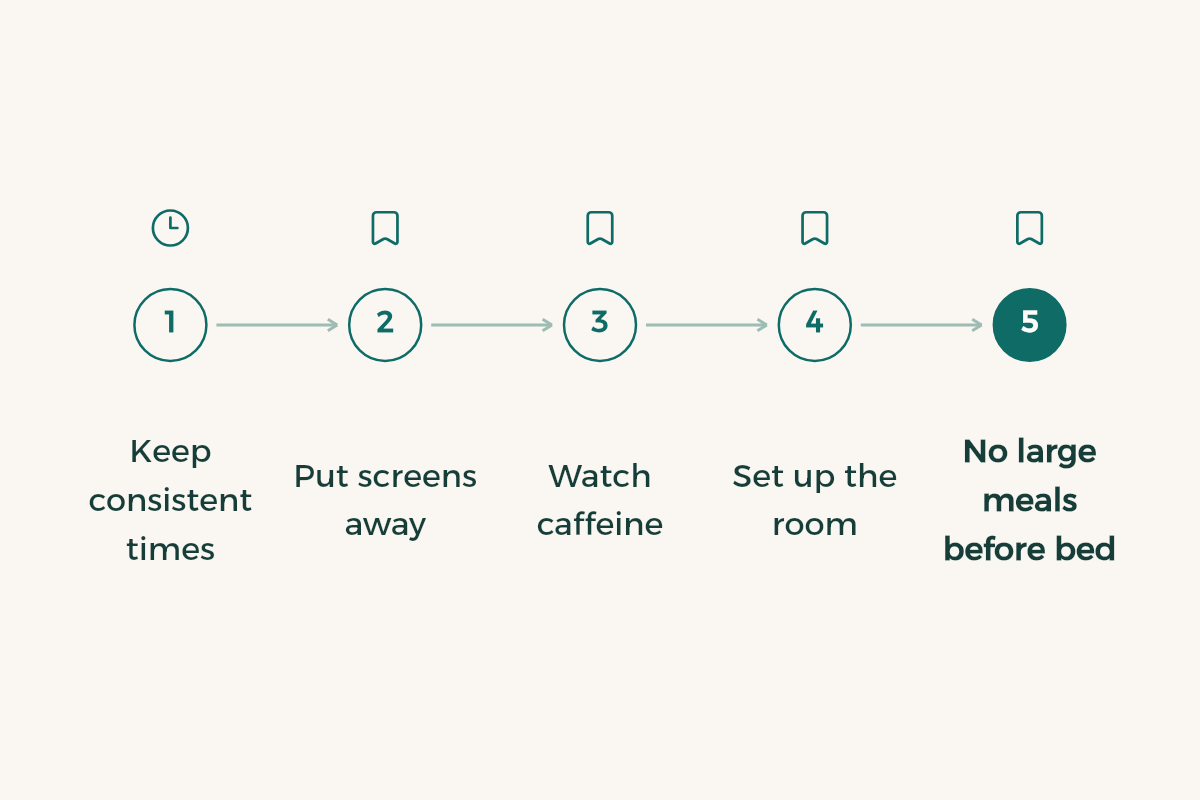
- Keep consistent times
The CDC and NHS advise going to bed and waking at similar times every day, weekends included.
- Put screens away
The CDC recommends turning devices off at least 30 minutes before bed; the NHS suggests an hour.
- Watch caffeine
The CDC advises avoiding caffeine in the afternoon and evening. That includes coffee, tea and energy drinks.
- Set up the room
Quiet, dark and fairly cool, as the CDC and NHS recommend.
- No large meals before bed
The CDC advises avoiding large meals right before bedtime.
- Empty your head
The NHS suggests writing down worries and tomorrow's to-do list before bed.
A daily plan that fits study and sleep
| Time | Activity |
|---|---|
| Morning and midday | Lectures and sessions that need the most focus |
| Afternoon | Last coffee or tea, then a study or review session |
| Early evening | Your heaviest study block, for example with Pomodoro |
| After dinner | Light review and self-testing, no new topics |
| 1 hour before bed | Close books and screens, pack for tomorrow |
| Bedtime | Fixed, giving you 7 or more hours before you wake |
This is an example, not a rule. What matters is a fixed bedtime and heavy study ending well before it.
Do naps help?
The Saudi Ministry of Health page on sleep patterns in Ramadan includes a short 15 to 20 minute nap in its advice. A short nap can refresh you between lectures and an evening study session. But if a long late-afternoon nap keeps you up at night, it breaks your schedule instead of helping it.
Sleep, Ramadan and exams
Ramadan shifts every schedule, sleep included. The Saudi Ministry of Health advises at least 4 hours of continuous sleep after iftar, then a few more hours, with consistent times and no stimulants for 4 hours before bed. If your exams fall in Ramadan, read studying in Ramadan to plan study around iftar and suhoor.
Common mistakes
- Catching up at the weekend: sleeping until noon on Friday makes Saturday night harder; the CDC and NHS advise similar times every day.
- Studying in bed: it ties your bed to thinking and stress instead of sleep. Study at a desk.
- Energy drinks to make up for lost sleep: they delay the next night's sleep and restart the cycle.
- Your phone in bed: "one minute" of scrolling becomes an hour. Keep it away from the bed.
A prompt to plan your week around sleep
I am a university student. My fixed wake-up time: [time].
I need at least 7 hours of sleep.
My lectures this week:
[paste timetable]
My upcoming exams:
[course and date]

Make me a weekly study plan with:
- a fixed bedtime every night that gives me 7+ hours
- no studying in the last hour before bed
- short sessions spread across days instead of one long session before the exam
- the hardest courses at the times I have most energy
When to see a professional
If sleep problems last for weeks despite these habits, or you feel very sleepy in the day in a way that affects your studies, do not handle it alone. See a doctor or your university's health clinic. In Saudi Arabia, the Ministry of Health offers health consultations on 937.
For more on smart studying, read how to wake up early and active recall and spaced repetition, and browse our study guides.