By the tiswa editorial team, from the official sources listed at the end of this guide. How we write our guides
Knowing how to wake up early becomes urgent at the start of every semester, especially after a long break in which your body got used to late nights. An 8 a.m. lecture feels impossible when you fall asleep at 3, and an alarm alone will not fix that. The real secret is not the moment you wake up but the hours before it: when you go to bed, what you do before sleep, and whether your times stay steady or shift every day.
This guide gives you a gradual two-week plan to move from late nights to early mornings, based on advice published by official health bodies such as the US Centers for Disease Control and Prevention (CDC) and the NHS. There are no strange hacks, only simple habits repeated.
How much sleep does a university student need?
According to the CDC sleep page, adults aged 18 to 60 need 7 or more hours of sleep a night, and teenagers aged 13 to 17 need 8 to 10 hours. So if you want to wake up at 6:30, sleep needs to start before about 11:30, plus some extra time, because sleep does not arrive the moment your head hits the pillow.
The US National Heart, Lung, and Blood Institute (NHLBI) explains that sleep helps with learning and the formation of long-term memories, and that not getting enough sleep can lead to problems focusing and thinking clearly. Waking up early on too little sleep will not help your studying much. The goal is to move your whole sleep earlier, not to cut it short.
A two-week plan to wake up early
Jumping from a 3 a.m. bedtime to 11 p.m. overnight usually fails, because you lie awake for hours. It works better to shift gradually:
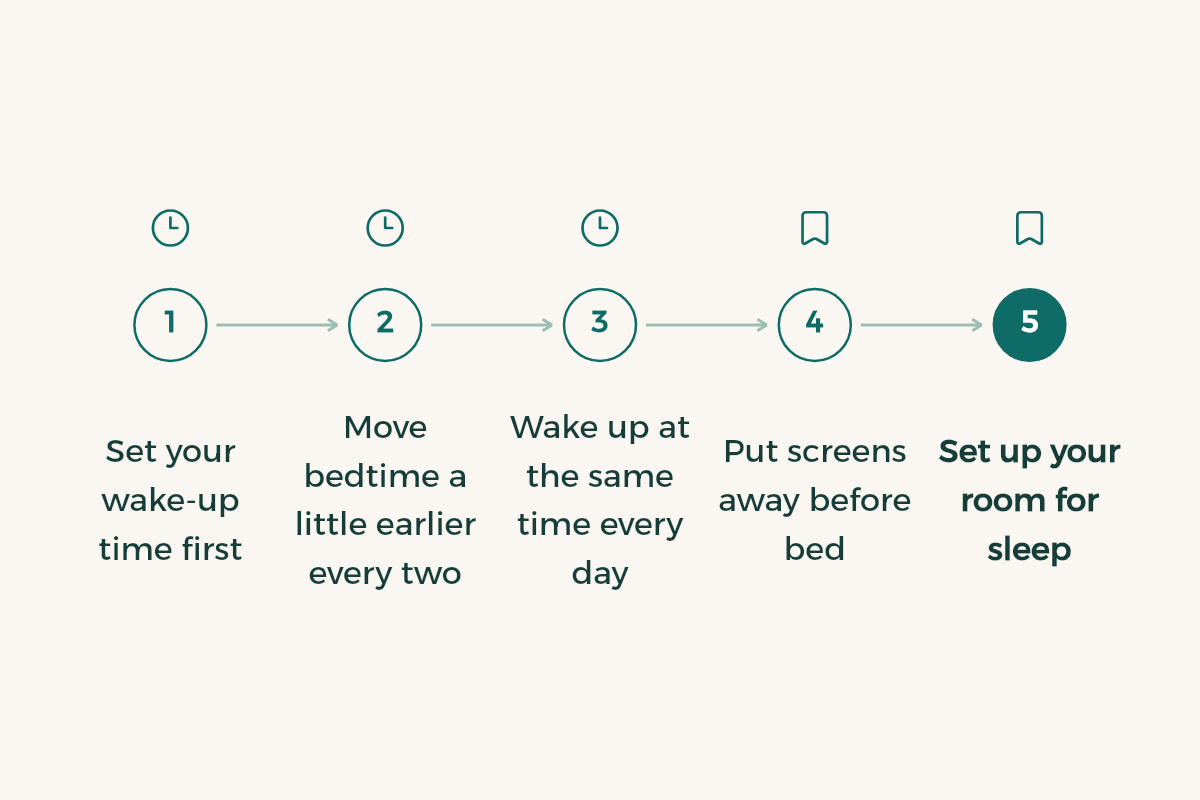
- Set your wake-up time first
Look at your timetable and pick one fixed wake-up time that suits your earliest lecture. Count back at least 7 hours of sleep plus time to get ready.
- Move bedtime a little earlier every two days
If you sleep at 3, sleep at 2:30 for two days, then 2, and so on until you reach your target in about two weeks.
- Wake up at the same time every day
Both the CDC and the NHS advise going to bed and getting up at similar times every day, including days off. This is the most important step in the plan.
- Put screens away before bed
The CDC suggests stopping electronic devices at least 30 minutes before bed, and the NHS suggests a full hour. Start with half an hour and build up.
- Set up your room for sleep
Dark, quiet and cool, as both bodies recommend. Thick curtains or an eye mask help a lot.
- Do not force sleep
If you are still awake after about 20 minutes, the NHS suggests getting up, doing something relaxing in dim light, and going back to bed when you feel sleepy.
A night routine before an 8 a.m. lecture
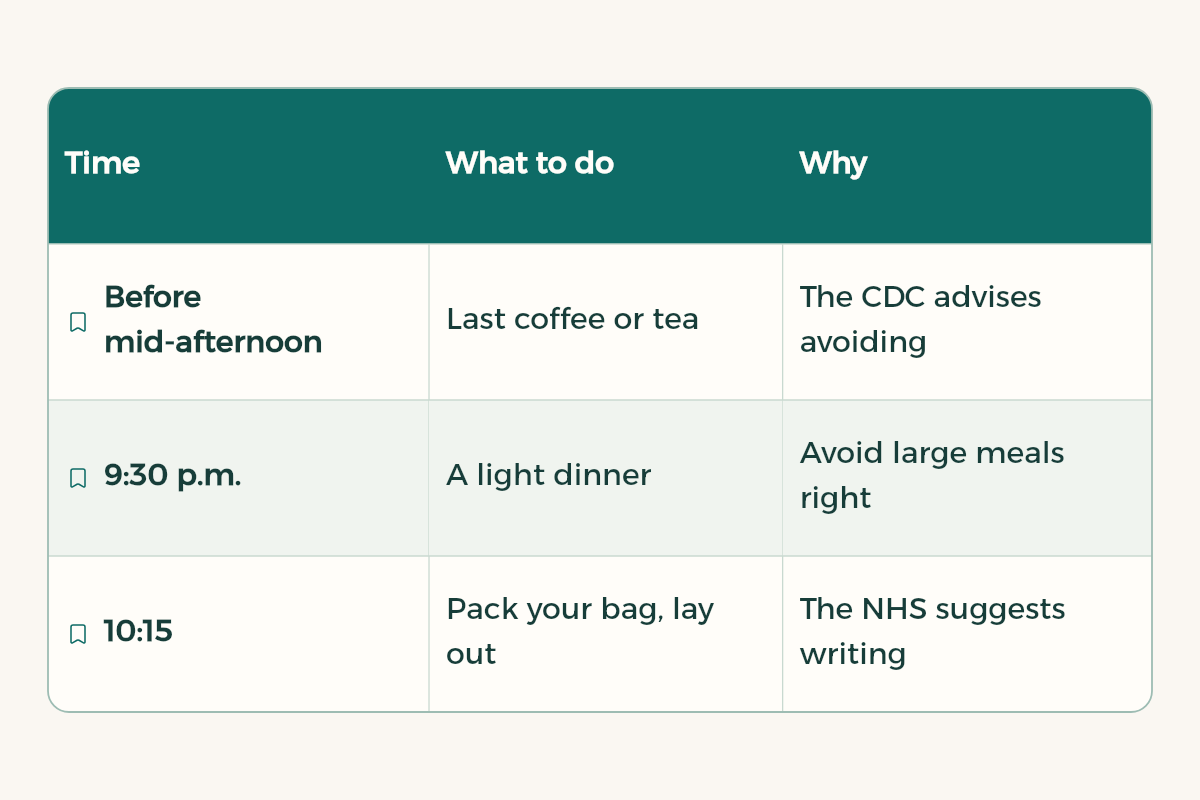
Here is an example for a student who wants to wake up at 6:30. Adjust the times to your timetable:
| Time | What to do | Why |
|---|---|---|
| Before mid-afternoon | Last coffee or tea | The CDC advises avoiding caffeine in the afternoon and evening |
| 9:30 p.m. | A light dinner | Avoid large meals right before bed |
| 10:15 | Pack your bag, lay out clothes, write tomorrow's to-do list | The NHS suggests writing down what is on your mind before sleep |
| 10:30 | Phone on the charger, away from the bed | Screens off before sleep |
| 10:30 to 11 | Read a paper book or do a breathing exercise | A calm activity helps you relax |
| 11:00 | Sleep | Seven and a half hours before the alarm |
| 6:30 a.m. | Wake up | The same time every day |
Alarm tricks that actually work
- Put your phone or alarm across the room so you have to get up to switch it off. That stops you turning it off half asleep.
- Use fewer alarms. Ten alarms five minutes apart break up your last half hour of sleep instead of waking you.
- Make the first minute easy: drink a glass of water left next to the alarm, or open the curtains.
- Prepare everything the night before so you do not have to make decisions before you are fully awake.
- Use a sleep Focus on your phone so notifications do not reach you after bedtime.
If you use an iPhone, our guide to iPhone Focus mode for studying explains how to silence notifications at set times.
Mistakes that leave you tired
- Late caffeine: coffee after sunset or an energy drink at night delays sleep even when you feel tired.
- Long naps to catch up: three hours of sleep in the late afternoon keeps you awake until dawn. If you need a nap, keep it short.
- Your phone in bed: "one last video" becomes an hour. Distance works better than willpower.
- A heavy meal before bed: the CDC advises skipping large meals right before bedtime.
- Shifting your times at the weekend: consistency matters more than the hours of any single night.
Use your mornings to study
Once early mornings stick, you will find quiet time before lectures. One morning hour without notifications can do more than three tired hours at night. Use it to review yesterday's lecture or test yourself with short questions. To structure it with a timer, try the Pomodoro technique.
Remember that sleep is part of studying, not time taken from it. Read our guide to sleep and studying to see why, and browse more study guides.
When to see a professional
If you follow these habits for weeks and still cannot sleep, or you sleep enough hours and still wake up exhausted every day, it is worth seeing a doctor. Some sleep problems need a medical assessment, and general tips do not replace one.