By the tiswa editorial team, from the official sources listed at the end of this guide. How we write our guides
A fourth-year physics student wrote on their CV: “Studied quantum mechanics and electromagnetism.” The hiring manager read the line and could not tell whether the student could open a data file, run a script or write a two-page report. The major is not the problem, since physics trains thinking better than almost anything. The problem is that a course title does not say what your hands did. A co-op reader wants small, honest evidence, and you already have it in your notebooks.
Which co-op skills should a physics student prove?
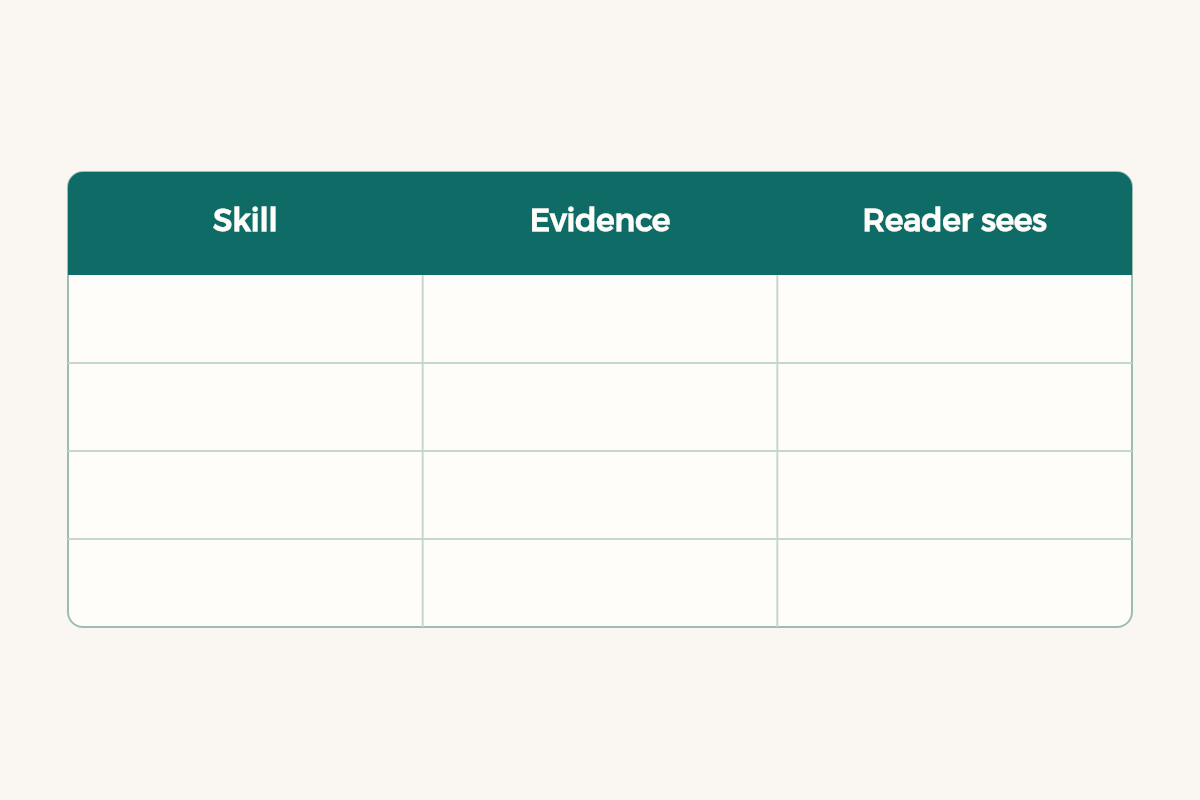
The US employer association NACE lists critical thinking, problem solving, technology and communication among its career readiness competencies.1 The American Institute of Physics publishes career data showing that many physics graduates work outside academic labs and use analysis, programming and technical skills in those jobs.2 We turn that into four skills you can prove from your own courses:
| Skill | University evidence | What the reader sees |
|---|---|---|
| Measurement and error estimates | A general physics lab report | You know a number without an error is incomplete |
| Data analysis | A CSV from an experiment you analysed in Python or Excel | You clean, plot and interpret |
| Modelling and simulation | A projectile or dynamics simulation from a computing course | You turn an equation into a working model |
| Writing results | A report or poster you presented in class | You explain a hard idea clearly |
These are examples of the method, not a list of what every employer wants. An energy company may care about measurement and a data firm about analysis, so read the placement description itself and lead with what fits.
How do you turn a lab report into evidence for a co-op application?
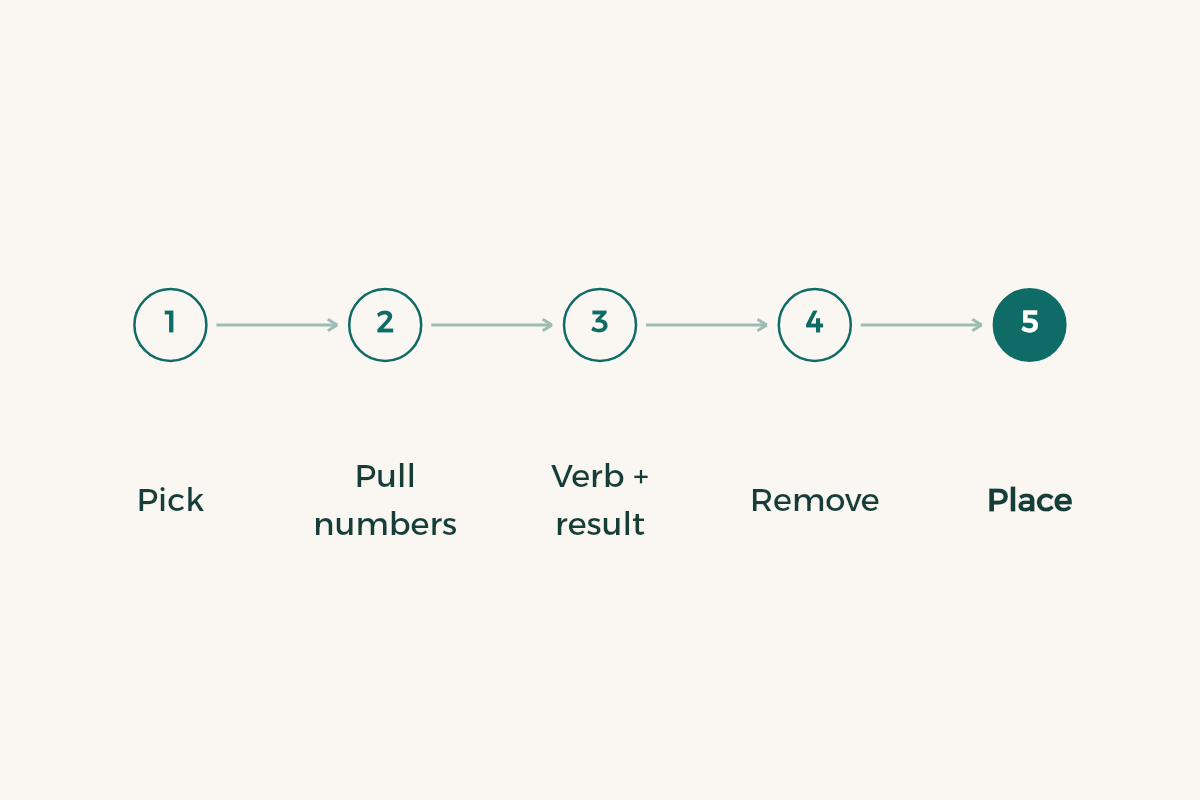
- Choose one report
The one where you handled the error analysis yourself and produced a clear graph, not the longest or the hardest.
- Pull out three numbers
How many measurements, which tool you analysed them with, and the result with its margin of error. Numbers make a sentence believable.
- Start with a verb and end with a result
“Measured gravitational acceleration from fifty readings, analysed them in Python and landed close to the accepted value with a small error margin.”
- Remove what is not yours
If you worked in a group, state your own part only. Do not claim your partner’s measurements.
- Make it one CV line and one paragraph in the letter
The line is for scanning, the paragraph is for the reader who wants to see how you think.
Purdue’s writing lab teaches that CV entries lead with action verbs and are ordered by relevance to the job.3 That holds for physics as much as any major. For the CV itself, read how to write a student CV.
What if your courses had no coding project?
Build a small one in two weeks. Take data from an experiment you ran, or open data on weather or radiation, plot it, fit a simple curve and write one page about what you found. No complicated library is needed. Writing up the result and its meaning matters more than the volume of code. If you are working on a final-year project, scoping a physics capstone shows how to narrow the question.
Code nobody can open does not count. Put it in one folder behind a public link, and write a line at the top saying what it is for and how to run it.
How does physics co-op evidence differ from chemistry or engineering?
In chemistry, evidence centres on safety and lab procedure, which we covered in chemistry co-op evidence. In engineering, hosts rely on named tools and designs. In physics the strongest evidence is method: how you set a hypothesis, measure, analyse and decide whether a result holds. That suits hosts working with data, energy, measurement and instruments, and not necessarily every placement description. Read the tasks before you write.
How do you apply for an internship in Saudi Arabia as a physics student?
These questions are useful, and the answers sit with your college and the host, not with us. Is co-op required in my programme? How long does it last? Does the college assign the host or do I find one? What tasks will I be given? Is there a supervisor who evaluates my work? Write the answers in one file and bring it to the interview. For the basics of how co-op works, read the co-op training guide.
The route differs by college. Some colleges coordinate with set hosts and assign students, others leave the search to you. Ask the training office first, then open the hiring or training pages of organisations working in measurement, energy and data, and log what each asks for in a simple table: timing, attachments and task type. When three hosts ask for the same skill, make it the first line of your CV.
Students also ask whether co-op is paid. That answer sits with your college and the host, since some pay a stipend and some do not, and we will not hand you a figure. Ask directly in your first message and write the reply in your file.
When you apply, follow the host’s own route and attach only what it allows. For wording a short message, see the co-op application email. After sending, do not leave the application alone, because a polite follow-up helps. Steps are in following up on a co-op application.
A common slip in physics applications is listing every course and naming no tool. Another is attaching a graph with unlabelled axes or missing units, which strips the evidence of value for anyone who knows measurement. A third is lifting a paragraph from a group report word for word. Reword it, check the figure before attaching it, and make sure every number on your CV is one you could explain if asked. Someone who says “how did you estimate the error?” wants two honest sentences, not a lecture.