By the tiswa editorial team, from the official sources listed at the end of this guide. How we write our guides
Two students at the University of Hail with almost the same GPA wanted the same department. One was accepted and one was refused. The second had done nothing wrong and met the stated minimum. But applications outnumbered seats, and students with higher GPAs went first. That is the whole lesson: the requirement gets you into the race and the seats decide who finishes.
What governs internal transfer at the University of Hail?
The unified undergraduate study and examinations regulation allows transfer between colleges inside a university and leaves the conditions to the university council.1 So what applies to a student at Hail is what the Hail council and its admissions and registration deanship announce, and you can find the official sources on the university’s website.2 Do not carry another university’s rule over to Hail. Read the current notice for your period.
How do you estimate your chances when applications are crowded?
The numbers in the scenarios below are examples to train your thinking, not Hail’s GPAs or seats. Suppose a department announces ten seats and receives thirty requests that all meet the minimum:
| Your situation | What it means | What to do |
|---|---|---|
| GPA below the minimum | You cannot apply | Raise it for a semester, then reconsider |
| GPA just above the minimum | You enter at the bottom of the contest | Ask for the last accepted GPA and prepare a fallback |
| GPA equal to or above the last accepted GPA | A good chance, not a sure one | Apply early and follow the announcement |
| The last accepted GPA is not published | No estimate is possible | Ask the department and consider two options |
The third row promises nothing, because this period’s cohort may be stronger. Use last period’s figure to estimate, not to promise yourself.
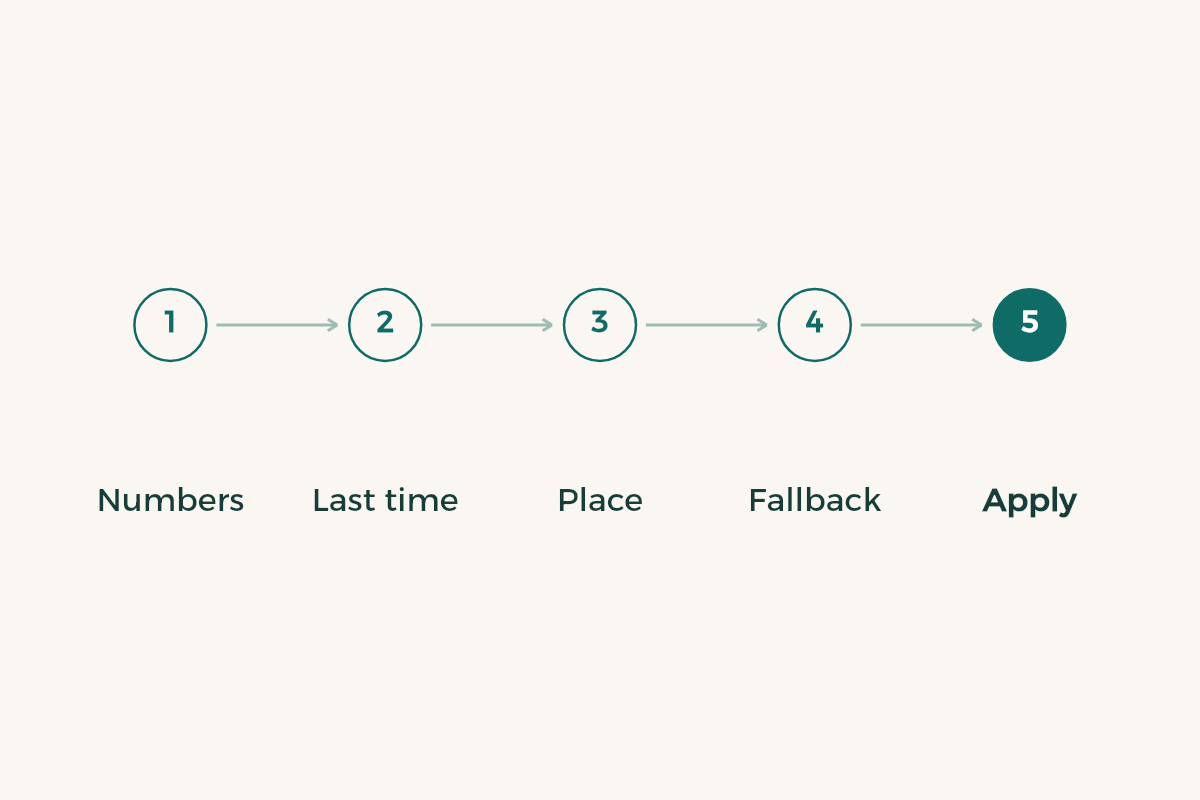
- Gather the numbers
Write down your GPA, the stated minimum and the department’s seats, if published.
- Ask about last time
Ask the department or deanship for the last accepted GPA and how many were accepted, or say you want to estimate your odds.
- Place yourself
Are you at the bottom of the contest, in the middle or near the top?
- Prepare a fallback
A second major on your list, or a plan to raise your GPA and try next period.
- Apply on time
Do not wait for your chances to improve; the deadline will not.

Can you transfer internally only once?
That is one of the university’s rules, found in the notice and the executive rules. In an example from Jouf University’s regulation, which is not a Hail rule, transfers between colleges or departments are limited to one unless an exception is granted.1 The practical lesson: if a limit like that exists, each accepted move counts against you. Do not transfer to a department because it has open seats. Transfer because you compared its plan with yours and were convinced.
How do you work out your cumulative GPA after an internal transfer?
In the Jouf example, matched courses count in the cumulative GPA.1 Ask the University of Hail about your case, and about how many hours will be counted and how many you will repeat. To understand how plans and credit work, see the guide to the credit hours system, and to work out your GPA first see GPA calculation.
What if your GPA is below the requirement?
Raise it. There is no shorter road. Every course you retake and improve brings you closer. Put your effort into the courses with the most credit hours, because they move the GPA most. The guide to raising your GPA shows how to order your priorities.
And ask a harder question: is transferring the answer at all? Some students aim at a new department because its seats look easier, then find the core courses harder. Compare the two plans course by course and talk to a student who went before you. If the picture is still blurry, go back to choosing a major.
If your request is refused, ask for the specific reason, then decide: retry in a later period with a higher GPA, or stay in your major and strengthen your position there? Both are legitimate. What matters is not deciding under the pressure of the first week after the refusal.
In the last week before the window closes, review your numbers once more, check that your file is complete, and submit. Do not switch your preferred department at the last minute on the strength of a rumour about seats or GPA. Change only for a reason you read in the notice or heard from the department itself.
If you have two options, rank them by what you truly want, not by what looks easier. The easy option you do not want uses up your transfer and leaves you studying a plan you did not choose, and two semesters later you are hunting for another transfer that may not be open.