By the tiswa editorial team, from the official sources listed at the end of this guide. How we write our guides
Nursing terms in Arabic and English come up from your first placement. Supervisors and doctors may speak English on the ward, while charts and reports are written in Arabic or English depending on the hospital. This guide lists 65 terms in five tables, arranged by what you do on shift: assessing the patient, giving medication, controlling infection, working at the bedside, and supporting patient rights and teaching.
A table does not replace your course book or the hospital policy. Use it to recognise words quickly during a shift. When a term names a specific procedure, follow your hospital procedure, and treat the table as a guide to the name and its meaning only.
Assessment and vital signs
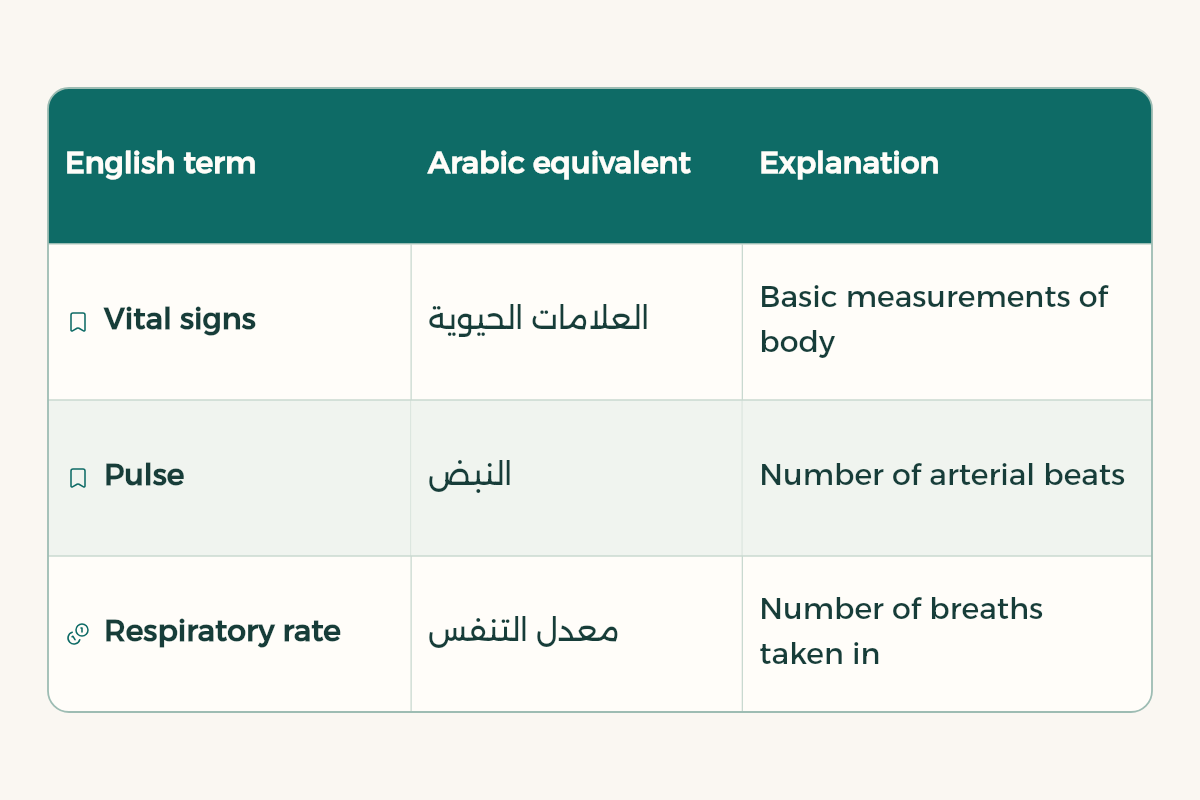
| English term | Arabic equivalent | Explanation |
|---|---|---|
| Vital signs | العلامات الحيوية | Basic measurements of body function: pulse, breathing, temperature and blood pressure. |
| Pulse | النبض | Number of arterial beats per minute, often measured at the wrist. |
| Respiratory rate | معدل التنفس | Number of breaths taken in one minute. |
| Body temperature | درجة حرارة الجسم | Measurement of internal or external heat, taken by several methods. |
| Pain scale | مقياس الألم | Tool where the patient rates pain from zero to ten or by faces. |
| Intake and output | الداخل والخارج | Recording of fluids entering and leaving the patient, including urine. |
| Fluid balance | توازن السوائل | Comparing fluids in and out to judge dehydration or retention. |
| Nursing assessment | التقييم التمريضي | Gathering information about the patient by questions, examination and observation. |
| Nursing diagnosis | التشخيص التمريضي | Professional judgement about the patient response to a health problem, not a medical diagnosis. |
| Care plan | خطة الرعاية | Written goals and nursing actions for one patient. |
| Head-to-toe assessment | الفحص الشامل | Systematic check from head to foot to pick up changes. |
| Glasgow Coma Scale | مقياس غلاسكو للغيبوبة | Scale that scores consciousness by eye, verbal and motor responses. |
| Capillary refill | إعادة ملء الشعيرات | Time for skin colour to return after pressure, showing limb perfusion. |
Medication, intravenous lines and feeding
| English term | Arabic equivalent | Explanation |
|---|---|---|
| Medication administration | إعطاء الدواء | Giving a drug to a patient after checking the medical order. |
| Six rights of medication | الحقوق الست للدواء | Right patient, drug, dose, route, time and documentation, checked before each dose. |
| Intravenous (IV) | داخل الوريد | Route that delivers a drug or fluid straight into a vein. |
| Cannula | القنية الوريدية | Small tube placed in a vein for fluids or drugs. |
| Infusion | التسريب الوريدي | Slow delivery of fluid or drug through a vein at a set rate. |
| Oral route | الطريق الفموي | Giving a drug by mouth. |
| Subcutaneous injection | الحقن تحت الجلد | Injection into the fat layer under the skin. |
| Intramuscular injection | الحقن العضلي | Injection into a muscle. |
| Nasogastric tube | الأنبوب الأنفي المعدي | Tube passed through the nose into the stomach for feeding or drainage. |
| Urinary catheter | القثطرة البولية | Tube placed in the bladder to drain urine. |
| Enteral feeding | التغذية المعوية | Feeding delivered to the intestine through a tube or by mouth. |
| Parenteral nutrition | التغذية الوريدية | Nutrition given straight into a vein, bypassing the digestive tract. |
| Adverse drug reaction | التفاعل الدوائي الضار | Unwanted effect of a drug at normal doses. |
| NPO (nil by mouth) | ممنوع الطعام والشراب | Order to withhold food and fluid, often before a procedure or surgery. |
Infection control and safety
| English term | Arabic equivalent | Explanation |
|---|---|---|
| Hand hygiene | نظافة اليدين | Washing or disinfecting hands at the moments set by policy. |
| Standard precautions | الاحتياطات القياسية | Basic protection used with every patient, since any body fluid may carry infection. |
| Isolation precautions | احتياطات العزل | Extra measures for a patient with a specific infection, to stop it spreading. |
| Aseptic technique | التقنية المعقمة | Method that keeps equipment and the work area free of microbes. |
| Sterile | معقم | Completely free of living microorganisms. |
| Personal protective equipment (PPE) | معدات الوقاية الشخصية | Gloves, masks, goggles and gowns that protect staff and patients. |
| Pressure injury | قرحة الضغط | Damage to skin and tissue from sustained pressure, also called a bedsore. |
| Fall prevention | الوقاية من السقوط | Measures that reduce the risk of a patient falling, such as risk assessment and bed rails. |
| Restraint | التقييد الجسدي | Device that limits a patient movement, used only under an order and with documentation. |
| Patient safety | سلامة المريض | Preventing unintended harm during health care. |
| Incident report | تقرير الحادثة | Written report of an incident, error or near miss, used for learning. |
| Healthcare-associated infection | العدوى المكتسبة من المستشفى | Infection acquired during a health care stay or shortly after it. |
| Sharps injury | إصابة بالأدوات الحادة | Puncture or cut from a needle or blade, which must be reported at once. |
Bedside work and documentation
| English term | Arabic equivalent | Explanation |
|---|---|---|
| Bedside | بجانب السرير | The place where direct patient care happens. |
| Shift handover | تسليم المناوبة | Passing patient information from the outgoing shift to the incoming one. |
| SBAR | أسلوب SBAR للتواصل | Structured communication: situation, background, assessment and recommendation. |
| Charting | التوثيق التمريضي | Recording observations and actions in the patient record in time order. |
| Documentation | التوثيق | Everything written in the patient file, which is read and audited later. |
| Wound dressing | تضميد الجرح | Covering a wound with a suitable dressing and changing it as needed. |
| Suction | الشفط | Removing secretions from the mouth, nose or airway with a suction device. |
| Oxygen therapy | العلاج بالأكسجين | Giving oxygen at a concentration and flow set by the medical order. |
| Nebuliser | جهاز الاستنشاق بالبخار | Device that turns liquid medicine into a mist the patient breathes in. |
| Mechanical ventilator | جهاز التنفس الصناعي | Machine that supports or replaces breathing for a patient who cannot breathe alone. |
| Bed rest | الراحة في الفراش | Order to stay in bed, sometimes limited by time or activity. |
| Mobility | القدرة على الحركة | The ability of the patient to move and transfer, assessed as part of daily care. |
| Discharge planning | تخطيط الخروج | Early preparation for going home, covering medication, follow-up and home care. |
Patient rights and teaching
| English term | Arabic equivalent | Explanation |
|---|---|---|
| Informed consent | الموافقة المستنيرة | Agreement to a procedure after the patient understands its purpose, risks and alternatives. |
| Patient advocacy | مناصرة المريض | Speaking up for the rights and interests of the patient within the team. |
| Confidentiality | السرية | Keeping health information private and sharing it only for valid professional reasons. |
| Health education | التثقيف الصحي | Explaining health information to patients and families in plain language. |
| Palliative care | الرعاية التلطيفية | Care that eases pain and symptoms for patients with serious illness. |
| Culturally sensitive care | الرعاية المراعية للثقافة | Care that respects the patient language, customs and beliefs. |
| Family-centred care | الرعاية المتمحورة حول الأسرة | Involving the family in care and decisions, with the patient agreement. |
| Shared decision-making | اتخاذ القرار المشترك | Decision made by the team and patient together after the options are explained. |
| Advance directive | التوجيه المسبق للرعاية | Written wishes about treatment for a time when the patient cannot decide. |
| Pain management | إدارة الألم | Plan covering pain assessment, medicines and non-drug measures. |
| Discharge education | تثقيف ما قبل الخروج | Teaching the patient about medication and the signs that need a return visit. |
| Caregiver | مقدم الرعاية | Person who looks after the patient at home, often a family member. |
How to learn these terms
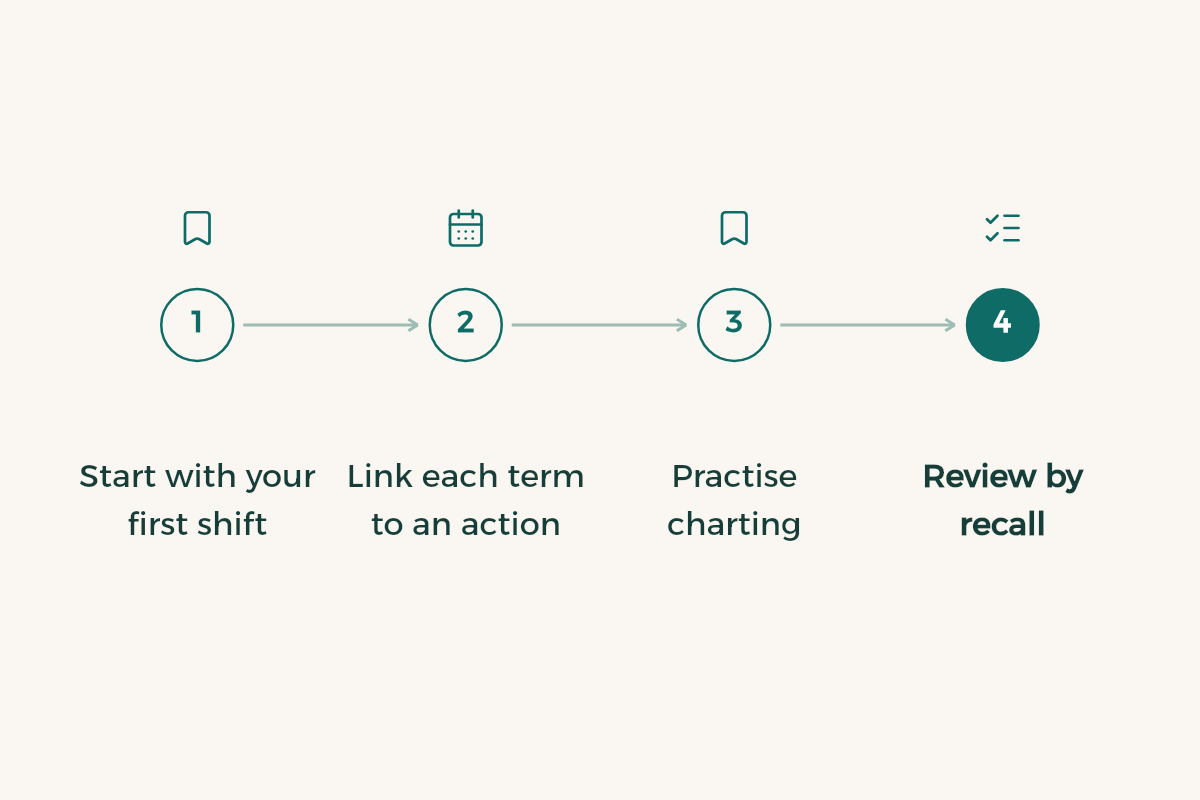
- Start with your first shift
Write down three terms you hear each day, and use them in conversation with classmates.
- Link each term to an action
Learn the word with the task it names, such as the six rights with the checks you make before each dose.
- Practise charting
Write a short note about an imaginary patient using the terms, then compare it with the format your hospital uses.
- Review by recall
Two days later, rebuild the table from memory and test the terms you missed. Active recall and spaced repetition explains the method.
If you use AI tools to practise these terms or draft study notes, read AI for nursing students first. Never paste real patient information into a tool, because patient data is confidential, and charting belongs in the approved hospital system only.
To plan the path itself, the nursing major explains study years and subjects, and the medicine major is useful if you are comparing the two tracks. If prevention and community care interest you, public health uses many of the same words.
Writing a report or research paper in English? The vocabulary in academic English vocabulary helps you build the sentence before you search for the exact clinical term.