By the tiswa editorial team, from the official sources listed at the end of this guide. How we write our guides
How to choose a thesis supervisor is one of the first decisions a masters student makes, and it shapes the whole project. Many students pick the first professor who agrees to listen, then discover months later that the topic does not match the supervisor's expertise, that meetings are rare, or that feedback arrives late. This guide explains how to choose, how to open the relationship clearly, and what to do if you need to change supervisor under your university's procedures.
Start with your university's regulation
Before you choose anyone, learn the rules that govern supervision at your university: who appoints the supervisor, whether the student can propose one, whether a thesis has one supervisor or more, and what the official procedure is if the supervisor changes. These are set by the graduate regulation and your department's forms, not by informal agreements. The graduate studies deanship page is the first place to look. As an example of what such a page looks like, see the graduate deanship page at Imam Mohammad Ibn Saud Islamic University. Find the equivalent page for your own university.
What makes a good fit
No supervisor is perfect, but a few practical questions help you compare candidates. Does the professor work in a field close to yours? Do they have published research on it? Do they speak with their current and former students? Do they explain what they expect from you at the start? A clear answer to these questions matters more than the title or the name.
- Real experience in your research area, visible in their publications or projects.
- Enough time for students, which you can learn from current students rather than from promises alone.
- A clear feedback style, so comments are specific and useful rather than general.
- Willingness to agree on a timetable and expectations before work begins.
- A respectful working relationship, with understanding of practical pressures such as a job or family, without lowering the quality standard.
Your first email should not be rushed
Your first message sets the first impression, so keep it short and specific. Say who you are, the field you want to research, why you chose this professor, and attach a summary of one or two pages. Ask for a short meeting, and do not ask them to decide your whole topic in one email. For writing academic emails clearly, see how to email a professor.
Write a short, polite email to Dr [name] introducing myself as a masters student in [field].
I would like to prepare a thesis on [research topic]. I read your paper [published title] and found that my topic overlaps with yours in [specific point].
I have attached a one-page summary, and I would be grateful for a short meeting at a time that suits you.
Thank you for your time and consideration.
The first meeting: agree on expectations
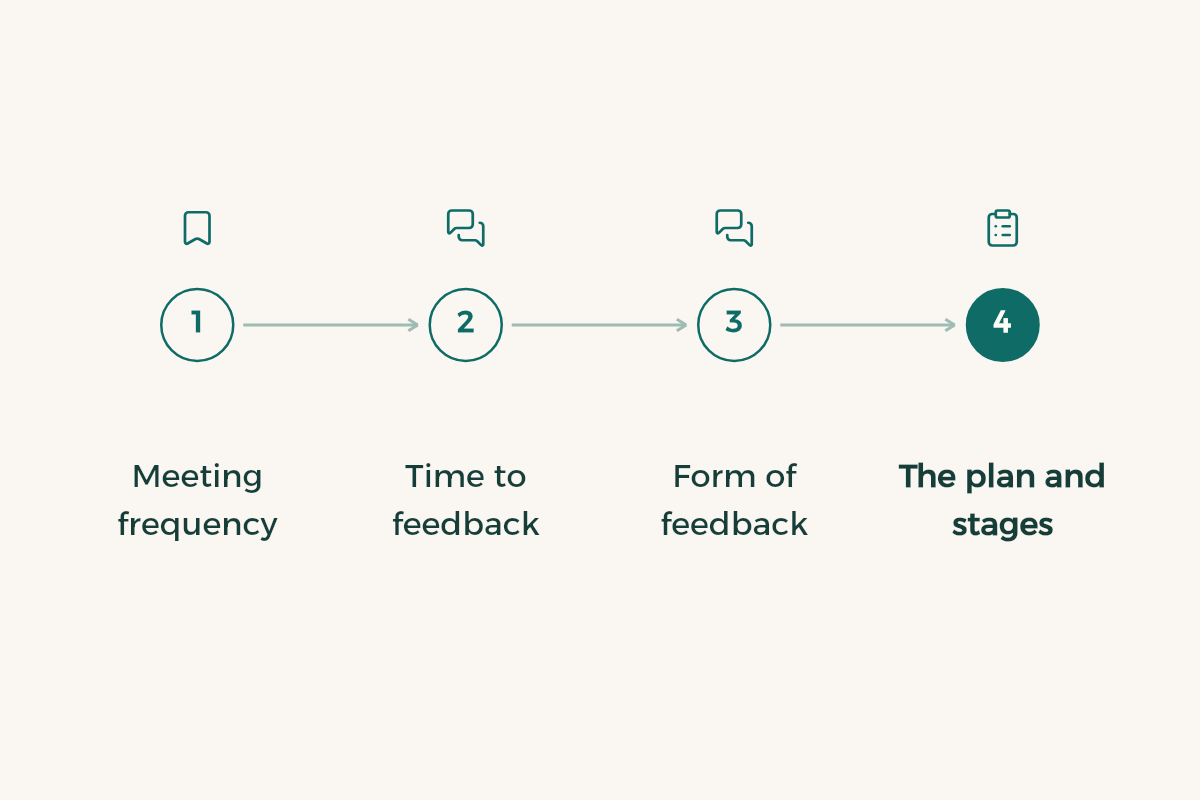
At the first meeting, do not stop at agreeing to supervise. Settle four things clearly, then write a short thank-you message afterwards so there is a written record:
- Meeting frequency
Agree how often you meet, such as every two weeks or monthly, and who arranges the appointment.
- Time to feedback
Ask the usual time to reply to a chapter, and agree a deadline for each submission.
- Form of feedback
Agree whether comments come in writing or in meetings, and whether changes are marked clearly.
- The plan and stages
Know the main stages of the thesis, their approximate dates, and what must be done before the defence.
If your schedule needs more structure, use a study plan template to share out the tasks between meetings. For a full overview of the thesis process, read how to write a masters thesis step by step.
When the work stalls with your supervisor
Relationships sometimes stall for ordinary reasons: slow replies, a difference of view about method, or a change in the professor's workload. Do not go straight to administration. Write to your supervisor with a short summary of the problem, propose a meeting, and ask for specific changes in writing. Many problems end at this stage, because both sides then know exactly what the work needs.
Changing supervisor through the official route
If you decide the relationship cannot continue, a change is possible at many universities, but it must follow formal steps. Do not end supervision with a verbal agreement alone, and do not approach a new professor before you know the correct procedure. A sensible order is:
- Read the official procedure
Look in the department guide or the graduate regulation for the change form, who signs it, and any required period.
- Talk to your current supervisor first
Explain your position calmly, and ask that the relationship remain professional. This protects your rights in the procedure.
- Speak to the department head or coordinator
Set out your reasons clearly, ask for the correct route, and mention a possible new supervisor if you have one.
- Submit the form
Keep a copy of the request, any written reply, and the date you submitted it.
- Hand over your work in an orderly way
Organise drafts, references and feedback, so the new supervisor does not start from zero.
Do not assume a new supervisor will accept you automatically, or that the procedure will be quick. Ask the university about the process early, and keep a professional tone with both current and former supervisors. Changing supervisor is not a failure when it is done through clear steps.
If your proposal is still in progress, read how to write a literature review. A well-built list of sources shows a potential supervisor quickly whether your topic fits their experience.