
By the tiswa editorial team, from the official sources listed at the end of this guide. How we write our guides
You open the programme plan and find thirty courses with codes and numbers, and wonder which ones matter right now. That question separates the student who walks into week one calm from the one who finds out in week four that statistics assumed a foundation nobody reviewed. This guide does not hand you a course list, because lists change between universities and between plan versions. It teaches you to read the plan in front of you.
How do I read a supply chain management course plan?
Start with the official source: the programme page on your college site or the student handbook your university publishes. Do not rely on a screenshot from a friend; plans get updated, and your friend’s copy may be old. Then read three things before any course name: the credit hours per semester, the prerequisite column, and whether college-wide common courses come before the major courses.
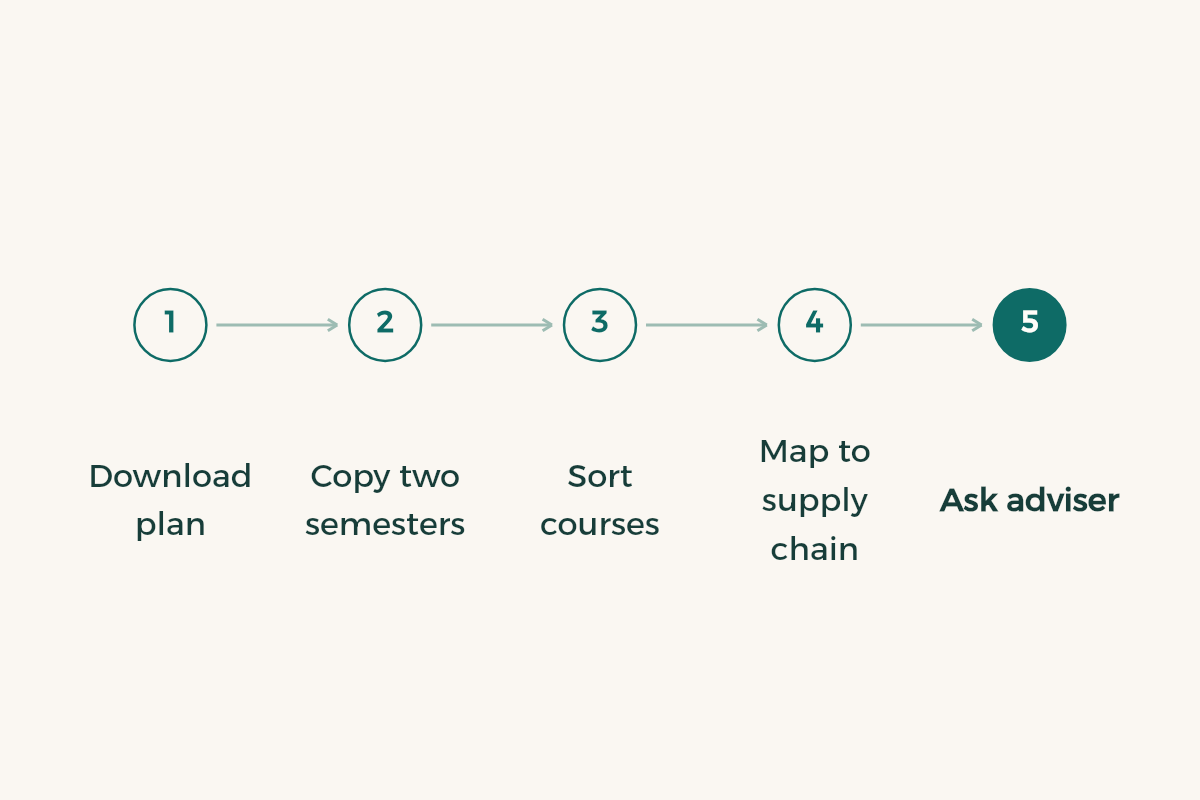
- Download the official plan
From the college or university site itself, and save the link. If there is more than one version, ask admissions which one applies to your intake.
- Copy semesters one and two
Put the courses in a table with four columns: name, credit hours, prerequisite, type.
- Sort every course
Write one word beside each: numbers, management, writing, or computer tools.
- Place courses on the supply chain
Ask of each: does it serve planning, buying, storage or transport? If you cannot tell, leave a question mark and come back in two weeks.
- Ask your adviser
Take the table to your academic adviser and ask about prerequisites and any course worth delaying. The adviser decides, not this guide.
What kinds of courses will I meet in the first year?
Supply chain programmes tend to mix three kinds of course, whatever the names. This sorting is a tool for organising your work, not a description of any one university’s plan, so match it against your own.
| Type | What is expected of you | How to prepare |
|---|---|---|
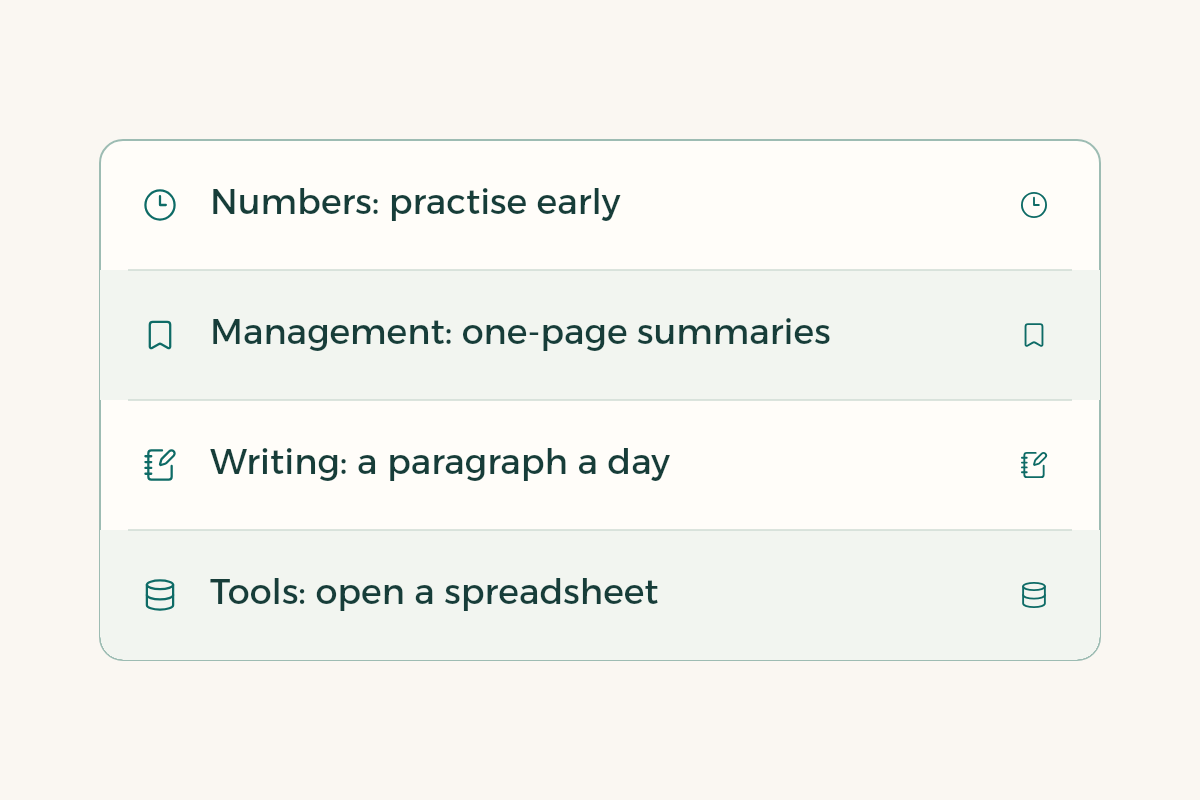
| Numbers (statistics, accounting, economics) | Solving problems and interpreting figures | Weekly practice on old problems before the semester |
| Management (principles of management, marketing) | Reading, grasping concepts, applying them to cases | Summarise each chapter on one page in your own words |
| Writing and language | Reports and short essays | Write one paragraph a day and get it checked |
| Computer tools (spreadsheets) | Hands-on work in a file | Open a spreadsheet and practise the basic functions |
Most first-semester trouble comes from the numbers type, not the management type, because numbers accumulate: what you missed in week three blocks week six. So prepare for the numbers courses first.
How do I connect courses to the supply chain so they make sense?
ASCM, a well-known professional body, publishes a reference model called SCOR that breaks supply chain work into main processes such as planning, sourcing, transforming and delivering.1 You do not need to memorise the model in year one, but it works as a shelf to put courses on. Statistics connects to planning and demand forecasting, accounting to the cost of what you buy and sell, and management to organising the teams that carry it all out.
An example, labelled as one: a student finds statistics a burden, then asks how a warehouse knows how many boxes to order next week. When she learns the answer is a demand forecast built on statistics, her attitude to the course changes. It illustrates the method, not any particular syllabus.
To see where the courses end up, read what a supply chain capstone project covers, which shows how the subjects come together in one project. MIT’s supply chain programme describes its capstone research as built on real industry problems, which is the direction every course in the plan points towards.2
How much should I read and practise before the first semester?
You do not need to read whole textbooks in advance; the instructor will name the reference. Spend two weeks before the start at about an hour a day: thirty minutes on basic maths, fifteen on spreadsheets, fifteen on one article about how the profession works. Cornell’s learning centre advises spreading study over separate sessions rather than cramming, which suits this short run-up.3
For structure in the first weeks use a study plan template, and put the number-heavy courses at times when your head is clearest. For long sessions on statistics, try the Pomodoro technique.
What mistakes do students make when reading a major plan?
The first is judging a course by its name. “Principles” does not mean easy, and “applications” does not mean practical; read the course description in the official handbook. The second is postponing a number-heavy course because it looks hard, then finding it is a prerequisite for next semester. The third is loading the maximum credit hours in a first semester when you do not yet know your own pace.
If you are still deciding on the major itself, the supply chain major guide covers courses and jobs at a general level, and this guide complements it with a method for reading the plan. In week one, protect your sleep too; it affects understanding more than most students expect.