By the tiswa editorial team, from the official sources listed at the end of this guide. How we write our guides
The supply chain major in Saudi Arabia has drawn growing interest as transport, logistics and e-commerce expand. Every product you buy, from your phone to a restaurant order, went through a long journey: supplier, factory, warehouse, shipping and delivery. A supply chain graduate plans that journey and makes it faster, cheaper and less risky. This guide covers where to find the programme, how long it takes, the courses, admission, jobs and professional certificates, with study advice.
Where can you study supply chain?
The programme comes in more than one form at Saudi universities. Princess Nourah bint Abdulrahman University (PNU) offers a B.S. in Supply Chain Management in its College of Business Administration, within the Department of Management, over four years according to the programme page. King Abdulaziz University (KAU) offers a Bachelor of Supply Chains and Maritime Business in its Faculty of Maritime Studies, also four years and taught in English, with a stronger focus on ports and shipping. At other universities supply chain is a course or track inside business administration. Before applying, decide whether you want a general management view of supply chains or a focus on maritime transport and ports.
How many years?
Both programmes run four years according to their official pages. KAU's plan starts with general courses such as maths, statistics, physics, programming and English before the specialised courses. So year one has a science component, which is worth preparing for if you come from a non-science track.
What courses will you study?
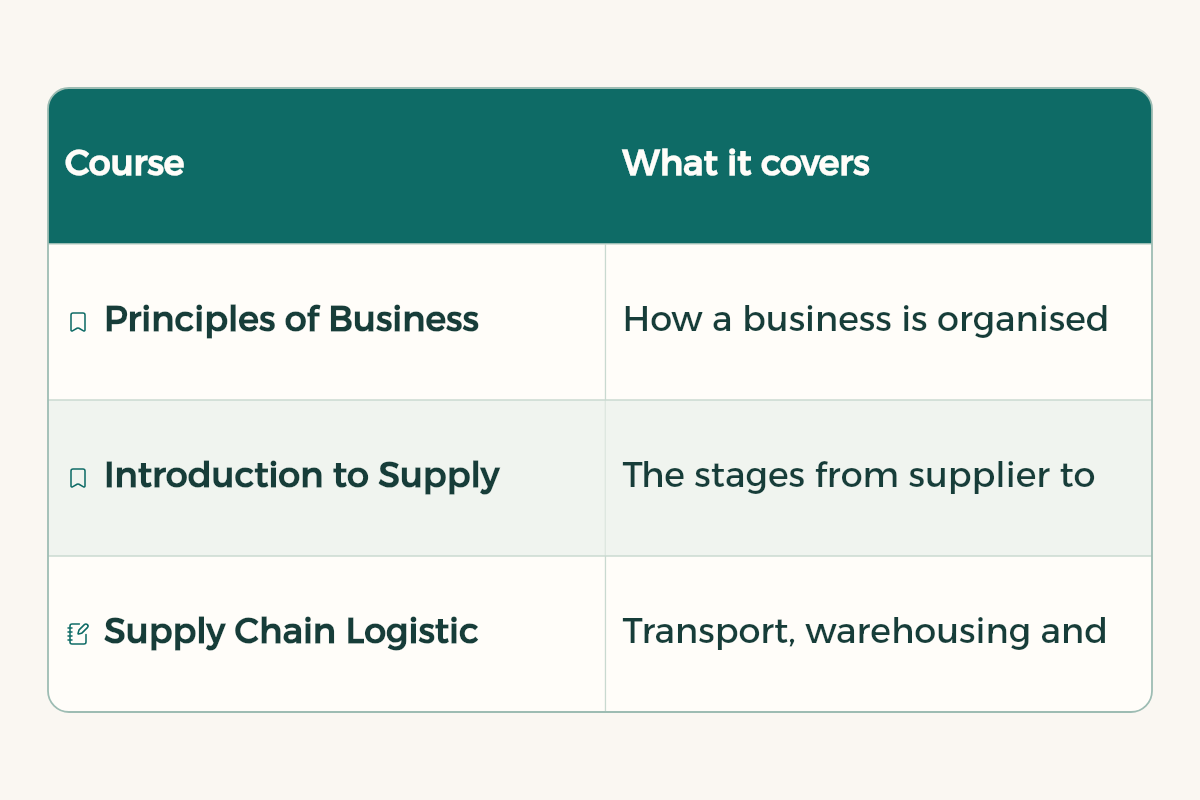
Here is a sample of courses in the PNU supply chain management programme:
| Course | What it covers |
|---|---|
| Principles of Business Administration | How a business is organised |
| Introduction to Supply Chain Management | The stages from supplier to customer |
| Supply Chain Logistic Management | Transport, warehousing and distribution |
| Strategic Sourcing and Procurement | Choosing suppliers, negotiating and contracting |
| Operations and Supply Chain Management | Production planning, capacity and inventory |
| Supply Chain Risk Management | Handling delays, disruptions and demand swings |
| Supply Chain Analytics | Using data to forecast and decide |
| Supply Chain in Action | Linking your courses to practical cases |
Analytics and risk are core parts of the plan. Supply chains today run on data: how much to stock, when to order, what to do if a shipment is late. Students comfortable with numbers and spreadsheets stand out quickly.
Is supply chain right for you?
It suits you if you like solving practical problems and enjoy organising things and improving how they get done. It suits you if you are comfortable dealing with many parties at once, since a supply chain manager talks to suppliers, carriers, warehouses and sales teams. You need calm under pressure, because shipments get delayed and orders change suddenly. If you prefer general management to operations, read the business administration major guide and compare.
Admission
Each university sets its own conditions and weighted score on its admission portal. One official example: Imam Abdulrahman Bin Faisal University uses 30% high school GPA, 30% General Aptitude Test and 40% Achievement Test. Since some programmes start with science courses and teach in English, check the programme's own requirements before applying. If you have a preparatory year, read the preparatory year guide.
Jobs for supply chain graduates
The PNU programme page lists job titles graduates move into, including:
- Supply chain manager and project manager.
- Logistics services manager and warehousing and distribution manager.
- Demand planning manager and sourcing, procurement and strategic procurement manager.
- Transportation operations specialist or planner.
- Supply chain analyst or planner, process improvement specialist and operations manager.
KAU's programme lists maritime paths such as port operations and management, shipping companies and maritime agencies, and maritime transport management at the Ministry of Transport. Aim your training at a real logistics employer, and read the co-op training guide.
The Saudi Logistics Academy and professional certificates
The major needs no practising licence, but there are internationally recognised certificates that raise your value. The Saudi Logistics Academy, established in 2021 to develop talent in the transport and logistics sector, lists programmes on its site such as diplomas, executive programmes and short courses, along with professional certificates and accreditations including CILT in logistics and transport and CIPS in procurement and supply.
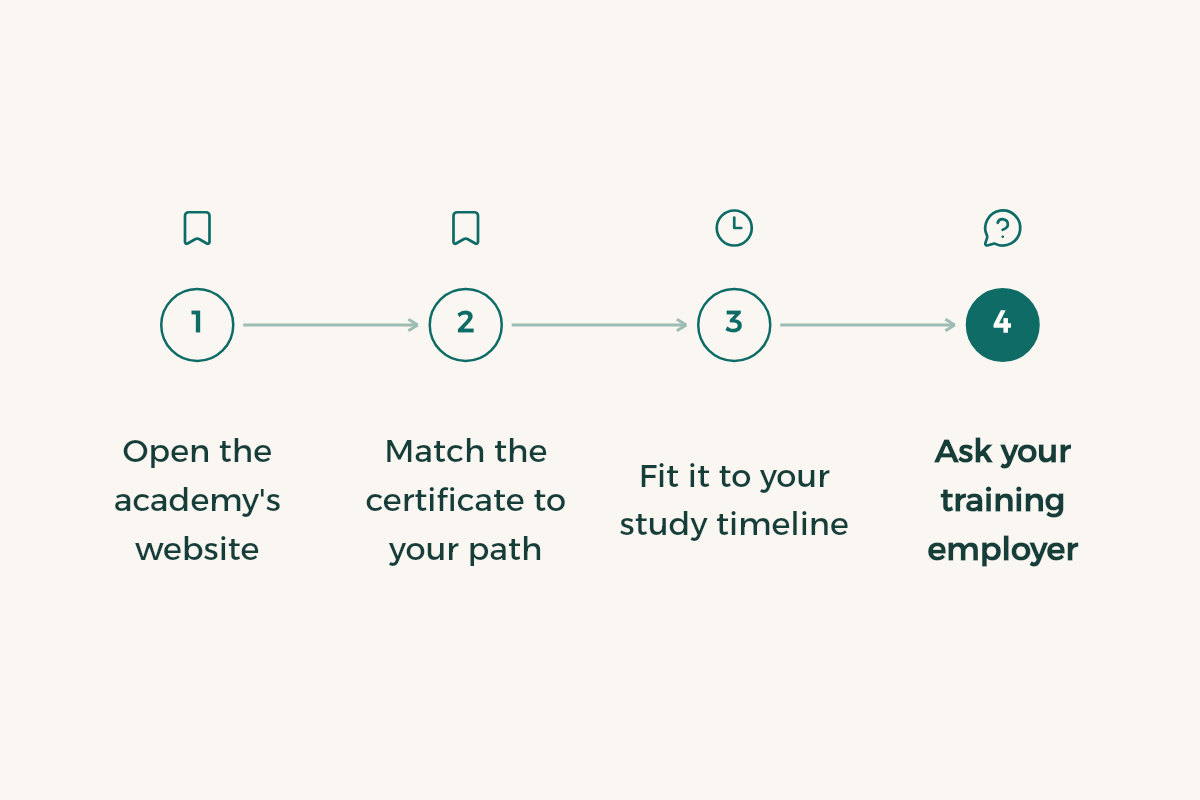
- Open the academy's website
Read the list of programmes and certificates and the registration conditions for each.
- Match the certificate to your path
Procurement suits supply certificates, while transport and warehousing suit logistics certificates.
- Fit it to your study timeline
Foundation certificates suit your final years or straight after graduating.
- Ask your training employer
Your placement supervisor knows which certificates employers in the sector value.
How to study supply chain
- Draw the chain for every case study: supplier to customer, marking each point where delays can happen.
- Learn Excel well, especially pivot tables and simple forecasting. Start with Excel for students.
- Follow news about Saudi transport and logistics and connect it to your courses.
- Do not neglect first-year statistics and maths, which underpin analytics later.
- If your programme is in English, build a vocabulary list from your first term. Read English for university.
I am a supply chain student. Write four graded problems on reorder point and safety stock with simple numbers for a Saudi shop. Do not write the solutions. After I send my answers, tell me where I went wrong and explain the idea, then suggest how to build the same calculation in an Excel sheet with formulas instead of numbers.




For your final project read graduation project ideas, and before graduating prepare your CV.