By the tiswa editorial team, from the official sources listed at the end of this guide. How we write our guides
Studying in the USA is a popular choice for Saudi students, thanks to the variety of universities, subjects and research. The route passes through three gates in order: admission from an American university, a student visa, and equivalency for your certificate in the Kingdom. This guide walks through each gate, explains the Saudi cultural mission's role in the United States, lists the documents you will meet at each stage, and points out what to verify on the official pages before you begin. US procedures do change, so the final reference is always the official US government site and the university itself.
The role of the Saudi mission in the USA
The Saudi Arabian Cultural Mission in the United States describes itself as placing Saudi students at strong US academic institutions, and providing academic and financial support so they can focus on their studies. Its website lists an e-services portal for students, orientation, announcements, a health insurance programme, student forms and student clubs. Office hours are published on the site, Monday to Friday, and contact is made through the channels listed there.
So the mission is not only a visa office. If you are a scholarship student, it is the body you will deal with throughout your studies. Read the guide to Saudi cultural missions to learn when to contact it and how to prepare, and read the Safeer platform guide for online requests.
Gate one: admission from the university
Do not begin visa steps until you have been admitted by an American university. Admission requirements differ from one university to another, but they usually include your previous certificate, your transcript, an English test, sometimes a standardised admissions test, and a personal statement or essay. Check the admissions page of each university, and do not assume one university's rules apply to another.
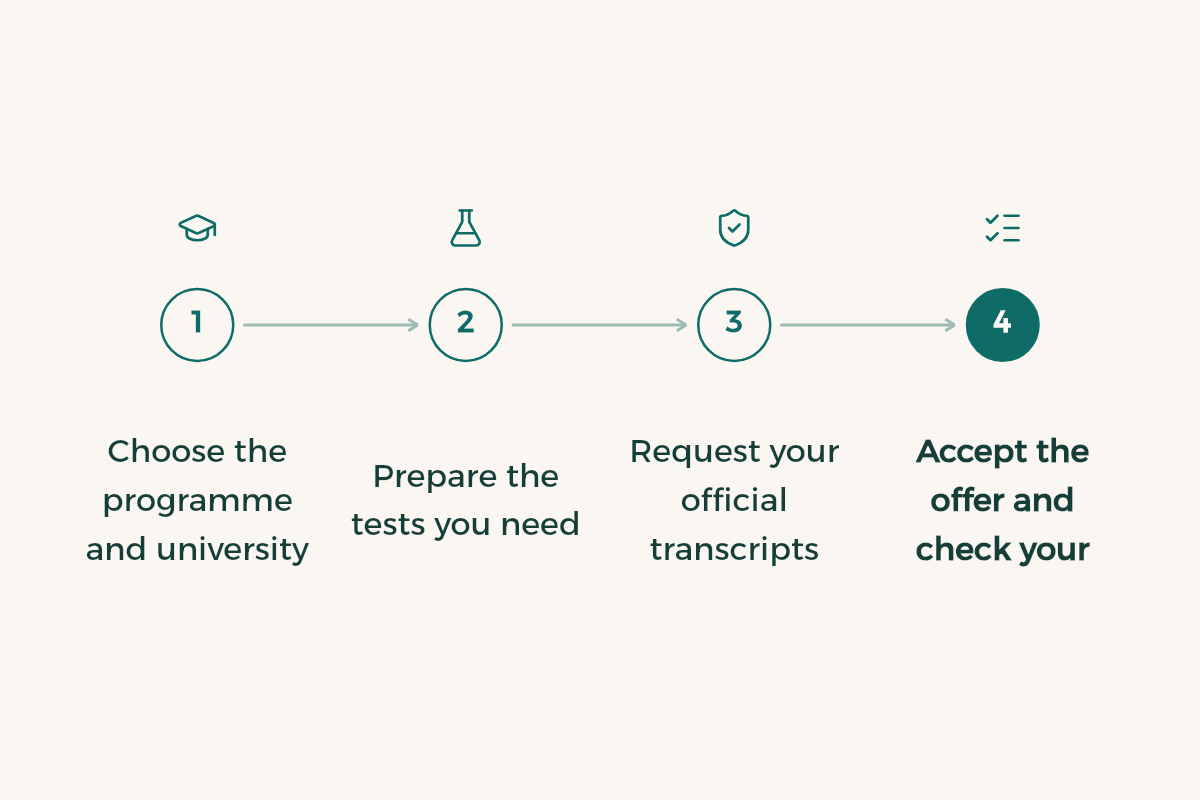
- Choose the programme and university
Compare programmes by subject, research focus and published costs, then read each university's official admissions requirements.
- Prepare the tests you need
Tests vary by programme. Read the GRE and GMAT guide for Saudi students if your programmes require them, and IELTS vs TOEFL if you need an English test.
- Request your official transcripts
Send official transcripts in the format the university asks for, and keep certified translations if your documents are in Arabic.
- Accept the offer and check your admission document
On admission the university issues the document you need for the visa, usually the Form I-20. Read its terms before you sign.
Gate two: the F-1 student visa
The most common visa for full-time academic study in the USA is the F-1. The process usually involves a few core documents that appear at every stage. The university issues the Form I-20, which confirms your admission. You then pay the SEVIS fee, which is tied to the student tracking system, and complete the online DS-160 application. Finally you book an interview at a US embassy or consulate.
- The Form I-20 issued by your university. Check that your name and programme dates are correct.
- The SEVIS fee. Its amount is published on the official US government site, so check it there.
- The DS-160 online application. Make sure its details match your passport and academic records.
- A valid passport, a photograph that meets the published specifications, and any document the embassy asks for at interview.
- Evidence of your financial ability and the academic papers that may be requested at interview.
Information on how early you may apply, rules for reapplying, and the fees in US dollars is published on the official US government site for student visas. These change, so do not rely on an old forum post. Find the student visa page on the State Department's website and review the steps before you pay anything.
Equivalency in Saudi Arabia: the step people forget
An American degree needs equivalency from the Ministry of Education to be recognised in the Kingdom. The ministry's certificate equivalency page says the university and programme should be on its list of classified universities, or else the case is reviewed individually against its criteria. It requires in-person study in the country that awarded the degree, unless a distance programme meets extra conditions. If you are funding your own study, get the ministry's approval before you travel.
So check the university first through the recommended universities guide, then gather your documents using the certificate equivalency guide.
After arrival: insurance, housing and enrolment
After you arrive you need housing, health insurance and enrolment before the term starts. Look for housing early, since demand rises before term. Ask about the health insurance your university or programme requires, and ask the mission about the health insurance programme it lists if you are a scholarship student. For practical university life, read the university housing guide and your first week at university.
Help me build a plan for applying to study in the USA.
Split it into: universities and programmes, tests, documents, university admission, the F-1 visa, and Saudi equivalency.
For each section list the question I must verify and the official site responsible for it. Do not state any fee or deadline from memory.
After graduation: plan your next step
Whether you plan to return to Saudi Arabia or work in the US after graduation, keep your transcripts and module descriptions, and follow the official US rules for any post-study options. If you plan a master's, compare the conditions with the master's in Saudi Arabia guide first.