
By the tiswa editorial team, from the official sources listed at the end of this guide. How we write our guides
A second-year student in Najran put two questions on a sheet of paper, one about wanting the new major and one about the number of semesters it would cost. The first answer came in a minute. The second took an hour with her old and new study plans side by side, and the result surprised her: the move added more than she had assumed. This is a simplified example, yet the sheet of paper is the part most applicants skip.
Is an internal transfer at Najran University worth the effort?
It is worth it when the two majors differ sharply in the work you will do after graduating, and not merely in what you enjoy hearing about. It is not worth it when your motive is one hard semester, because a hard semester passes faster than a major does. Test yourself with two questions. If this term ended with a good grade, would I still want to move? And if I were told the cost is one extra semester, would I accept? A “no” to either deserves a pause.
The unified undergraduate regulation allows moves between colleges and departments inside a university under rules the university council sets, and says that accepted courses are recorded on your file.2 So the effect of your choice does not end at acceptance; it stays written in your average.
How do you count the cost of a college transfer in semesters?
The method is the same for everyone. Take the new major’s study plan, strike out every course you have passed that has a clear match, add up the hours left, and divide by the load you normally carry. The table uses invented numbers for illustration only; it is not a Najran study plan.
| Item (illustrative example) | Old plan | New plan |
|---|---|---|
| Hours in the whole plan | 132 | 136 |
| Completed hours that count | 54 | 40 |
| Hours left | 78 | 96 |
| Usual load per semester | 15 | 15 |
| Semesters left, roughly | 5.2 | 6.4 |
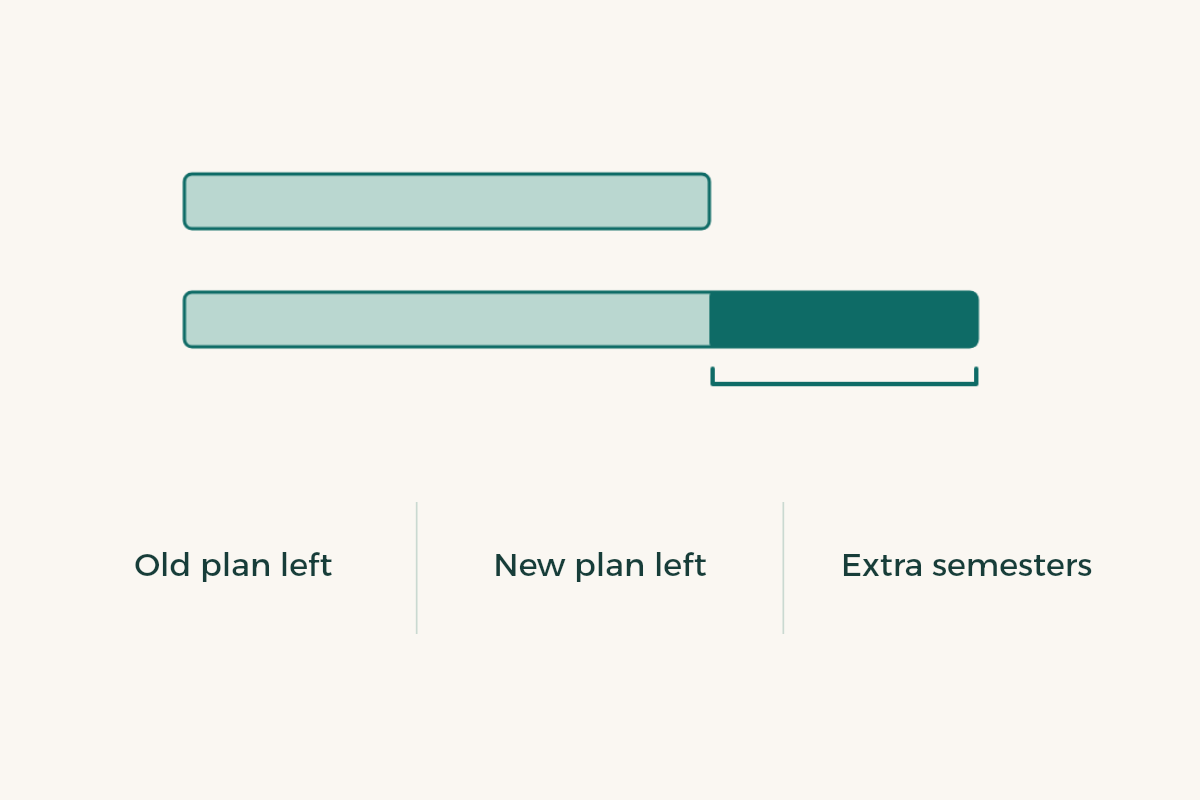
In this example the move adds a little over one semester (1.2), because 14 of your completed hours have no match. Then ask what the table cannot show. Are some courses offered in only one term a year? Do prerequisites push the rest back? Those answers change the number more than the sum does.
How do you read the transfer conditions and dates at Najran University?
With the cost in hand, read the conditions in a fixed order. Start with the receiving college, since it makes the decision, then the registration deanship’s notice on the university site.1
- Copy each condition word for word
The GPA asked for, the hours you must have completed, any courses the department requires. Do not paraphrase.
- Put your position beside each one
Met, not met, or not sure. The last kind becomes your question to the deanship.
- Find the application dates
Open the university calendar and the deanship notice, and see whether applying falls before or after drop and add.
- Ask your adviser for the credit-match list
Which of your courses will count in the new plan? A written answer protects you if there is a dispute.
- Gather your documents before the window opens
Your academic record and any form the college asks for, so the application days are not spent hunting for them.
While you wait, do not drop a course or withdraw from a semester. Keep your schedule as registered until the decision comes. If your term is tight, read the guide to drop and add to see what each action does.
What is the fallback if your internal transfer is refused?
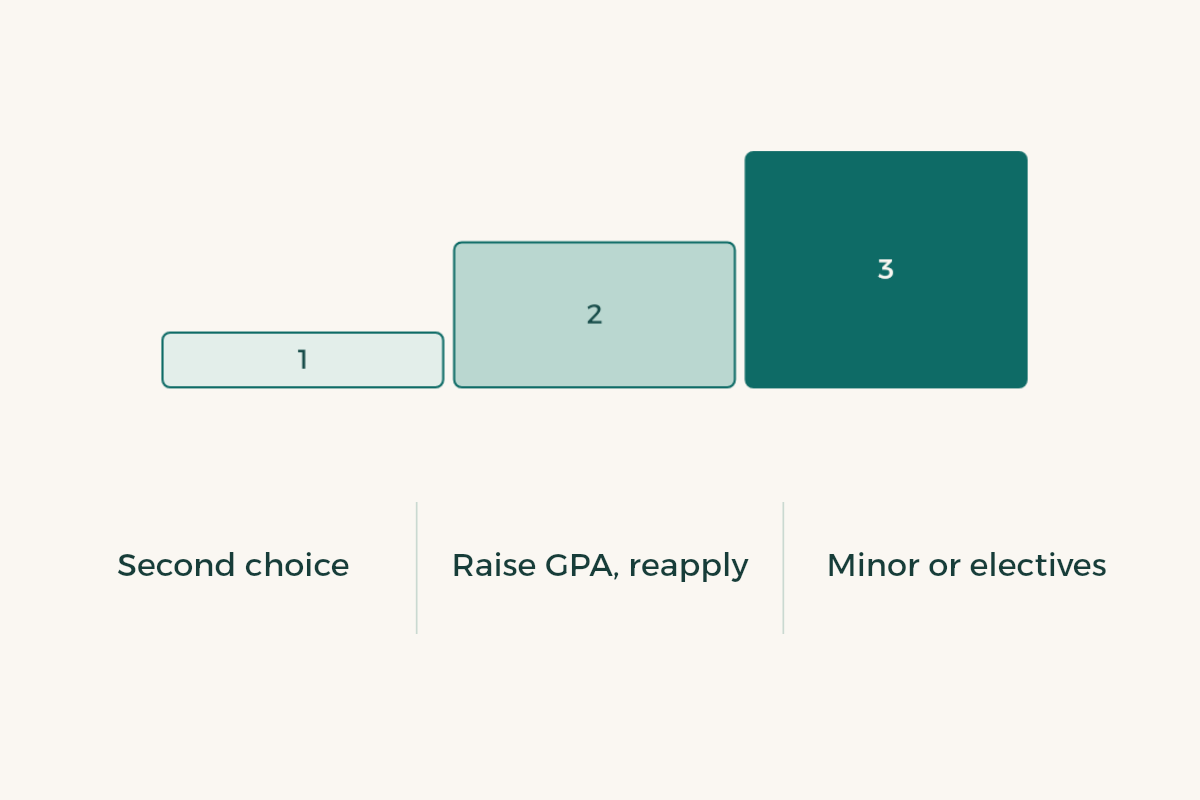
Set the fallback before you apply, not after a refusal. One option is a second choice of major, if the college allows more than one, so ask the deanship. Another is to stay put, raise your GPA next term and apply again, and the guide on raising your cumulative GPA helps there. A third is to ask about electives or a minor that move you closer to the field without a full transfer.
And if the real reason is that you are thinking of another university rather than another college, the path is quite different: fresh admission, then equivalency. Open the guide to transferring between universities and compare the cost before deciding.
What mistakes do internal transfer requests usually contain in Najran?
The first is building a decision on a friend’s story from another college, since the rule that applied to them is not your college’s rule. The second is applying without counting semesters, then being accepted and discovering you added a year. The third is waiting for the last day, when portals slow down and a missing document shows up. The fourth is dropping courses early in the hope of acceptance. Students who live far from the main campus add a fifth: they put off contacting the adviser because it felt like something to do from home, and the exchange then drags for a week.
What should you ask your academic adviser at Najran before applying?
Prepare five questions and send them in one message by university email or through the portal, so you keep a written trail. One: how many of my completed hours match the new plan, and how many enter the GPA? Two: is there a minimum GPA or minimum completed hours before I can apply? Three: which courses open once a year and could delay graduation if I miss them? Four: is my request decided this term or the next? Five: can I apply to more than one college at once?
Keep the replies in a single file with the date of each message. If the adviser’s answer later differs from an official notice, the newer notice wins, but your message proves you asked before deciding. Make sure the adviser you write to belongs to the receiving college, not your old one, or you will get an answer about a plan you did not mean.