By the tiswa editorial team, from the official sources listed at the end of this guide. How we write our guides
Picture week four. You tell your supervisor you will study how Saudi brands use social media. The supervisor asks which brands, which platform, what exact question and over what period. You have no ready answer to any of them. What you described is a field, not a project, and scope is the step that turns one into the other.
What is the scope of a marketing capstone project?
Scope is where you stop: what you will measure, on whom, where, when and with what evidence. The title tells a reader the topic. The scope tells the committee what you will actually hand in. A project called “digital marketing in Saudi Arabia” could take a career. “The effect of three post types on engagement for one café account over eight weeks” can be finished, marked and defended.
Scope has two edges that people skip. One is the claim edge: do not write that the result holds for the Saudi market when you asked a hundred people on one campus. The other is the time edge: whatever does not fit the schedule leaves the project, however attractive it is. The wording of the question itself is covered in the marketing graduation project guide; this page deals with size.
How big can a marketing capstone be in one semester?
Start from weeks, not from the idea. Take the length of your semester and subtract the week your topic is approved, a week for supervisor review and two for final writing and submission. What remains is your real time for collecting and analysing. If eight weeks are left, you will not gather data from three platforms, analyse it and write recommendations. The table gives examples of the difference. They are illustrations, not limits set by any university.
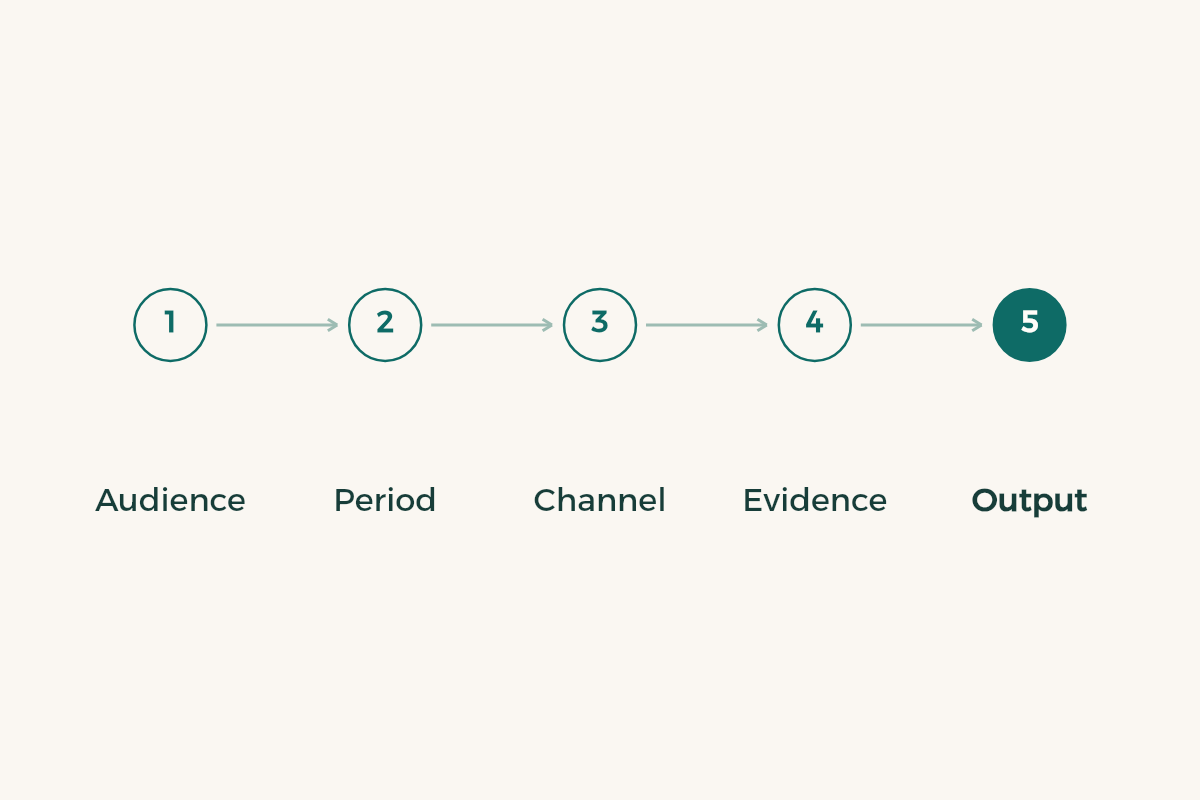
| Scope element | Too wide | Fits a semester |
|---|---|---|
| Audience | Consumers in Saudi Arabia | Female students on one campus in Jeddah who order food weekly |
| Period | The last five years | Eight weeks of posts |
| Channel | All social media | One platform and one competitor account |
| Evidence | Effect on sales | A survey of 80 to 120 respondents plus public engagement data |
| Output | A national strategy | One campaign proposal with a test plan |
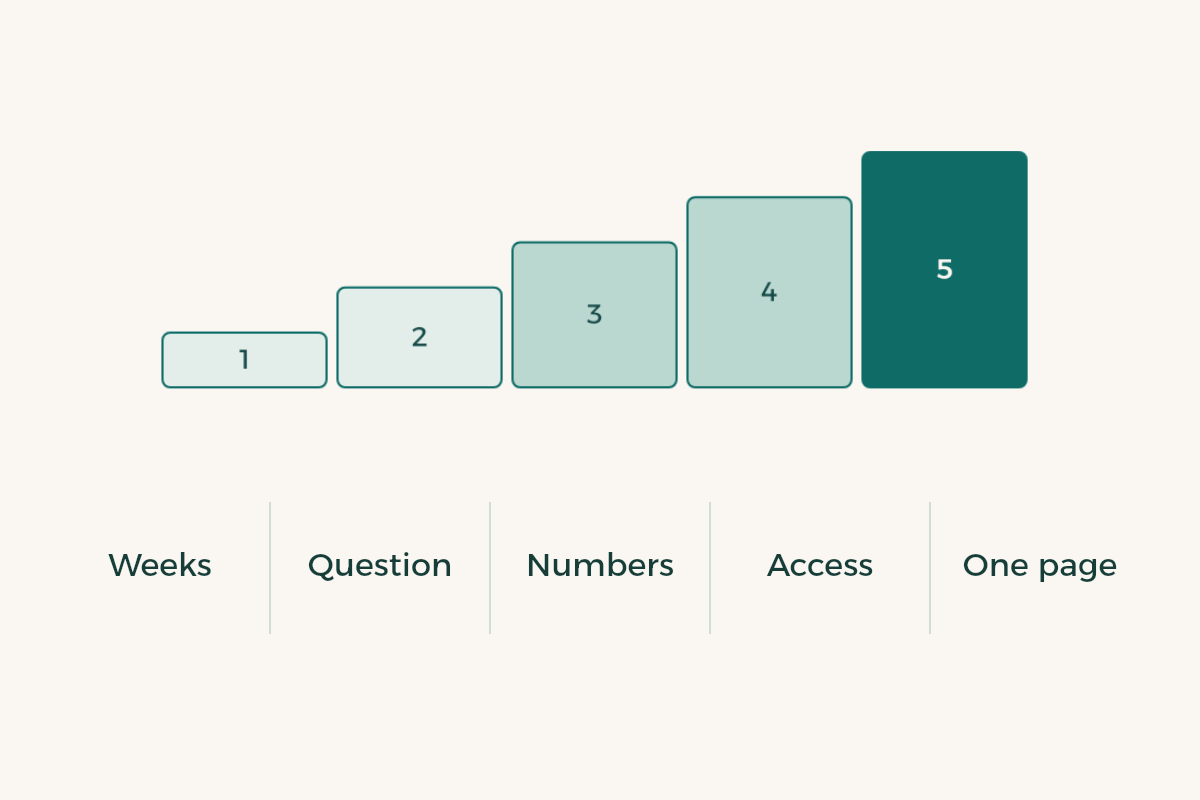
Everything in the third column can be measured with tools you already have: a Google Form, Excel, and whatever public accounts show. If you need clean charts for your results, see Excel charts.
What do graduation project guidelines expect from your scope?
Your department’s guidelines set the format and the deadlines, and they rarely say how big the work should be. That part is left to you and your supervisor, so use the steps below to arrive at a size you can defend.
- Count the real weeks
Find the submission date in the course plan and subtract approval, review and writing weeks. That number is yours.
- Write the question in one sentence
If the question needs a second “and”, you are carrying two. Pick one.
- Fix the audience, channel and period
Use numbers: who, where, how many weeks. General phrases do not count as scope.
- Ask whether you can get the evidence
Company data needs written permission, and a survey needs a sample you can actually reach. If access is uncertain, change the source now.
- Show your supervisor one page
Question, scope, data and timetable. A change your supervisor asks for in week two costs far less than one in week ten.
Which resources set the scope of your project?
Four things: time, access to data, money and tools. Money in a student project is usually close to zero, so a real paid ad campaign is out of scope unless a sponsor covers it. The alternatives are to analyse published campaigns, test two versions of a design on a small sample, or propose a campaign and have it assessed by reviewers. If you have a real client, such as a small shop that shares its figures, get written permission for what you may publish, because the committee may ask you to present results in public.
A ready-made project does not replace fieldwork. Someone who builds on a downloaded “marketing project” cannot say why that audience was chosen and cannot defend a single number. If you want field experience before the project, look at the marketing co-op guide.
What research ethics apply to a marketing capstone?
The American Marketing Association’s statement of ethics asks marketers to do no harm, keep their integrity and hold values that include honesty, responsibility and transparency.1 In your project that becomes plain habits: tell participants the purpose of a survey before they start, do not collect a name or phone number you do not need, and do not pose as a customer to draw information from an employee.
In Saudi Arabia, the implementing regulations of the law of ethics of research on living creatures set out informed consent for participants and require research institutions to run local ethics committees.2 Does a class survey need committee review? Your university’s ethics office decides, so do not assume the answer. Ask early and be specific: I will send an anonymous survey to students aged twenty or over; do I need approval? Avoid minors altogether in a one-semester project, because the procedures are much heavier.
What are realistic marketing graduation project ideas for one semester?
An example, not a published project: a student in Riyadh might ask whether a photo of the real product lifts engagement for a neighbourhood bakery more than a designed graphic. They measure the bakery’s public posts over eight weeks, add a nine-question survey sent to one hundred followers, and end with a two-week campaign proposal and a way to test it. They do not claim the result holds for all bakeries, and they say so in the limits section. A small, honest sample beats a large, vague one.
How do you know your scope is too big?
Three signs. You need more than one collection tool to answer the question. You cannot say where the sample will come from. Or you write “then” more than twice when explaining the plan. The cure is cutting, not late nights: drop the second channel, shorten the period, turn “causes” into “relationship”. Talk to your supervisor before changing direction, because changing the question after data collection means redoing the work.
When the analysis is done, write the abstract after the results rather than before. The graduation project abstract guide shows how to fit it in half a page.