By the tiswa editorial team, from the official sources listed at the end of this guide. How we write our guides
A student arrived in Riyadh from a distant town and opened a study plan with dozens of courses spread over semesters he knew nothing about. He asked the cohort chat and got twenty answers, some for a different college. What he actually needed was one page: what he studies this semester, why, and where to check it. That page is what this guide describes.
How do you register for courses at Imam Mohammad ibn Saud Islamic University?
The university publishes the services and guides of its Deanship of Admission and Registration, and the deanship has issued illustrated guides to its electronic services, including one for electronic admission that walks through each screen.2 In earlier semesters it also announced registration for regular students through self-services, so that is the door to look for on the university website, and you confirm its current name there.1
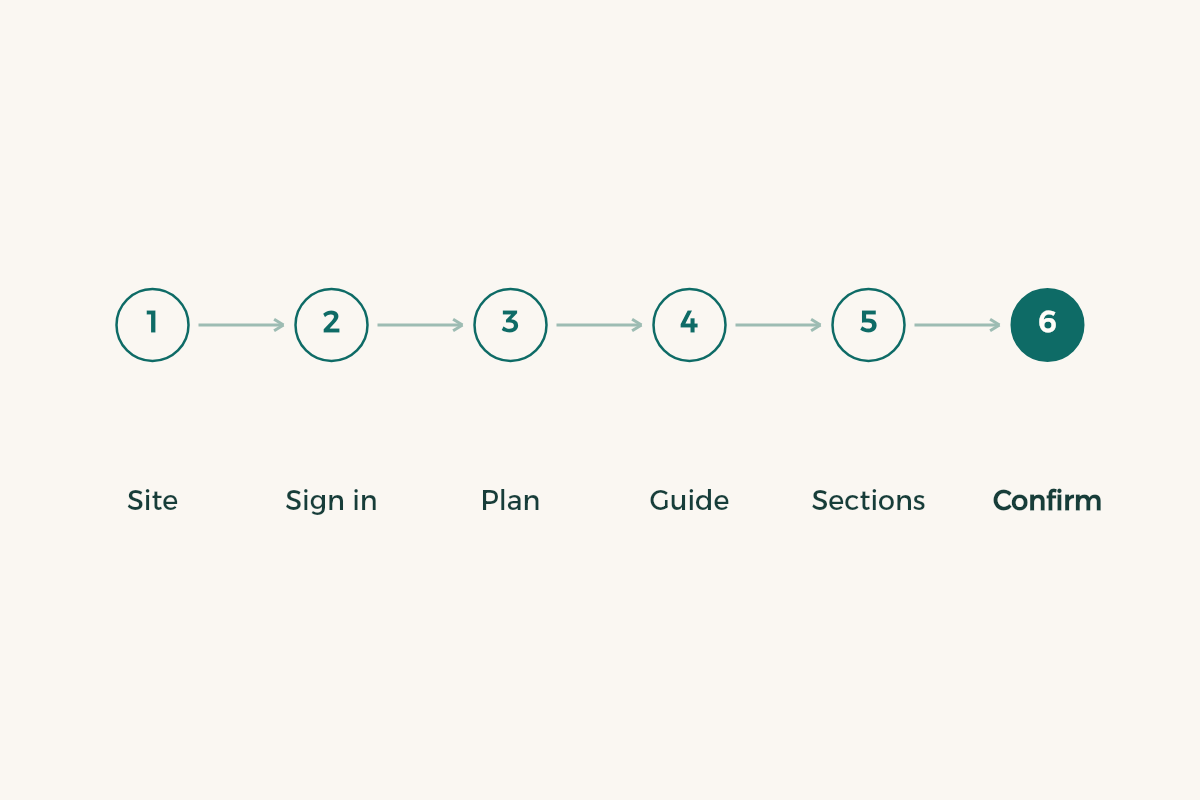
- Start from the official site
Open the university website and find the Deanship of Admission and Registration. If a message sends you a link to register, do not open it; go in from the site itself.
- Sign in with your university account
Enter your student number or ID as the system asks, and check before the window that your password works.
- Open your study plan
It is the list your schedule comes from. Read the courses offered to you this semester and their prerequisites.
- Read the deanship guide
Look for the electronic services guides on the deanship page. They explain the screens you will pass through.
- Pick sections and check clashes
Put each course into a single week view and see whether two meet at the same time.
- Confirm and verify
After saving, reopen the schedule and screenshot it. It is your proof if a dispute arises.
Why do plans differ between colleges in the same university?
Because each college runs programmes of a different nature: the College of Sharia is not the College of Computer Science, and each has its own compulsory courses, prerequisites and spread of hours. Even within one college the plan differs between programmes, and between a cohort admitted years ago and one admitted recently. So your friend’s advice is right for your friend and may not apply to you.
| Your situation | What to open first | Who confirms it |
|---|---|---|
| New student in the first semester | The deanship guide for new students | The deanship and your college student affairs |
| Regular student in a middle semester | Your study plan and prerequisites | Academic advisor |
| Behind your cohort in a course | The delayed course and its prerequisites | The academic department |
| Transferred from a college or branch | Equivalent courses | Department, then the deanship |

The table shows a way of thinking and does not replace your college guide. If what you were told conflicts with the official guide, the guide wins.
How do you build a workable schedule before registering?
Start with the gateway courses in the plan, the ones that unlock later courses. Delaying them delays whole semesters. Then add lighter courses to balance the load. If you live far from campus, cluster lectures into fewer days when the sections allow it, because one trip from morning to noon beats three short ones.
An example, tied to no real course: a student picks five courses and finds two of them meet on Sunday morning. She writes a backup section for each, then tries three combinations on paper. One of them puts her lectures into four days instead of five. Those minutes on paper save her a whole day every week. The guide to a study schedule helps you organise your days once the timetable settles.
What about add/drop and withdrawing from a semester at Imam University?
These procedures have their own regulation and windows, and only the university sets them. The deanship guides in earlier semesters pointed to specific add/drop instructions and noted that a new student’s position differs from others, so read the instructions published for your semester before acting.2 Do not rely on a number you heard, because minimum and maximum hours change when the regulation changes.
Withdrawing from a semester or a course is not the same as dropping, and it affects your enrolment and any stipend you receive. Ask before you decide, and read the guide to academic probation to see what withdrawing means when your GPA is weak. If you are considering a move between universities, there is a guide to university transfer.
What should you register first if you cannot register everything?
Put first the courses offered once a year, then those that unlock others, then the rest. The rule is simple: what blocks other courses goes first. If one seat remains across two courses, take the one that does not repeat.
Tell your advisor if your hours do not add up, because you may need approval or a substitute course. Do not stay silent until the week ends, since adjustment windows do not stay open.
What should you save once registration ends?
Save a picture of the confirmed schedule, each section number and each instructor’s email if it appears. Add the lectures to your phone calendar. Then open Blackboard or whatever learning platform your college uses and check that your courses appear. If one is missing the problem sits in registration, not in the platform, and it must be solved in the first week.
Look at the cost of the term as well: books, devices and transport. Many students never learn that a student card opens discounts, so browse the student deals before you buy.