By the tiswa editorial team, from the official sources listed at the end of this guide. How we write our guides
A major shapes years of study and a long working life, which is why parents find this decision hard to help with. Many want their child to pick the field that guarantees a job, and many students pick a major because their friends did. The most useful role for a parent is a thinking partner: ask good questions, help gather reliable information, and leave the final decision to your child, who is the one who will study and work in it.
How do you choose a university major: interests or jobs first?
Most students ask first which major will get them a job. The more useful question is what they can do for hours without getting bored. Interest alone is not enough, but it is what keeps a student going when the courses turn hard. Help your child answer honestly:
- Which school subjects did you enjoy, and which ones did you lose track of time in?
- Do you prefer working with people, numbers, tools, or ideas and writing?
- What do you do in your free time, and which activities do you seek out yourself?
- Do you prefer fieldwork or office work, and open spaces or closed rooms?
- What worries you about the majors you have heard of?
Write the answers on one sheet and look for a pattern. If numbers, people or design keep coming up, that is worth exploring, even if there is no major name in mind yet.
How do you tell whether a major fits your child?
A major is an entry point, and the job comes after it with other skills: languages, software, practical experience and professional contacts. So judge a major by three things rather than its title: what your child learns in it, what training and activities the college offers, and what projects the students finish. A student who completes projects and placements usually has better options than one who only attended lectures.
For each major your child is considering, check the core courses, the length of study, any special requirements such as tests or fieldwork, and the kinds of work it leads to. This information is on each university's official website, on the pages of colleges and departments. Ask the deanship of admission and registration what the switching procedure is, in case the choice changes later.
Where can you find official occupation information?
When you talk about jobs, use official sources rather than impressions. The Ministry of Human Resources and Social Development publishes occupation information on its website, including the Saudi Unified Classification of Occupations, which the Council of Ministers approved as a framework for job titles and the fields they belong to.1 The classification follows the international standard published by the International Labour Organization, so you can place two occupations in the same family when you compare them.2 Ask your child to read about the occupations that interest them, note the qualifications and experience they require, and compare those with the majors.
Do not build the decision on one job a parent heard about at a gathering. Jobs change during the years of study, so the aim is a major that builds skills which transfer across several fields.
How to choose a college major without getting lost?
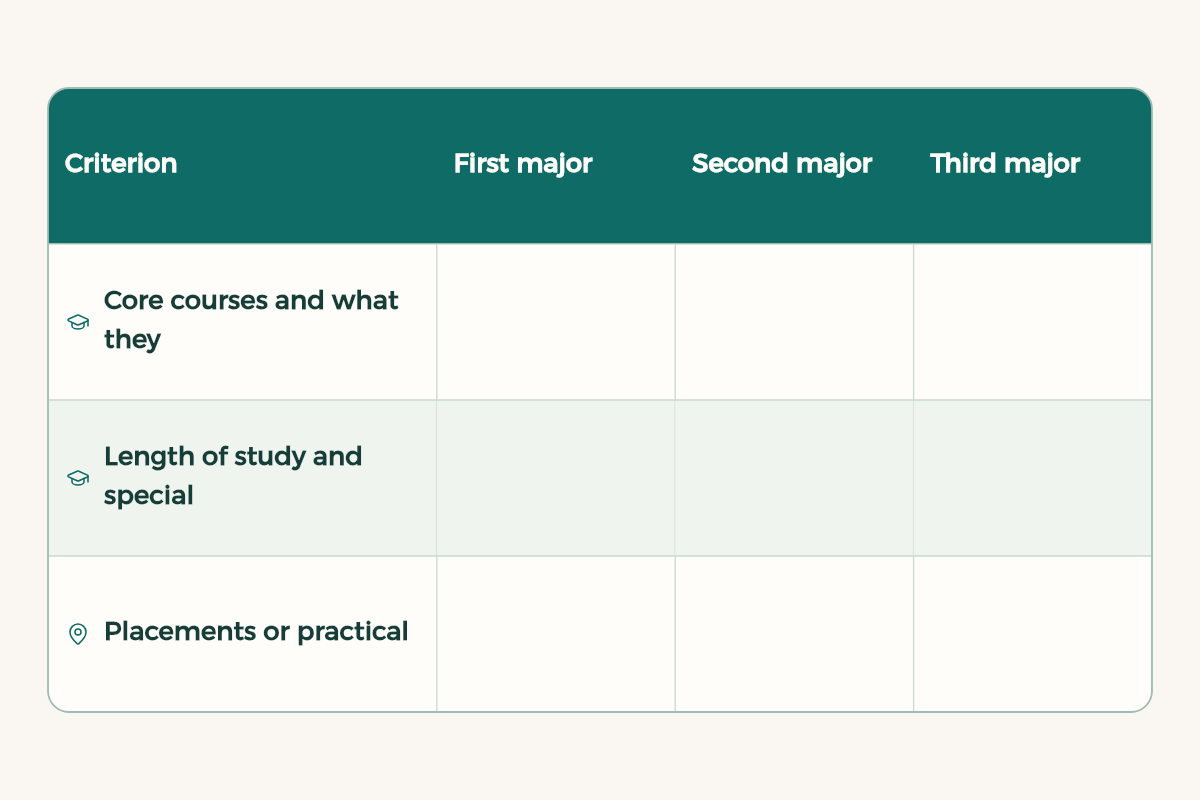
Work together on one simple table for 3 majors, no more. Do not rely on impressions alone. Fill each cell from the official university website:
| Criterion | First major | Second major | Third major |
|---|---|---|---|
| Core courses and what they enjoy in them | |||
| Length of study and special requirements | |||
| Placements or practical projects | |||
| Skills employers ask for | |||
| Places where opportunities exist | |||
| What worries them about it |
What should your child do before enrolling?
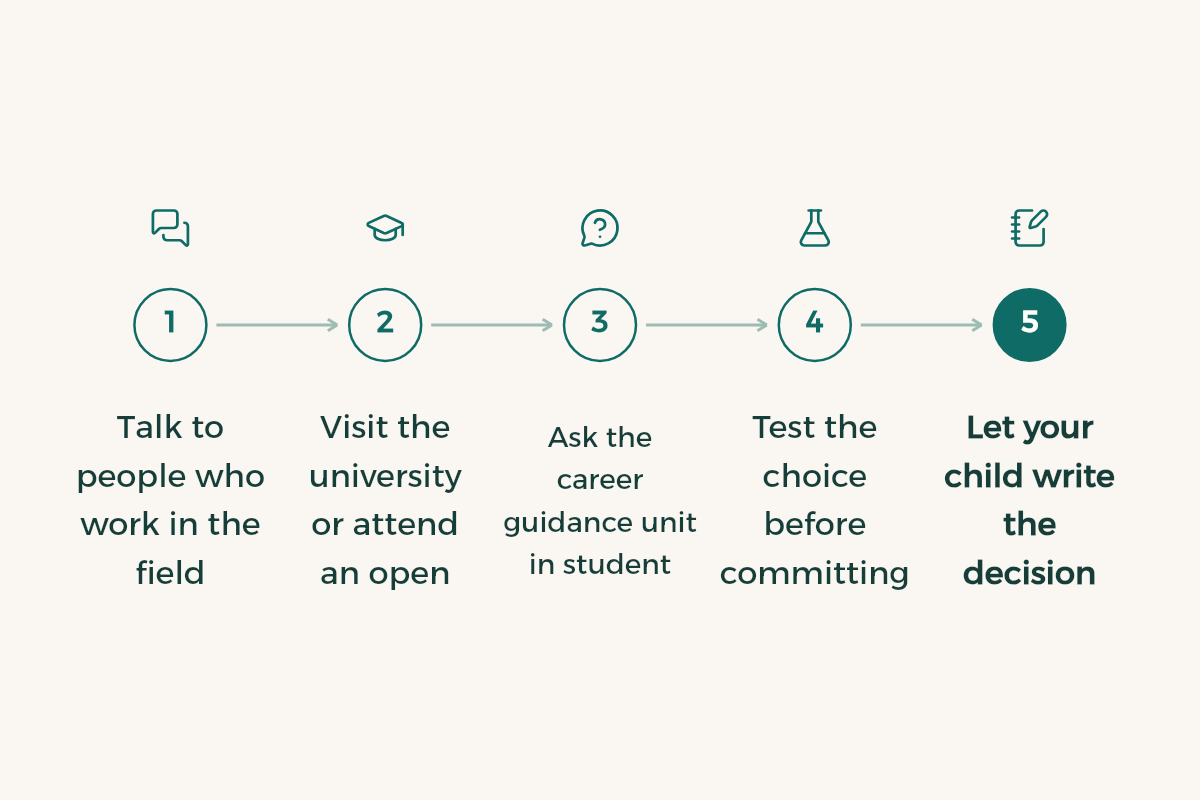
- Talk to people who work in the field
Ask your child to speak with 2 or 3 people working in each major, or with recent graduates. Ask about a typical day, the hardest part of the study, and what they wish they had known before starting.
- Visit the university or attend an open day
If possible, visit the campus and college and speak with an academic advisor. Some universities hold events that introduce their majors, so check the official site for dates.
- Ask the career guidance unit in student affairs
Most universities have career guidance and academic advising units. Book an appointment, since they know what graduates actually do after finishing.
- Test the choice before committing
A short course, a small project or volunteer work connected to the field. A few weeks of trying something tells you more than any article.
- Let your child write the decision
After gathering information, your child writes the decision and the reasons in a short paragraph and shows it to you. The exercise shows whether the choice comes from conviction or from pressure.
If your child has questions before the first year, the guide to the preparatory year explains how it works in some universities, and it is a chance to try the subjects before the final decision. If practical training is part of the plan, see cooperative training.
What mistakes ruin the choice?
- Pushing a major with threats or by comparing your child with siblings or cousins.
- Assuming a major that pays well for someone else will suit your child, when staying in a major needs real interest.
- Dismissing their interest because the major is less known, when many good careers sit in fields that get little attention.
What if my child does not know what they want?
That is common, and it does not mean something is wrong with them. Start with majors that offer a varied mix of courses in the first year, and take your time. If anxiety or pressure stops them thinking clearly, the counselling and advising units at their university are a good place to talk, and details of that support are on the university website. What you can offer most is the sense that they can make a mistake, correct it, and that you will stand by them whatever they decide.
Also read how to support your child in the first year to see what they will need once the decision is made.
What questions help more than suggesting a major?
Open questions make your child think out loud, and show you what they enjoy rather than what they think you want to hear. Try them over several conversations, and do not react to the answer in the moment:
- Which subject makes an hour pass quickly when you study it?
- If you had a whole free day, what would you choose to learn?
- What kind of working day do you want in ten years: an office, the field, a lab, or a mix?
- Who would you like to work like, and why?
- What worries you about the major you are leaning towards?
After the answers, read the guide to choosing a major together and compare three options only. If a preparatory year is ahead, it gives you time to try the subjects before the decision is final.