By the tiswa editorial team, from the official sources listed at the end of this guide. How we write our guides
A computer science student in Riyadh opened the careers page of a large telecom company and found one box for GPA, one for skills and one for a link to your work. She filled the first, wrote a long list of programming languages in the second and left the third empty because she had nothing to show. What happened next was predictable: the list looks like hundreds of others, and the empty box says more than she meant. This guide sets out what to do in the weeks before applying so the work link is not empty.
What must employers do for computer science co-op training?
The procedural guide to the students’ training decision says every establishment with 50 or more employees must host co-op students at no less than 2% of its total workforce each year, announce its opportunities and their conditions, and choose trainees through a competitive process on criteria such as cumulative GPA, skills and career interests.1 So the door is open, but selection is competitive and both GPA and skills are in the scoring. Large technology firms, banks and telecoms fall under the obligation once they reach the headcount.
For the contract, the stipend and the report, read the guide to co-op training in Saudi Arabia. This one covers only what matters to a computer science student: how to search and how to present yourself.
How do you search for a computer science co-op in four weeks?
Start a full semester before the placement. The four weeks below are a suggested plan, and you adjust them to your college’s calendar.
- Week one: pick a track
Choose one direction to apply under: web development, data analysis, cybersecurity or mobile apps. A general application disappears among a hundred general ones. If you cannot decide, read the cybersecurity roadmap or the data analysis roadmap.
- Week two: build two projects
A small finished project beats a large unfinished one. Put it on GitHub with a README that explains the problem, how to run it and a screenshot of the result.3 The basics are in the GitHub guide for beginners.
- Week three: prepare the CV and the link
A one-page CV with the link to your work at the top. Read the CV guide for students with no experience and see building a portfolio.
- Week four: apply through several doors
The company’s official site, the national platform Jadarat,2 your college training office and the company’s LinkedIn page. Log every application with its date, destination and result.
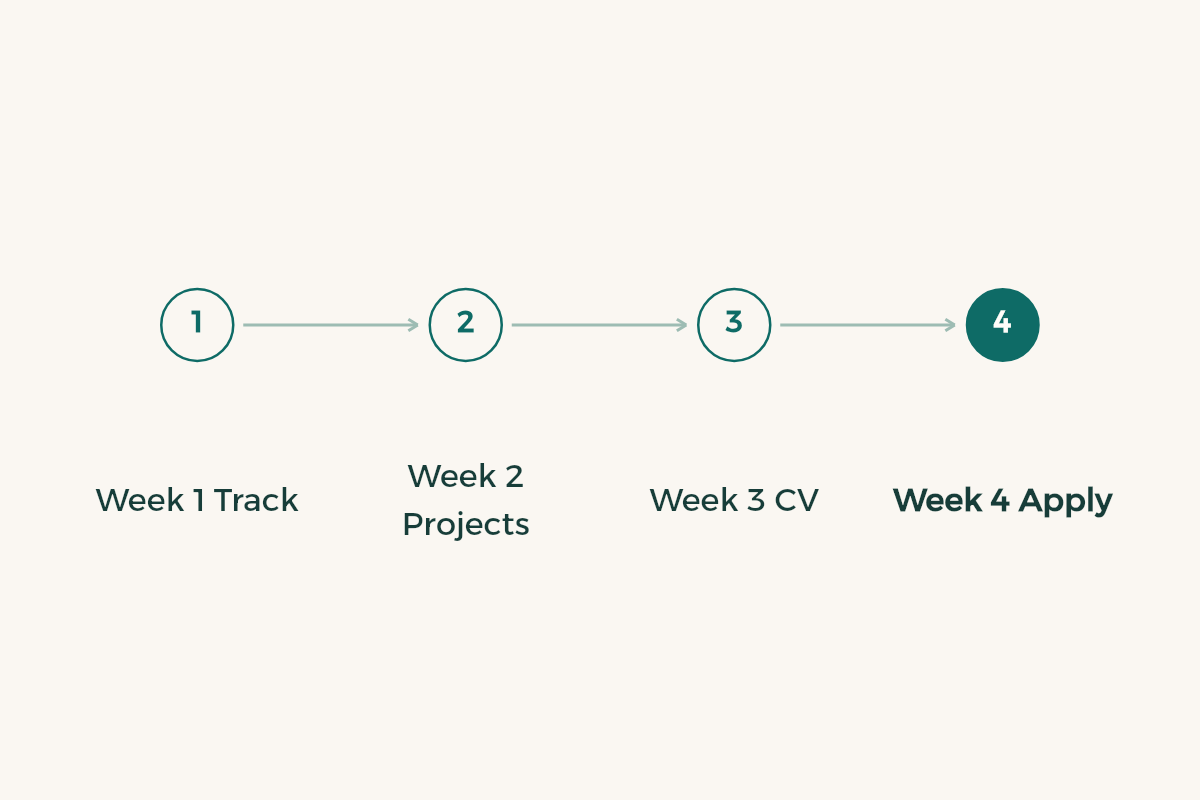
The example in week two is illustrative: your project might be an appointment scheduler, a dashboard or a small bot. What matters is that it runs and a stranger can see it without you explaining.
What goes in a computer science project file?
Two projects are enough. The first shows you finish what you start, the second that you learn something no one taught you. Give each project one sentence that says what problem it solved, not which tools it used.
| What you include | What it says about you | Common mistake |
|---|---|---|
| A repository with working code and a README | You finish and you explain | A repository with no explanation or run steps |
| A course project you extended after submission | You continue after the grade | Copying the course project as it was |
| A small contribution to an open project | You read other people’s code | Claiming broad involvement for a one-line text fix |
| A certificate tied to a project | It supports what you built | A list of certificates with no work behind them |
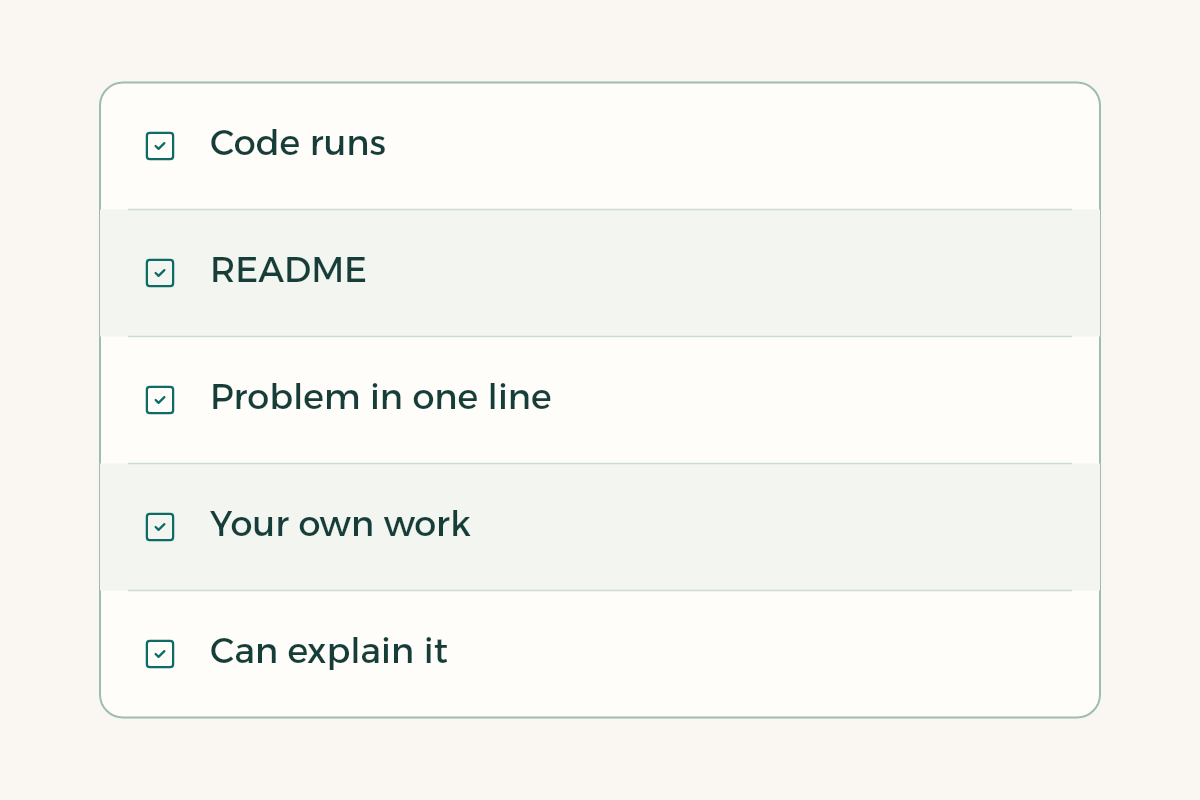
The rows are examples of thinking, not a required list. Use what you really have, and never write what you cannot defend in an interview.
How do you prepare for the first technical interview?
The first co-op interview is usually a conversation about your project, not an algorithms exam. Expect to be asked why you chose a tool, what broke while you built it and how you fixed it, and what you would change if you started again. Prepare an honest answer to each. Someone who has never tried anything stumbles at “what broke”.
Mind your English too, since many technology teams use it daily. Practise explaining your project in two minutes in English, and read interviewing in English and job interview questions.
Which mistakes weaken a computer science application?
The first is sending the same CV to every company. A firm building mobile apps cares little about a network security certificate, and a security team cares little about a pretty interface with no thought for protection. Change at least the first two lines for each destination and put the closest project at the top.
The second is showing a project you cannot explain. Perhaps a teammate wrote part of it, and then the interviewer asks about a line you do not recognise. Show only what you understand completely, even if it is small. A group project is fine when you state in one line what you wrote yourself.
If your GPA is lower than you would like, do not hide it or apologise for it. Put your projects first, add a course or skill you raised in the last semester, and try smaller employers who look at what you build more than at the number. GPA is one of the selection criteria in the guide,1 but not the only one, and a good project can make up much of the gap.
What if companies turn you down?
Write down what happened before reacting. If the rejections come with no interviews, the problem is the CV or the link. If you reach interviews and do not convert, the problem is how you explain your project. The first takes a week to fix; the second takes practice talking. And if the placement semester approaches with nothing found, ask your college training office which employers it already works with, because an option may exist that general search never shows.
Remember you pay nothing for the placement: the guide states that the establishment does not charge the trainee any costs.1 If you are asked to pay for an opportunity, stop and ask your college.