By the tiswa editorial team, from the official sources listed at the end of this guide. How we write our guides
In week three of studio at an architecture college in Riyadh, a student handed in a beautiful board for a small kiosk at a campus gate. The instructor asked why the opening faced west, and he had no answer. The scene is an example, but it captures something common: studio assesses your decisions, not the polish of the drawing alone.
What are the architecture studio projects in the first year?
Projects differ between universities, but most start with short exercises: analysing an architectural element, drawing a plan of a place you know, then designing a small space for one person. These are examples, not an official list. Ask your instructor for the course outline on Blackboard or your college portal, which sets the number of projects, their weight and the review dates. The Saudi Council of Engineers and overseas accreditation bodies publish material on the profession that helps explain why the course is staged this way.12
| Skill | How to practise | What the jury looks for |
|---|---|---|
| Quick sketching | Ten minutes a day on a place you pass | The hand records what the eye sees with reasonable accuracy |
| Reading plan and section | Compare a plan of your room with a section of it | That you understand how people read space |
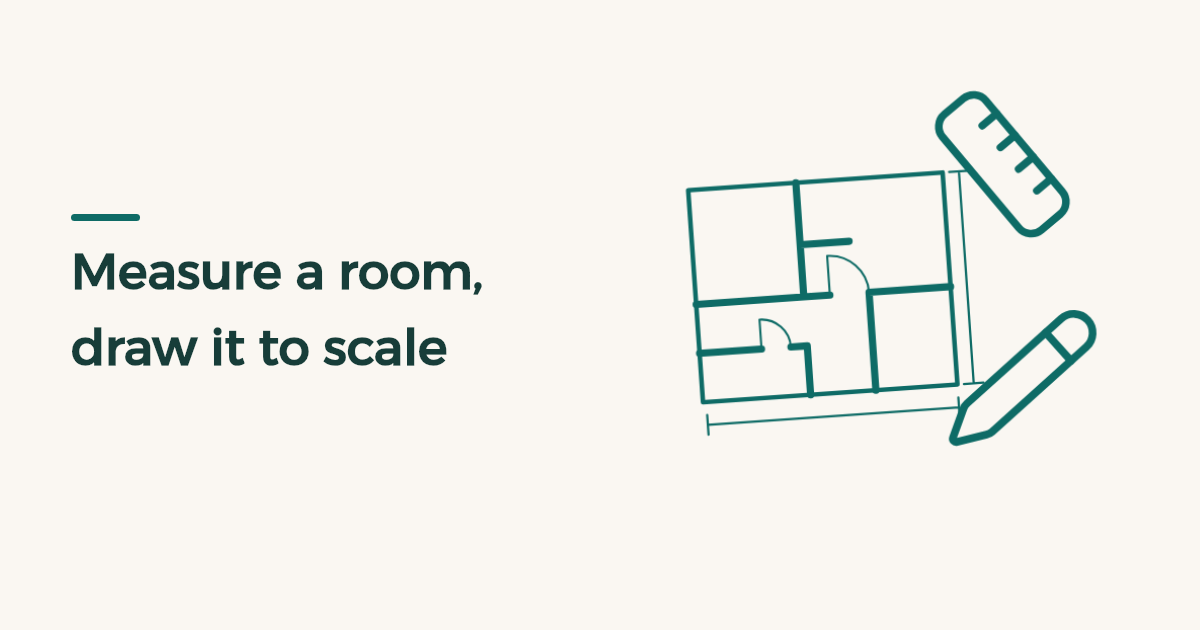
| Drawing to scale | Draw your room at 1:50 on paper | That dimensions make sense for the body |
| Model making | Build a card model of a book | That you can turn an idea into a volume |
| Oral presentation | Explain your project to a classmate in three minutes | That you defend decisions with reasons, not with taste |
| File management | Name each stage with a number and date | That you can return to an earlier version when needed |
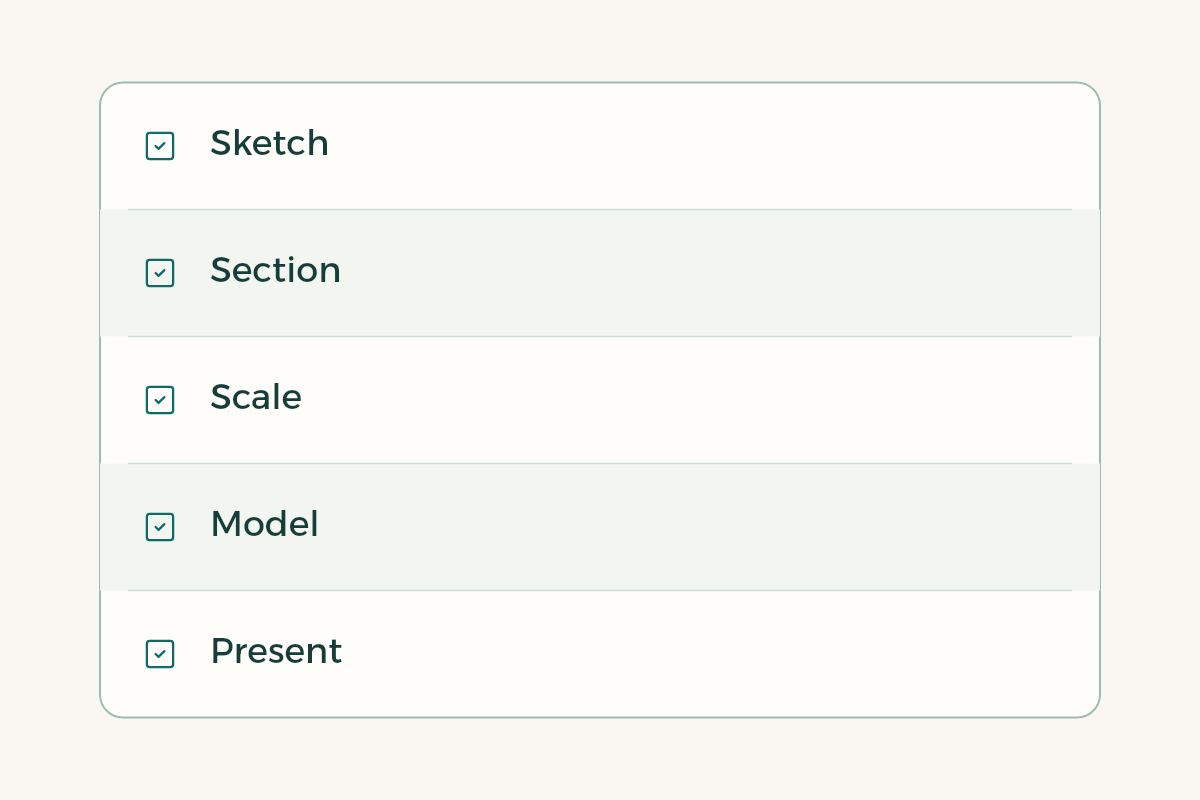
The table is a way to think, and your college sets the actual assessment.
How do you succeed in a first-year architecture studio?
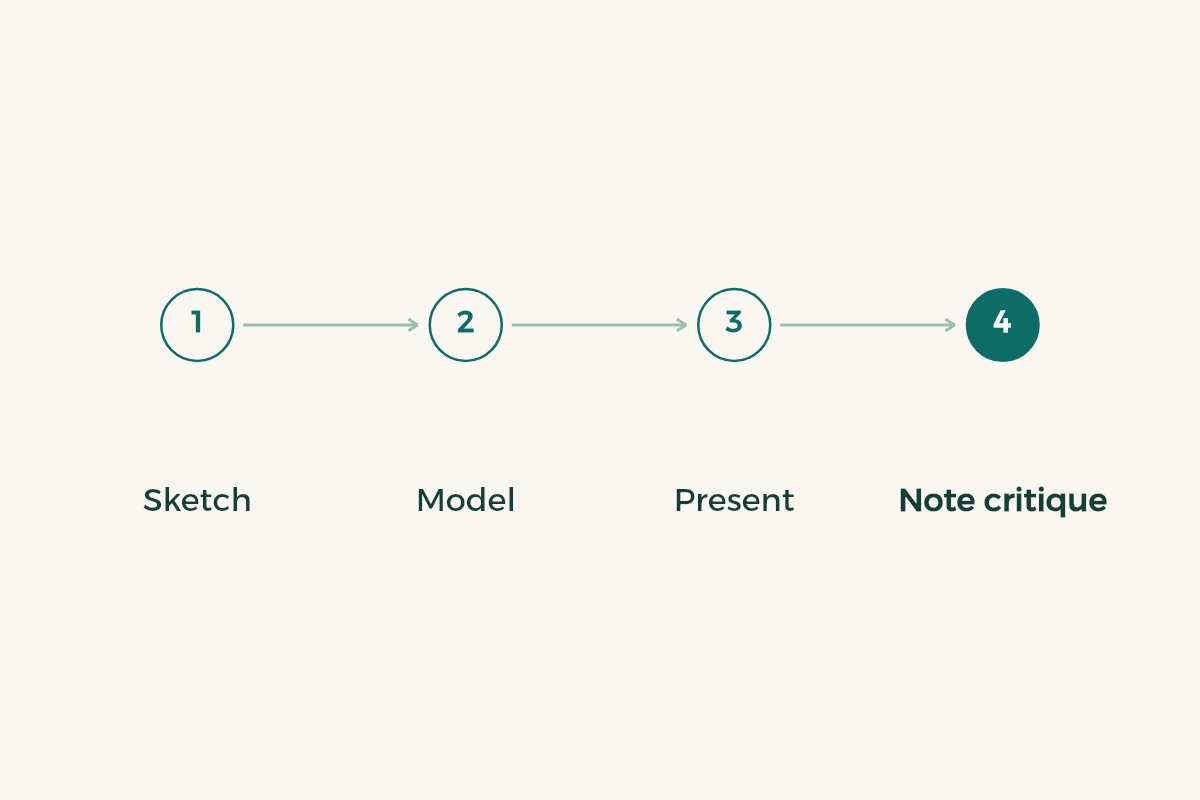
Success in studio is a weekly behaviour, not a talent. The strong student arrives at each critique with something new, even if small. The instructor wants to see development, and a polished first version matters little. Someone who shows unfinished work early gets critique that changes direction, while someone who waits for perfection gets critique in the last week, when it is too late to use.
- Carry a small sketchbook
Pick a size that fits your bag. Draw what catches you: a doorway, a stair, the shadow of a wall. Do not judge the drawing, just repeat.
- Write the project question in one sentence
What does the brief ask you to answer? Copy the wording from the brief, then write your provisional answer beneath it.
- Make three quick alternatives
Three sketches of equal length, not one polished version. That shows which idea deserves development.
- Build a rough model early
A card model reveals proportion errors that drawings hide. Keep it crude, since it is a thinking tool and not the final piece.
- Rehearse the presentation
Stand in front of a classmate or a mirror and say your idea in three minutes. If you need five, cut something.
- Write down critique the same day
Turn each comment into a verb: move, change, remove. Then rank them by importance.
Do you need to draw well before studying architecture?
You do not need to be a skilled drawer before you start. Most colleges admit students without an advanced art background and teach drawing from scratch. What you need is the readiness to practise daily and to have your work criticised in front of others. If you want a head start, draw from observation: your chair, the stairs at home, the front of a nearby mosque, in simple lines.
For the practical side, read the first-year architecture supplies guide to see what to buy now and what to postpone. If you are still comparing majors, go back to the architecture major guide and how to choose a major.
It helps to know the shape of the week. You meet your instructor two or three times: the first session presents the idea, the second the development, and the last is a hand-in or a jury. If your timetable lives on the university system, count the hours from week one: six contact hours usually mean ten working hours or more. Put them in your calendar like any lecture, and you protect both your sleep and the quality of the work.
How should you handle critique in studio reviews?
Critique in studio is public and quick, and it can feel harsh to someone not used to it. Separate comments about the work from comments about you: the first is information, the second is noise. Listen to the end before defending, take notes, then ask one question that clarifies what you did not understand.
Remember that classmates face the same thing. Sit with a project partner and swap comments before the session, since a peer’s feedback is free, early and gentler than a jury’s. If you cannot find a partner, the group study guide has ways to form a group that actually works.
What role do software and AI play in studio projects?
Software is for execution, not for thinking. In year one it helps tidy a drawing and lay out a presentation board, and it does not replace sketching. If you plan to use AI tools to generate images or ideas, read your college policy first, then the AI guide for architecture and design students, because handing in a generated image as your own work may count as a breach.
Studio ends at graduation, and if you want to see where this path leads, look at the architecture graduation project brief guide. For co-op training, read the architecture co-op training skills guide to connect your skills now with what a design office asks.