

By the tiswa editorial team, from the official sources listed at the end of this guide. How we write our guides
Most alumni programmes fail before they start, because nobody can say who the graduates are or how to reach them. The first question is practical, not inspirational: which graduates do we have, and what is the right way to contact each one? If the university cannot answer that, the association becomes a mailing list nobody opens. This article is written for staff who run graduate affairs, careers or institutional communications, and it puts the work in the order it is usually done.
Building a contact base you can trust
A clean record with name, major, graduation year and an agreed way to reach each person is enough to begin. Contact details decay quickly. Graduates change their email, their phone and their employer, and rarely tell the university. Make updating the record part of graduation procedures wherever you can, and send a short form each year that the graduate fills in personally.
Start with the last few cohorts. They are the easiest to reach and the closest to today's labour market. Widen the base to older graduates once the routine works. When you collect this data you are handling personal information. The Saudi Personal Data Protection Law generally requires consent before data is used for a new purpose, and it lets the person withdraw that consent at any time.3 Say on the form what you will do with the data, who will see it, and how long you will keep it.
How do we follow what graduates do next?
Follow-up is the hardest part of the work and also the most useful. Taif University's career development and employability support unit states that it operates an alumni employment platform linking graduates with relevant openings, and that it assesses satisfaction among students, alumni and employers.1 That is a clear model because the unit says plainly what it measures. If your university has no platform yet, begin with a list of current openings sent once a month, and grow the service when you have enough openings to justify it.
Measurement needs no more than three sources: a short survey sent some months after graduation, a question to each academic department about where its graduates are working, and an annual check with employers who hire your graduates. Any one of them is incomplete. Together they give leaders a picture they can act on.
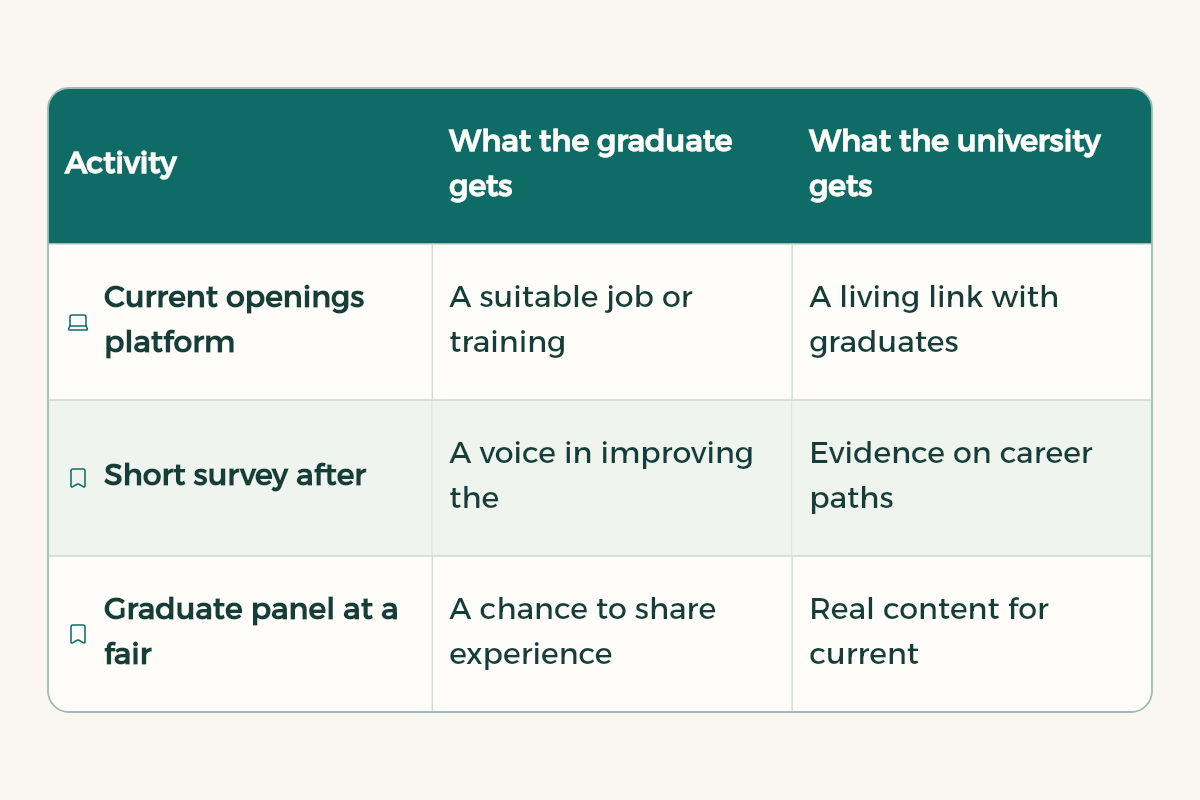
| Activity | What the graduate gets | What the university gets |
|---|---|---|
| Current openings platform | A suitable job or training place | A living link with graduates |
| Short survey after graduation | A voice in improving the service | Evidence on career paths |
| Graduate panel at a fair | A chance to share experience | Real content for current students |
| Mentoring a student in their major | Passing on experience | A stronger sense of belonging |
| Termly newsletter | News and openings from the university | Updated contact records |
What is the best way to help a graduate find work?
A graduate who knows where to look saves months of guesswork. Give them three clear channels: the university platform if you have one, the list of employers your university already works with, and the annual career events. Then ask them to start with two applications a week. A graduate who sends twenty applications in one night tires quickly, and an employer who receives a rushed batch forgets the name.
Turning a willing graduate into an active mentor
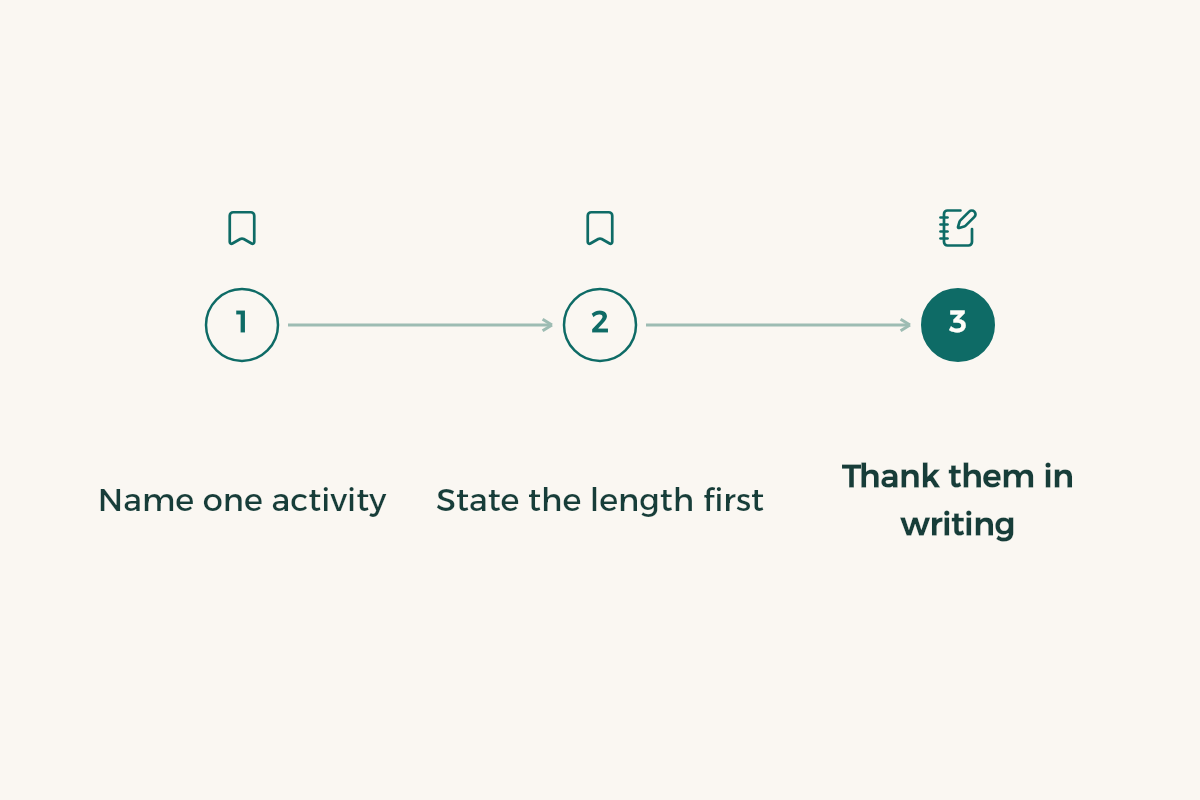
A graduate who agrees to talk with students needs a clear next step within days of saying yes. Otherwise the enthusiasm fades. Name one activity, state its length before they agree, and send a thank-you note that describes the effect on students.
- Name one activity
A short session at a career fair, a meeting with students in their major, or a review of a set number of CVs.
- State the length first
An hour or two usually works. A busy graduate accepts a fixed time far more readily than an open-ended one.
- Thank them in writing
Describe what the session changed for students, and ask about next year in the same message.
A survey of five questions is enough
A long survey will not be finished by a graduate who is busy. Five questions show where they stand and keep the door open. Send it six months after graduation, then once a year:
- What is your current status: employed, looking for work, studying, or something else?
- If you work, which sector is it, and is it related to your major?
- Which skill did you need at work that you did not learn at university?
- Would you speak with current students about your experience once a year?
- What is the best way to reach you?
Answers to the third question belong with the academic departments, which can adjust their plans. Answers to the fourth build your list of mentors. Do not ask for data you will not use, and say at the top of the survey how the answers are stored and who reads them.
Why three numbers beat a dashboard
An alumni programme does not need a complicated dashboard. Three figures at year end are enough: how many graduates updated their details, how many took part in a survey or event, and how many gave a session, mentoring or CV review to students. Compare each figure with the year before, and write beside it how you counted it.
If a figure falls, look first at the channel, the message or the timing before blaming graduates for staying silent. A message sent during exam week or from an inbox the graduate no longer opens will look like apathy in your report, but it is a delivery problem.
What do graduates and current students exchange?
Graduates give experience, networks and time. Students give energy and fresh questions, which remind a graduate of what they needed when they were in the same position. The exchange stays healthy when it is specific and short. It turns unhealthy when it becomes repeated requests with nothing given back. Close each volunteer activity with a written thank-you and a note on what it made possible.
Mistakes that weaken a graduate association
- Mass messages that matter to nobody who receives them.
- A contact list written once and never updated.
- Asking graduates for donations before any relationship exists.
- Ignoring graduates who return with new skills that would help students.
A newer university may not have a full graduate record yet, and that is not a reason to wait. Begin with the official records you already hold, then add the rest with each cohort. A plan you run on one cohort beats a complete plan that never started.
To see how graduate contact fits the wider service, read about university career services. For a joint event with graduates and students, see planning a career fair. Graduates updating their own CVs can use the guide on CV writing for students, and anyone looking for student discounts can start on the tiswa deals page.


