

By the tiswa editorial team, from the official sources listed at the end of this guide. How we write our guides
A student discount program gives enrolled students a reason to feel that the university looks after them beyond the campus gate. This guide is for student affairs, career and quality teams, and anyone deciding whether to launch a benefits scheme. It explains what a good program looks like, what it must protect, and one practical way to run it, with tiswa for Universities as one option among several.
How do student discounts work for enrolled students?
Students get an offer once the university confirms their status from its own email or records, not by sending copies of documents to every partner. Four questions need written answers before launch: who qualifies, how a student proves enrolment, what the benefit covers on and off campus, and who protects the student data. If any answer stays vague, the program will struggle in its first term.
- Free for the student: no joining fee and no hidden monthly charge, so the benefit never becomes the reason someone is left out.
- Verified students only: access follows enrolment rather than an open sign-up form.
- On campus and beyond: most student spending happens in the city, on transport, phones, software, food and clothes.
- Data stays with the student: partners do not receive student lists, and each student can stop taking part at any time.1
What is the best student discount program for a university?
The best one is run by the university with its partners, not a row of logos on a page. The university already holds enrolment records and university email, which is the natural way to check status without collecting extra papers. When you gather any personal data, remember that the Saudi Personal Data Protection Law generally requires consent before data is used for a new purpose, and lets the person withdraw that consent at any time.1 Say on the joining form what you will do with the data and who will see it.
Design it with the university, not above it
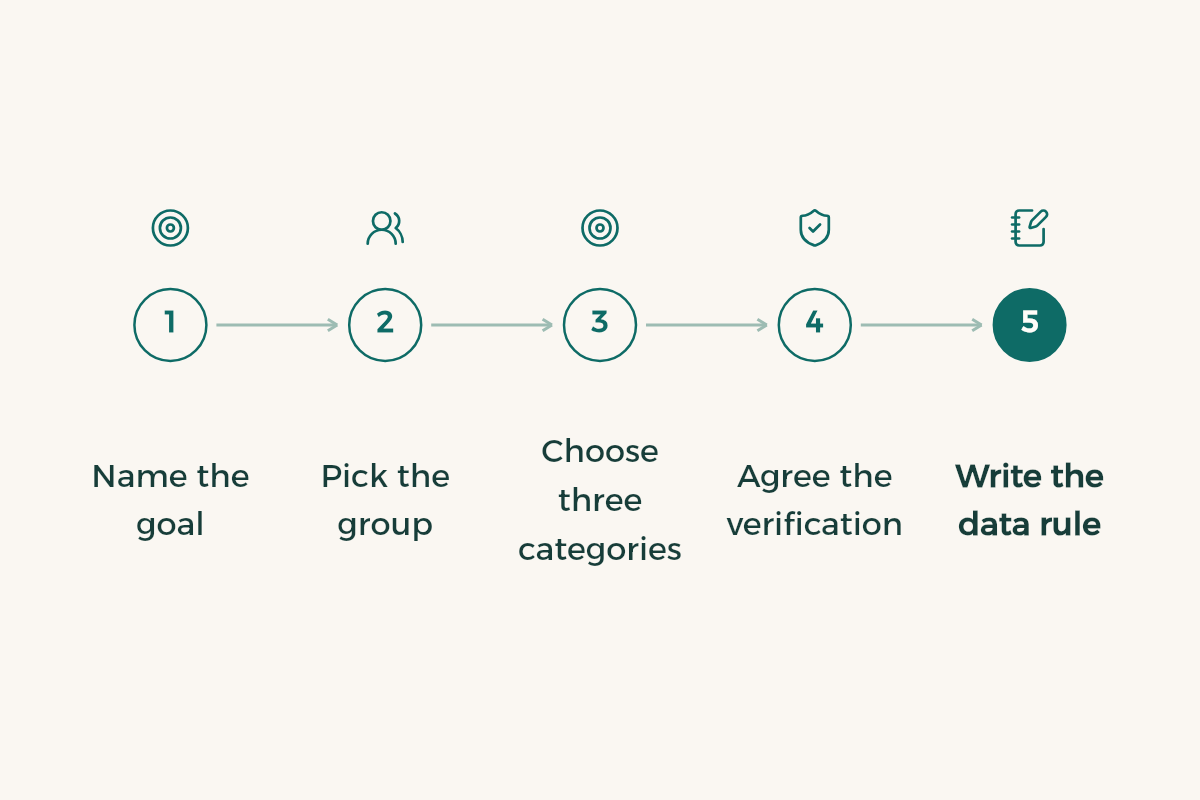
A program that one office imposes on everyone else tends to fade after the first announcement. Start with a single working session that brings together student affairs, the library, student activities, communications and whoever owns student records. Agree on the target group, the places where benefits apply, the categories you need, and who approves a partner at the end.
- Name the goal
Choose one measurable aim, such as more students using campus facilities in the first term, or lower costs for first-year students.
- Pick the group
Start with one cohort, such as first-year students or a single college, then widen it once the process runs smoothly.
- Choose three categories
Begin with three things students buy every week. A short list is easier to explain and easier to keep up to date.
- Agree the verification
Use the university email or the academic record, and write the method in a short policy that students read before they join.
- Write the data rule
Say in plain language what the university shares, what it does not share, and how a student can stop taking part.
- Measure and adjust
Ask students and the relevant units what they used and what was unclear, then change the program each term.
How do students get the discount in practice?
A student should show proof once, to the university, and then use the offer at the partner's counter or site. A program that asks the partner for ID, a transcript and a receipt all at once tends to lose the student before the first purchase, so keep the proof step inside the university.
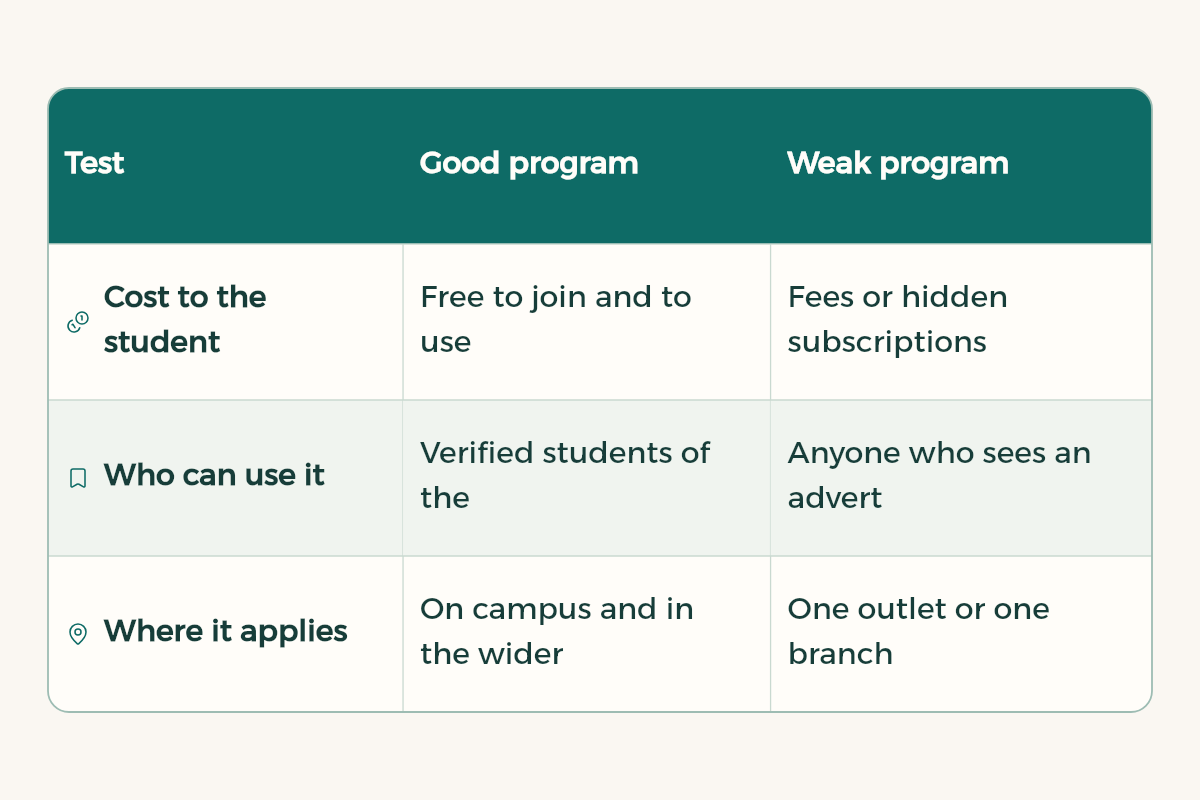
| Test | Good program | Weak program |
|---|---|---|
| Cost to the student | Free to join and to use | Fees or hidden subscriptions |
| Who can use it | Verified students of the university | Anyone who sees an advert |
| Where it applies | On campus and in the wider city | One outlet or one branch |
| Student data | Stays with the student, shared with consent | Lists handed to partners without notice |
| How it is set up | Designed with the university | Imposed without consultation |
Why do off-campus offers matter?
Most students spend their money outside the university, so a program that only covers the cafeteria reaches a small share of their costs. Phone plans, transport, devices and subscriptions weigh on a budget month after month. Students and families can plan those costs together with the student budget guide, and anyone comparing prices can start on the tiswa deals page.
What should a university avoid?
- Savings claims that nobody has measured.
- Conditions that appear only at the checkout or at the service desk.
- Asking staff to collect student IDs or paper documents.
- Partners who ask for the full student list.
If a partner changes or its terms change, tell students before they notice for themselves. Trust in the program comes from repeated clarity, not from the first announcement alone.
Which questions should I ask a benefits partner?
Before adding a business to the program, ask for written answers. Clear answers point to a partner who will stay, and vague ones point to an offer that may vanish in weeks:
- What exactly is the discount percentage, and which products or services does it cover?
- How does a student prove they are a student, and does that require sharing personal data?
- How long does the offer run, and how will you tell the university before any change?
- Who is responsible for solving any problem a student runs into?
How do students find out about the program?
Tie the program to the moments every student passes through: orientation week, the student portal, the university email at the start of each term, and student clubs. Keep the message short: what the benefit is, who it is for and how to get it. Then ask students in the satisfaction survey whether they know the program, because awareness is the first measure to track, before usage.
How do I measure the result each term?
Track three numbers at the end of each term: how many verified students joined, which categories they used, and how many said the benefit was clear to them. Keep the survey short and send it through the channels students already use. If the numbers are low, check verification and clarity before adding partners.
For the wider picture of student support, see how academic advising welcomes new students. Benefits work best when they sit inside care that the university already gives its students.


