By the tiswa editorial team, from the official sources listed at the end of this guide. How we write our guides
An accounting co-op offer arrives and the reply is due in two days. It says you will “take part in the financial and administrative work of the company.” You are pleased, but that sentence could mean posting journal entries or it could mean filing papers and photocopying. The difference between those is an entire term.
What tasks does coop training in accounting include, and which should you ask about?
Tasks depend on the type of host. An audit firm is not a company finance team, and neither is a government body. So a general question about “tasks” does not help. Ask about the kinds of work themselves: will you enter data in an accounting system, prepare bank reconciliations, check documents for audit samples, build schedules and reports, or work with invoices and tax? To compare types of host, read choosing an accounting co-op placement; it covers picking the host, while this guide covers what to ask once an offer is in hand.
It also helps to tie the questions to where you want to end up. The Saudi Organization for Chartered and Professional Accountants is the body for the accounting and auditing profession, so if you are thinking about a professional path, look at its site to see which kinds of experience matter later.1 Anyone doing tax and invoice work deals with rules published by the Zakat, Tax and Customs Authority, so ask whether your role will touch that area at all.2
How do you ask about coop training accounting tasks before accepting?
These questions can be copied and adjusted. Ask on a call or by message, and ask for the answers in writing if you can.
- Ask for a typical week
“Could you describe an ordinary week for a trainee? What are the three most common tasks?” Concrete examples beat a general phrase.
- Ask who reviews you
“Who reviews my work, and how often?” A trainee with no review repeats mistakes without knowing.
- Ask about tools
“Which accounting software and which Excel version do you use?” Compare that with what you know and practise the gaps before day one. Excel for students is a place to start.
- Ask about documents
“Which documents will I handle: invoices, bank statements, journal entries?” This shapes what kind of understanding you build.
- Ask about confidentiality
“How do you treat client data, and what may I mention in my training report?” It matters because your university report needs material to write about.
- Ask for it in writing
“Can the tasks and hours we agreed be documented?” Show the terms and any contract to your university’s training office before signing, and use the ministry’s official site for questions about the employment relationship.3

How do you read the host’s answers?
Do not judge the host by enthusiasm; judge it by how precise the answers are. The table helps you tell a reassuring answer from one that needs a follow-up. The examples are illustrations only.
| Question | Reassuring answer (example) | Answer that needs follow-up (example) |
|---|---|---|
| What will my weekly tasks be? | “Match the bank statement to entries and prepare the payables schedule” | “Whatever the department needs” |
| Who reviews my work? | “The accounts manager reviews every Thursday, and her name is X” | “Everyone will help you” |
| Which software? | “System X plus Excel, and we teach you in week one” | “Something simple, don’t worry” |
| Will I do accounting work? | “Yes, with admin work around a quarter of the time” | “You will move where we need you” |
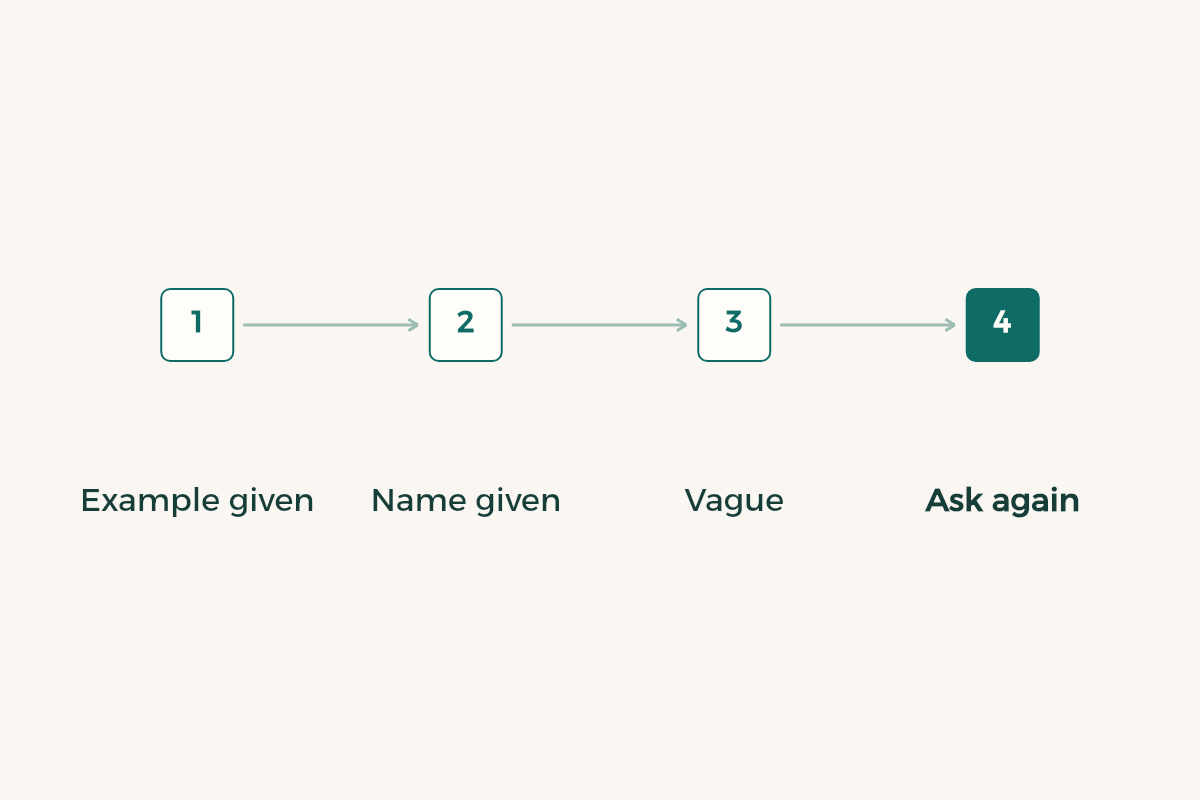
“You will move where we need you” is not automatically bad in a small business, but it tells you what to ask next: what should I be able to do well by the end of the term, and can we name three core accounting tasks I will work on? If the interviewers refuse to name anything, that is information in itself. If you hold more than one offer, use comparing training offers to put them side by side.
Do your questions change between an audit firm and a finance department?
Yes. At an audit firm, ask how working papers are documented, how big the team is that you would join, and when the busy periods that might lengthen your hours fall. In a company finance department, ask about the monthly close and which part of it you would join. In a small business, ask whether a qualified accountant supervises your work. Do not assume a big name is always better: a small team may hand you wider tasks and closer feedback.
If you are early in your degree, make sure you can follow the terms the interviewers will use. The accounting and finance glossary shortens that road. For preparing the application itself and the skills it shows, see accounting co-op skills.
What do you do once you have the answers?
Write a five-line summary of what you understood: main tasks, who reviews you, the tools, hours, and any confidentiality condition. Send it to the host as “just to confirm I understood.” If they correct something, you have avoided a misunderstanding. If they confirm it, you have a record to return to when the story changes. Then compare it with your university’s training requirements, since the university decides what counts, not this guide and not the host.
If you accept, following up on a training application covers the steps after the offer, and co-op training gives the wider picture. If the answers do not fit, declining politely is better than losing a term to tasks that teach you little.