By the tiswa editorial team, from the official sources listed at the end of this guide. How we write our guides
Picture a student who has finished two semesters in the College of Science and is eyeing computer science. That is only an example, but it captures the problem. Before opening the Academia portal, two numbers matter: how many transfers are left, and how many semesters have already passed. Those two answers settle the request before a word of it is written.
What is an internal transfer, and how is it different from an external one?
An internal transfer moves you to another department or college inside your own university, and you stay on the same academic record and student number. An external transfer moves you between two universities and brings its own admission and course-matching rules. The unified regulation allows both, leaves the detailed conditions to each university council, and says courses you studied and matched stay on your record.2 The practical gap is large. Inside one system, your courses follow you to the new plan instead of starting from zero. For a wider comparison, read the guide to transferring between universities.
What are the conditions for an internal transfer at King Khalid University?
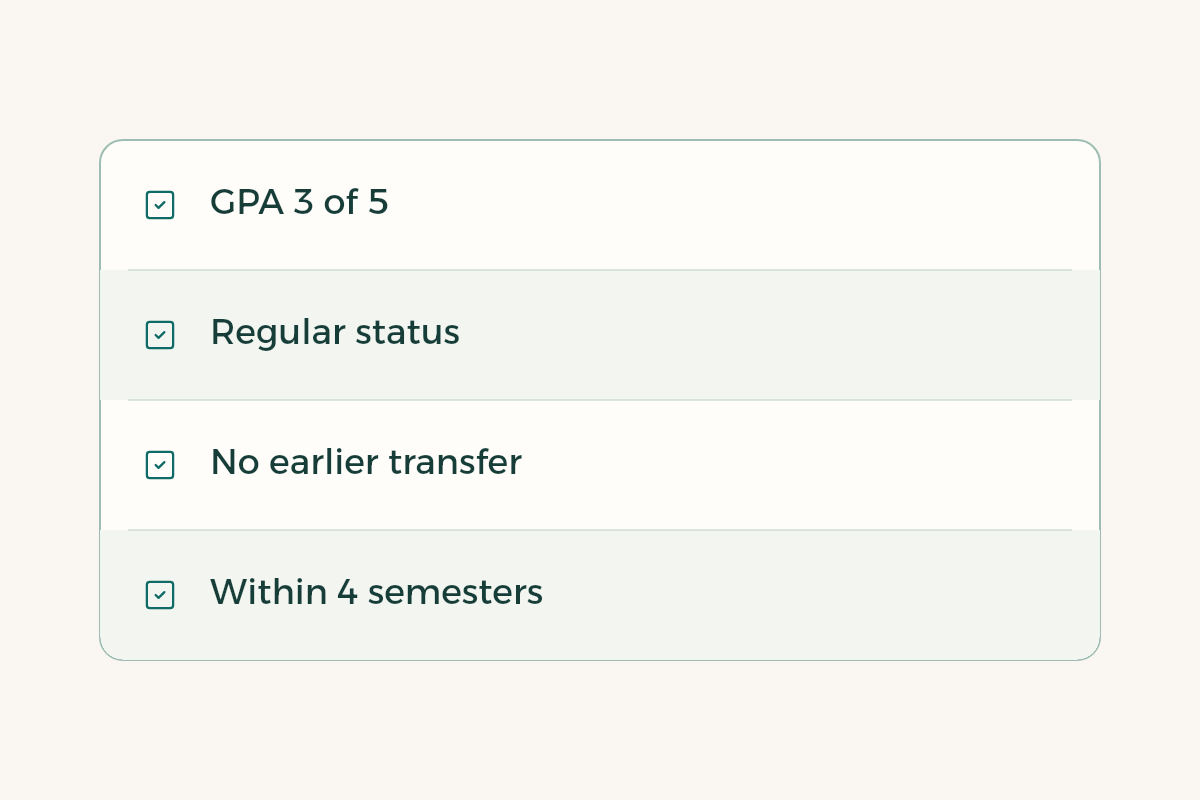
The university publishes them in the internal transfer FAQ from the Deanship of Admission and Registration. In short:1
| Condition | What the FAQ says |
|---|---|
| Number of transfers | One only, across your whole study period |
| Cumulative GPA | At least 3 out of 5, based on two semesters or more |
| Student status | Regular |
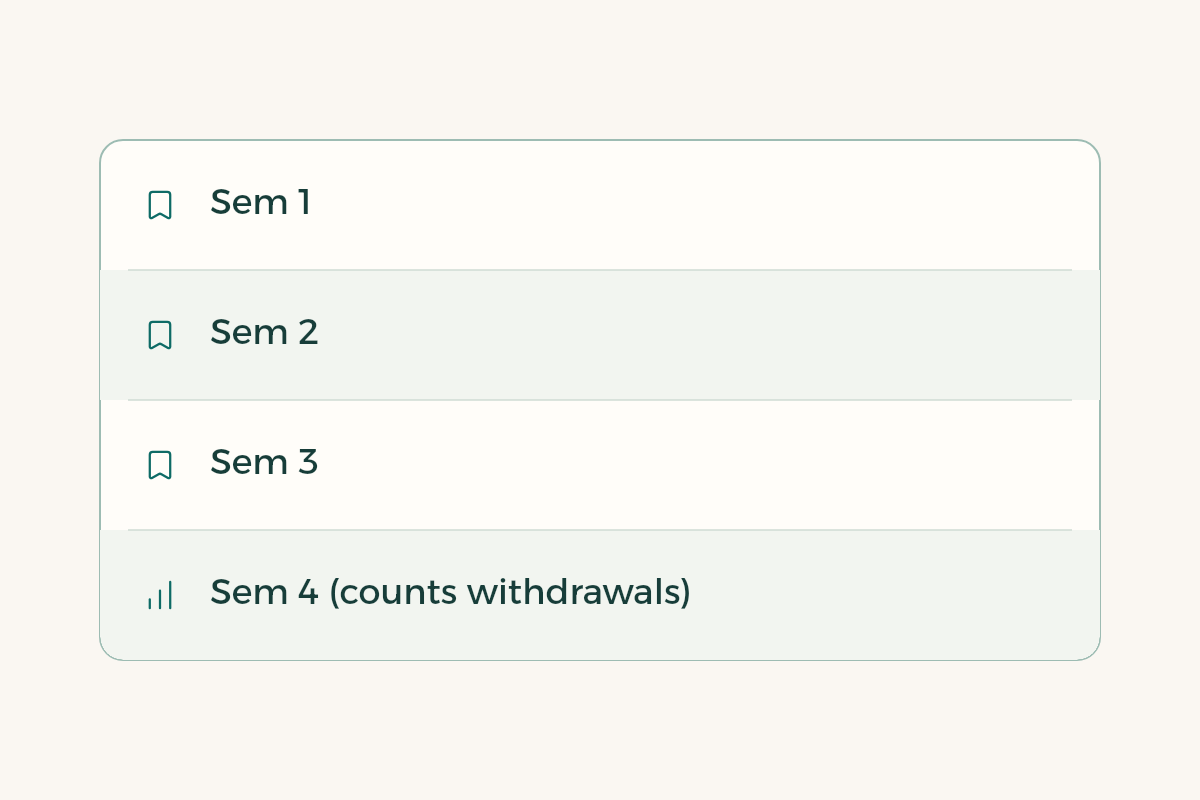
| Maximum semesters | Four for a bachelor’s degree, two for a diploma |
| What counts towards that cap | Withdrawal periods and approved leave |
| Ranking | By cumulative GPA and the target department’s capacity |
| Health specialisations | Open only to students already in medical specialisations who have finished first-year courses |
Read the last row twice. A student in a non-health college cannot move into a health specialisation, so do not build a plan on a closed door.
How many semesters count against you before the door closes?
Four for a bachelor’s degree, and the FAQ counts withdrawal and approved leave inside that number.1 A semester you dropped does not buy extra time. Here is an example. A student studies one semester, withdraws from the second, then studies the third. The counter reads three, not two, so one semester is left to apply. That is why waiting until the second year, assuming time is on your side, is a mistake.
The other end matters too. The GPA is taken after at least two semesters, so your real window opens after the second and shuts at the fourth.
How do you apply for the transfer in Academia?
- Read the window announcement
The university announces the transfer period on its site and in its academic calendar, and the dates are not fixed from year to year.1 Start with the announcement for the semester you want.
- Check your own numbers
GPA above 3 out of 5, no more than four semesters once withdrawals are counted, regular status, and no earlier transfer.
- Open the transfer service in your account
The request is electronic, through your own Academia account, during the announced period.1
- Pick the target department
Read its plan first. For a health specialisation, confirm you come from a medical specialisation and finished first-year courses.
- Submit and wait for the result
Submitting is not approval. Requests are ranked by cumulative GPA against department capacity.
- Review your courses after acceptance
The head of the new department decides which earlier courses count.1
What if the sources disagree on how many transfers you get?
You may come across earlier announcements, or sites quoting them, saying one transfer between colleges and two between departments of the same college. The current FAQ says one transfer during your study.1 Go with the newer text, and if what you read conflicts with what a registrar tells you, ask for the wording in writing. Old announcements stay archived instead of being removed, which is a common source of confusion.
Can you undo a transfer after the university approves it?
The FAQ says an approved transfer can be reversed within 72 hours of execution, and you must contact the relevant administrative office straight away.1 That is a very short window and no way to test-drive the new department. Use it only if you spot a clear mistake, such as selecting a department you did not mean.
What happens to your courses and GPA after the transfer?
The head of the new department reviews your earlier courses and decides what counts in the new plan.1 Because the move is internal, your university courses stay on your record. Open your degree plan and compare it with the new department’s plan before applying, so you know roughly how many courses will carry across. If your GPA sits under 3 out of 5, read how to raise your GPA first, since that is the condition that stops most requests.
For the arithmetic itself, check how your GPA is calculated at your university so there is no gap between your number and the system’s.
How do you pick the new department before spending your only transfer?
With one transfer available, the decision deserves an hour of structured work before you press send. Start with courses: get the new department’s list for the first two years and put what you have already studied beside it. Similar courses are the ones likely to carry across without repeats. Then ask yourself a blunt question about the reason. Do you want the new department because you like it, or because you are running from a hard course in the current one? Difficulty sometimes follows you from department to department.
- Read the full study plan, not only the course names in the first two semesters.
- Ask students in their final years about workload and training in that department.
- Compare the GPA you are likely to earn there with your current one, since ranking depends on it.
- Have a second department you would accept, because a refusal after using your only transfer is costly.
For comparing majors themselves, the guide to choosing a major helps you order your priorities before you return to the portal numbers.
And if the answer is no this time, it is not the end. Look at withdrawing and reapplying to compare staying with starting again.