

By the tiswa editorial team, from the official sources listed at the end of this guide. How we write our guides
In the second week of term, a mechanical engineering student at a campus such as KFUPM in Dhahran follows the statics lecture perfectly, then fails to solve the homework two days later. The case is an example, but it sums up the year. Understanding while someone explains is one thing, solving on your own is another, and the exam only tests the second.
What are the first year mechanical engineering courses?
Plans differ by university, and some colleges start with a preparatory or shared engineering year before the tracks separate, so read the preparatory year guide to see where you stand. The course types repeat in most plans: calculus, physics for mechanics and electricity, general chemistry, engineering drawing or computer-aided design, an introduction to programming, an introduction to engineering, and language and general courses. ABET, the international accreditor, expects engineering programmes to build a base in mathematics and basic science, which is why year one is heavy.1
| Course type | What it asks of you | Exercise to start with |
|---|---|---|
| Calculus | Solve chained problems where each step needs the last | One problem a day, with all your errors kept in one notebook |
| Mechanics physics | Turn a real situation into equations | Draw the free-body diagram of a book on a table |
| General chemistry | Memorise concepts and solve quantitative problems | A weekly sheet of formulas with their units |
| Engineering drawing | Picture objects from three views | Draw a box in all three views with a ruler |
| Intro to programming | Write a small program that solves a problem | Write a program that converts units and prints them |
The table is a way to think about the plan. Course names and credit hours are set by your college.3
How do I read a mechanical engineering degree plan?
An engineering plan is a chain: calculus opens integration, integration opens differential equations, and physics opens statics and then dynamics. Delaying one link costs more here, sometimes a whole term. So you need to see the chain from the start before you register. For the general method, see read your degree plan.
- Download the official plan
Look on the college site or ask the deanship of admission and registration for the mechanical programme plan, and save a PDF. Do not use a copy from a graduate friend.
- Draw the chain
Write core courses in rows and join them with prerequisite arrows: Calculus 1 to 2 to differential equations, Physics 1 to statics.
- Mark the critical courses
A critical course is one that several later courses depend on. Give those your best hours and your hardest revision.
- Spread the load
Avoid stacking maths, physics, programming and chemistry in one term unless the plan forces it. If it does, keep the language course light.
- Show it to your advisor
Take the drawn chain to your academic advisor and check there is no missing link.

Is mechanical engineering hard?
It is heavy, not impossible. The difficulty is volume: weekly homework, labs, reports and short quizzes arrive one after another. Students who build a system early get through. Students who postpone find the problems piled up with no idea where to start. To aim for the top, work out what each course weighs with GPA calculation and put effort into the high-credit ones.
The commonest mistake in calculations is ignoring units. A line that multiplies newtons by metres and then adds the result to joules without conversion loses the whole mark even when the idea is right. Write the unit beside every number on every line and you will catch half your errors before the marker does.
Do not neglect the lab either. Lab reports are usually due the week after the experiment and carry a real share of the course mark. Read the lab manual the night before, record readings in a clean table and keep photos of the rig and its calibration. The commonest way to lose marks is a graph with unlabelled axes or missing units. Ask a classmate to check your report before you submit it, and check theirs, because fresh eyes catch what you stopped seeing.
What is the best laptop and note app for engineering students?
In year one a machine that runs the drawing and simulation software your college asks for is enough, so ask your course instructor about the software and its memory needs before you buy. Watch four things: 16 GB of memory is more comfortable for CAD, a battery for a day of lectures, a weight you can carry daily and a screen that fits two windows. For handwritten notes on a tablet, read note-taking apps on iPad. Compare prices on the student discount index.
How do I practise one problem a day?
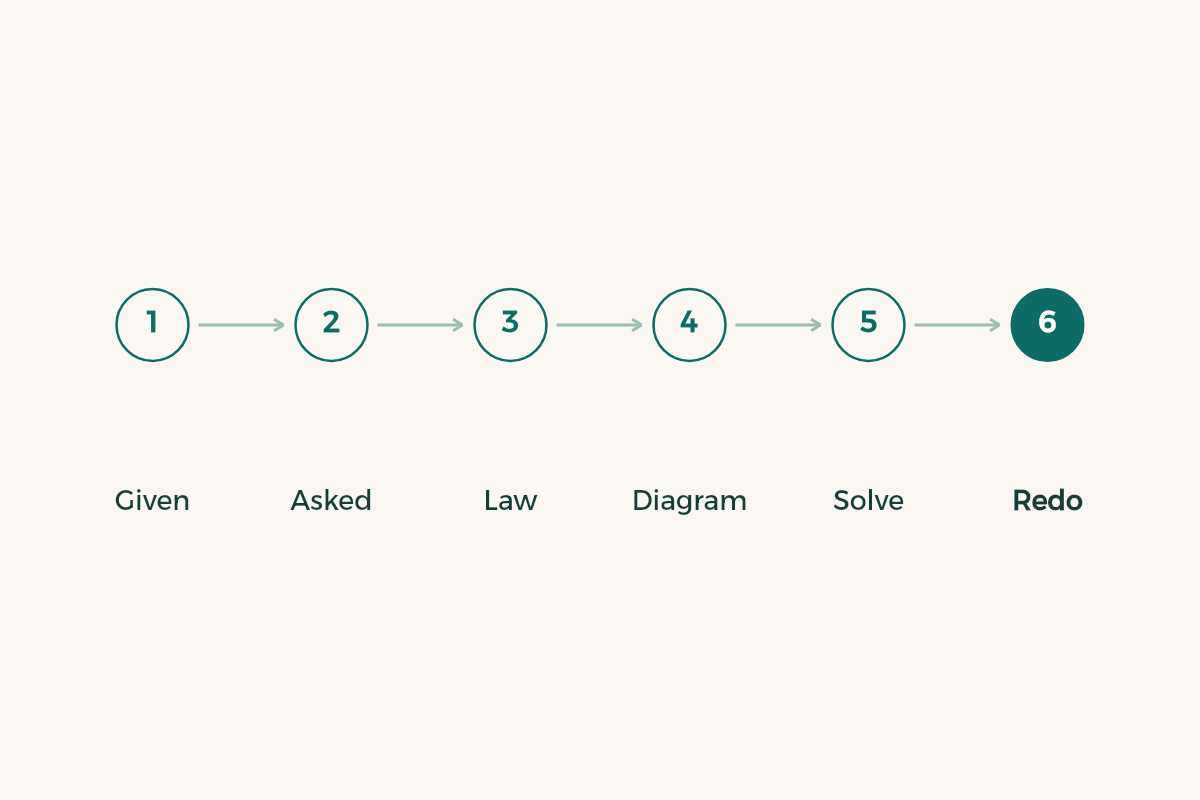
Pick a problem from the end of a book chapter, not its worked examples. Read the text, then write three things at the top: what is given, what is asked and the law you think links them. Draw a diagram. Solve with a pen, and afterwards mark every step where you hesitated.
If you are stuck for more than twenty minutes, look at one step of the solution, close it and carry on. At the weekend redo the two problems you got most wrong. That repetition is what turns an error into a skill. For weekly planning, use the study plan template.
Can AI tools help in engineering courses?
They help to explain a vague idea or to suggest practice problems, and they do not help with your homework. They make confident mistakes in calculations and units, and a student who leaned on them struggles at the first written exam. Read AI for engineering students for safe-use rules.
Further out, this path leads to co-op training and then the graduation project, which you can preview in mechanical engineering co-op skills and the mechanical engineering capstone scope. The Saudi Council of Engineers regulates the engineering profession in the Kingdom, so look at its site to learn the professional registration path after graduation.2 For the wider picture, see the mechanical engineering major.


