
By the tiswa editorial team, from the official sources listed at the end of this guide. How we write our guides
Getting your daughter to campus every morning matters most at the start of term, when the options multiply and questions about safety, cost and time arrive together. This guide starts with what to verify in any transport arrangement, then sets out the options, then gives you a checklist to run before the first trip.
Where do you start: is the provider licensed?
The Transport General Authority regulates transport activities in the Kingdom, and its website publishes a directory of licensed companies you can consult.1 Before you agree anything with a driver or company, ask for the licence number and the name of the licensed entity, and check it yourself. It takes minutes, and it gives you more assurance than any verbal promise.
The rule that specialists in this area stress is that students use licensed transport, whether it is run by a company or a licensed individual. So if the university offers a service or works with providers, ask which licensed entity is involved before you register, not after.2
Which licensed bus or transport option suits a female student?
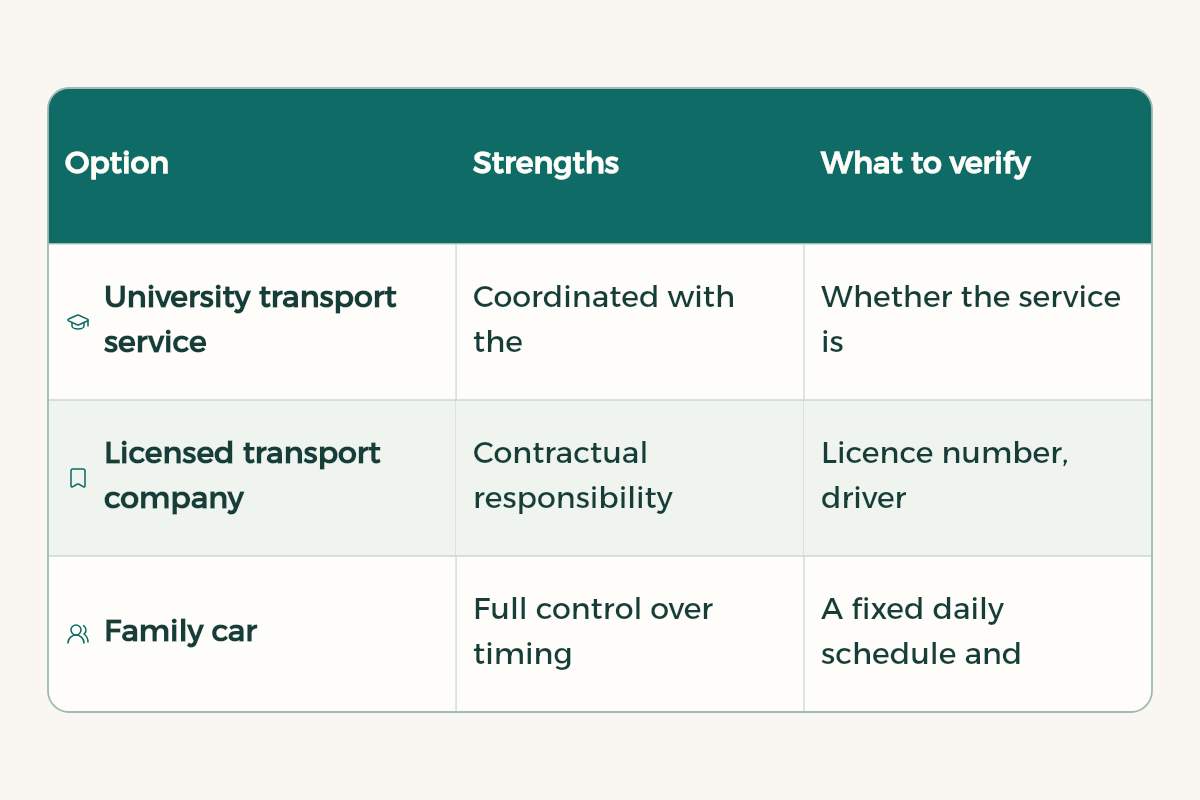
Each option has strengths and weaknesses. Choose by where your daughter lives and her timetable, not by what other families say:
| Option | Strengths | What to verify |
|---|---|---|
| University transport service | Coordinated with the university, with set times | Whether the service is registered, how to sign up, routes, and departure and return times |
| Licensed transport company | Contractual responsibility and a backup plan | Licence number, driver documents, vehicle details and an emergency plan |
| Family car | Full control over timing and route | A fixed daily schedule and an agreement on delays and emergencies |
| Licensed public transport | Published timetables, often a lower cost | The route, the stops and the operator's official rules |
Routes and fares for public transport are published on the official site of the operator in your area. Do not rely on figures from friends, because fares vary by category and route and change over time.
Does the university provide transport for female students?
Some universities organise a transport service or work with licensed providers, and announce registration on their official sites or through their transport office. The service differs between universities, and sometimes between campuses of the same university. So ask the student affairs office or the transport office: what service is available, how to register, which entity runs it, and how emergencies are handled.
What is the checklist before the first trip?
- Check the licence
Ask for the licence number and the entity's name, then look them up in the Authority's directory. If you cannot find the entity or the details do not match, stop there.
- Check the driver and the vehicle
Ask to see the driver's licence and the vehicle details and their validity. Ask the licensed entity how it verifies its drivers. Do not hand your daughter over before you know who the driver is and who runs the trip.
- Set the route and times
Write down the home address, the university and the agreed entrance, agree departure and return times, and decide what happens if a lecture runs late or the vehicle is delayed.
- Agree how you stay in touch
A direct number for the driver or transport supervisor, an emergency number, and a rule that your daughter messages you on arrival and on return.
- Agree a backup plan
Who can collect her if the transport does not come, whom she calls if she is not picked up on time, and whom the university should contact if needed.
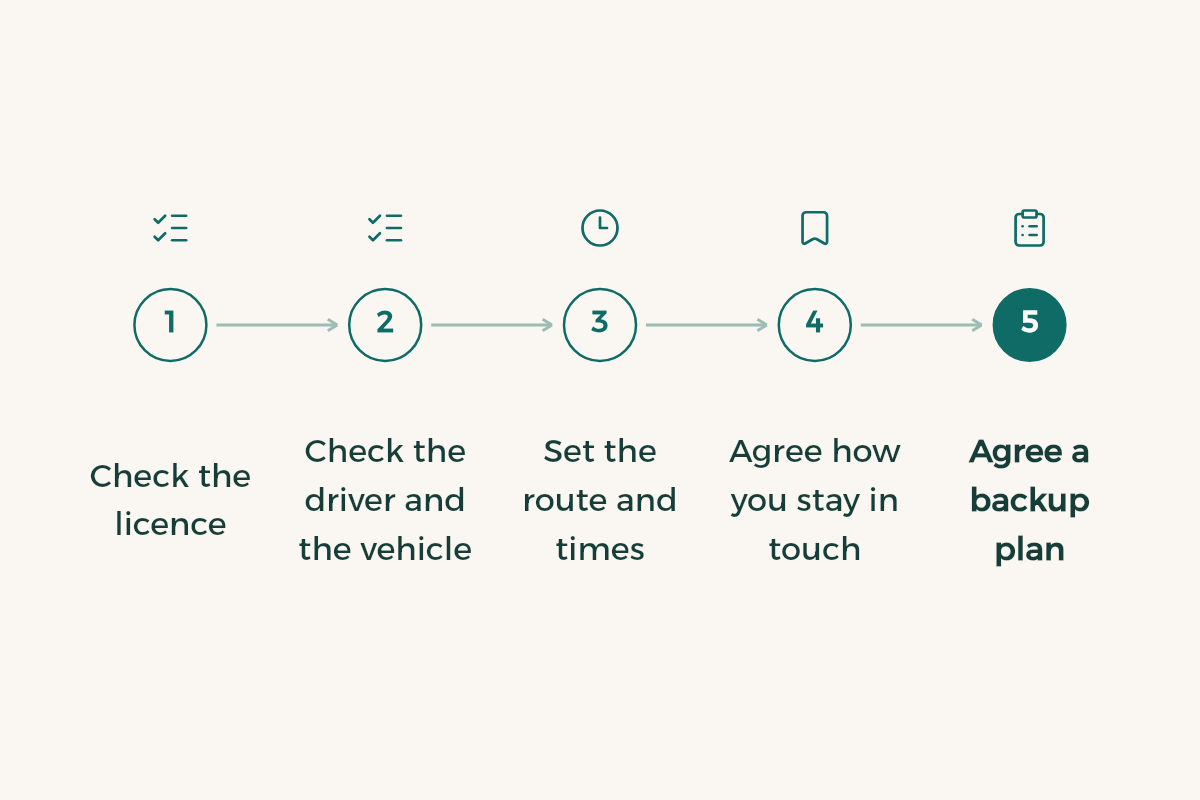
Keep a copy of this list with your daughter and go through it together in the first week. What matters most is that she understands the plan, rather than being a passenger in an arrangement she does not follow.
What should you monitor once the trips start?
Safety is not constant monitoring. It is clear arrangements and regular contact. Check that the trip follows the plan, ask your daughter about anything that worries her, and keep the door open for her to raise a situation that bothers her, such as an unexplained delay or conduct she does not like. If you notice inappropriate behaviour from a driver or supervisor, report it to the licensed entity and to the university directly, and keep the details and dates.
- Do not allow a change of driver or route without telling you and getting your agreement.
- Track arrival and return with the agreed messages rather than guessing.
- Make sure she knows she can question any arrangement that does not reassure her.
What does the trip really cost?
The cheapest option is not always the best one. The real cost includes lost time, tiredness and lectures missed because of delays. Work out the length of the journey each day and compare the options on time, safety and cost together. If transport is a large share of the allowance, split the allowance by percentages, as explained in how much allowance a university student needs.
How do you agree the choice with your daughter?
Your daughter knows her day better than anyone, so involve her in the decision. Ask which time suits her, which route she feels comfortable on, and where she would like the transport to stop. A young woman who helps organise her journey is more aware and better able to handle the unexpected.
If worry is taking over, that is understandable, but turn it into a written plan rather than constant checking. A written plan and regular contact beat silent anxiety, and they beat questioning her about every journey.
Even the best arrangement fails sometimes. Agree in advance what happens if the driver is late or the trip is cancelled: who she calls first, which licensed alternative she uses, and where she waits on campus until someone arrives. Write the numbers in her phone and on a card in her bag. If the university runs a service, register early and do not leave it to the first day. If she lives in university housing, the university housing guide explains the housing side, which helps you judge distance before you agree the route.