By the tiswa editorial team, from the official sources listed at the end of this guide. How we write our guides
A university student may be registered within the family, or as an independent person, and the difference comes down to where the student lives. We will not give an amount here, or a condition we could not confirm on an official source. What we will do is set out the questions to settle before you apply, and point to the page that governs each one.
What is the legal framework for social security?
The developed programme is run by the Ministry of Human Resources and Social Development. The regulation page on the ministry website states that the rules were issued by a Council of Ministers decision, number 211, and approved by a royal decree, number M/321. The practical meaning is that the regulation text decides who qualifies, how cases are reviewed and when benefits end. News summaries and forum posts do not.
The same page says the earlier system continues to apply to beneficiaries who registered before the new one started1. If the family already holds a file, the first step is to review its current status, not to open a new file that may not fit.
What separates a dependant from an independent student?
A student registered as a dependant is counted within the household, so the household as a whole is assessed. An independent student is assessed on his or her own situation and has to show independent living. That distinction changes the documents and the review, so the family should not choose the label it would like. The facts decide the label.
| Situation | What it means | What the family needs |
|---|---|---|
| Dependant of the family | The student lives with the family and appears in its file | Household details and up-to-date student data |
| Independent person | The student lives in separate housing and registers in his or her own name | Papers that prove actual housing, with the accepted list on the platform |
| University housing | The student lives on campus or in university housing | A certificate from the university confirming the housing and enrolment |
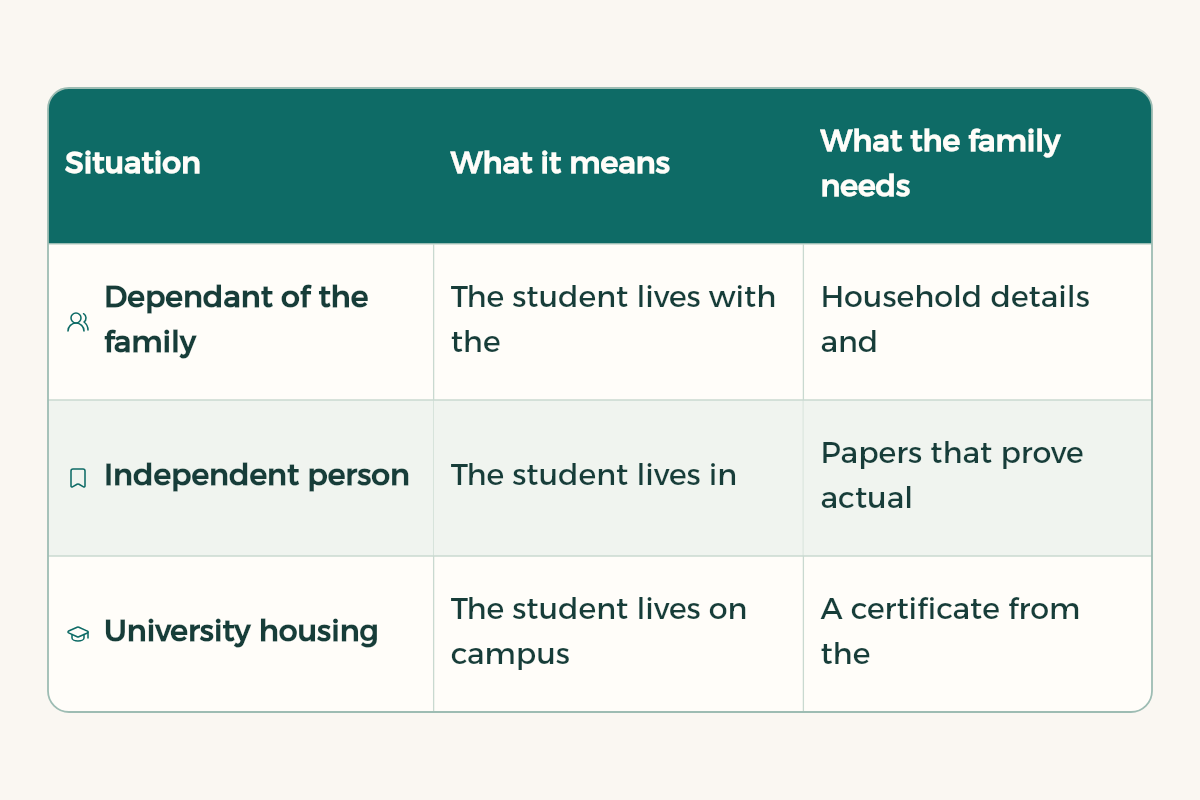
The situation labels in the table are descriptive. The detailed conditions, including the age rules and the accepted documents, are in the regulation text and on the official platform. Read them there before you assume you qualify or do not. Ministry pages are the reference throughout2.
What are the social security conditions for a university student?
We will not list a number or a threshold here, because we could not confirm one on the ministry page we checked, and figures in this area change. What you can do now is name the 3 situations above, then read the article that covers each one in the full text: does the student live with the family, alone or with flatmates, or in university housing? Each answer opens a different route through the rules.
How does a university student register?
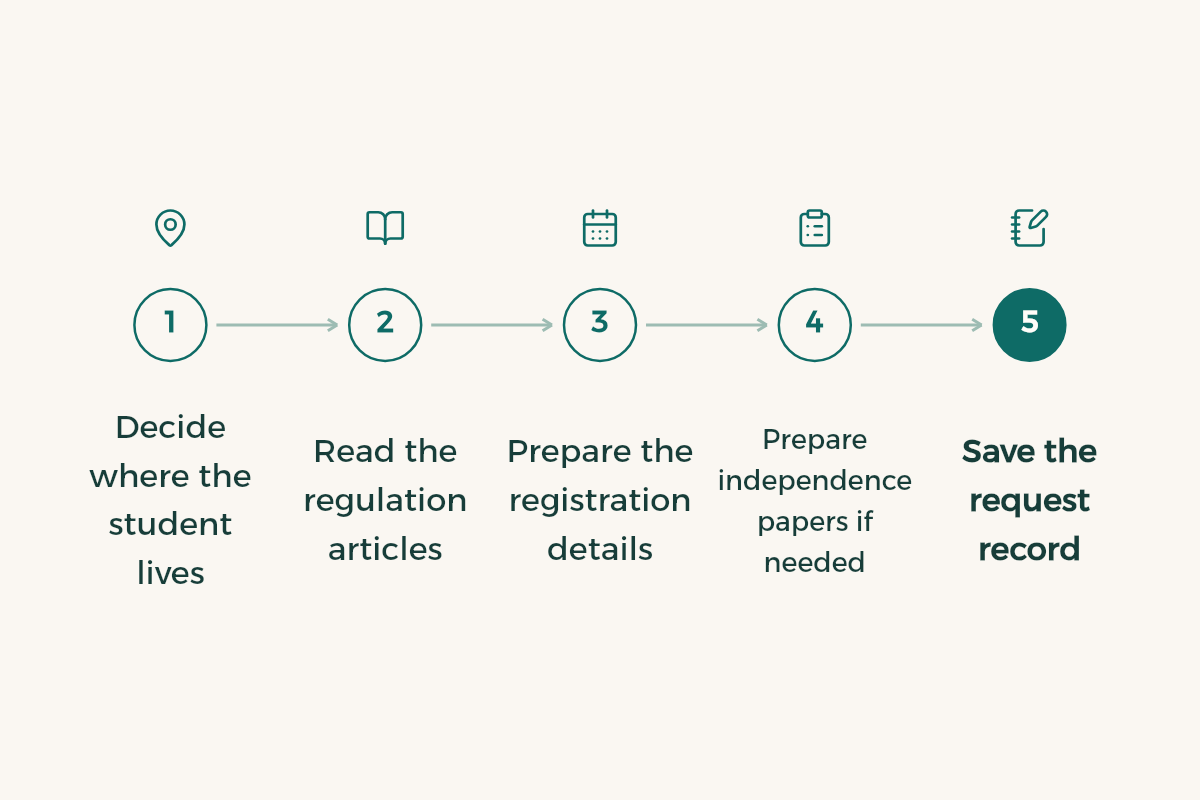
- Decide where the student lives
Write it down clearly: with the family, in private housing, or in university housing. That answer sets the route you follow and the papers you will need.
- Read the regulation articles
Open the regulation page on the ministry website and search the text for the eligibility, dependant and independent articles. The page links to the full text1.
- Prepare the registration details
The platform asks for basic identity details and then sends a verification code to a mobile phone. Choose a phone that the person managing the file can reach, and check that the details match the official record.
- Prepare independence papers if needed
For independent registration, gather papers that prove the actual housing and check the accepted list on the platform before you submit. A rejected document sends the file back to the start.
- Save the request record
After you apply, keep the request number, the date and every message from the ministry. These are your reference if you need to follow up.
Many errors start with applying before the family agrees on the facts. One side says the student lives at home, the other says the student has his own flat, and the difference only appears at review. Agree the real situation first, then open the platform. For government services in general, the reference portal is my.gov.sa3.
Which questions should a family settle before applying?
- Does the student actually live with the family, or in separate housing with an official document?
- Has the student's study or work situation changed since the last registration?
- Is there any regular income for the student or the household that must be reported accurately?
- Has the family registered before, and if a file exists, should it be updated rather than replaced?
Accurate reporting matters more than anything else on the form. Wrong data sends a file to review, and correcting it before submission is far easier than correcting it afterwards.
When does the situation change?
A situation is not fixed. A move from family housing to a flat, graduation, or the start of a job can each change eligibility or the way the student registers. Read the regulation at each of those points, and update the data when the platform asks, rather than waiting for someone else to notice a mistake.
If you are building a monthly budget, treat any social security support as expected income rather than guaranteed money. Splitting income by percentages handles that variation, and the method is in student budget planning. The full cost picture, including housing, transport and books, is in university fees in Saudi Arabia.
If the family is also looking at other household support, the Citizen Account guide for university students covers a separate programme with its own rules and documents. Do not mix the two, and do not carry a paper from one into the other without checking what each one asks for.
Common mistakes in a social security file
- Relying on what neighbours or majlis conversations say about amounts or conditions.
- Registering the student as a dependant because it is easier, when he or she already lives in separate housing.
- Forgetting a housing paper, then discovering the gap after a long wait.
- Not saving a copy of the data after each update, which makes it hard to prove what was sent.
If a mistake has already happened, do not correct it at random. Go back to the regulation text to find the right case, then request the correction through the route the platform or the ministry sets.
A worked example before university
Picture a family that receives social security, whose son has been admitted to a university in another city. Before the term starts, the family sits down and answers three questions in writing: will the son stay registered at the home address? Will he receive a university stipend or income from part-time work? Has the number of people living in the household changed?
With the answers ready, the family opens the service, reviews the recorded data and compares it with what they wrote down. Any difference is updated before the next cycle, not after it. The family then saves a copy of the updated data, with its date, in one file.
The review repeats with every big change: a move, the start of part-time work, or graduation. If the son also benefits from other programmes, review the Citizen Account guide for university students in the same sitting, since updating one record often affects the other.