By the tiswa editorial team, from the official sources listed at the end of this guide. How we write our guides
A student walks into her supervisor’s office with an idea: the effect of international standards on every company in the Kingdom. The supervisor asks how many hours she has. She counts and finds roughly three hundred once her other courses are counted. The scene is illustrative, but the question is real, and the answer to it is your accounting capstone project scope. The big idea is not wrong. It is bigger than a semester, and the steps below measure an idea before you commit.
How do you define the scope of an accounting graduation project?
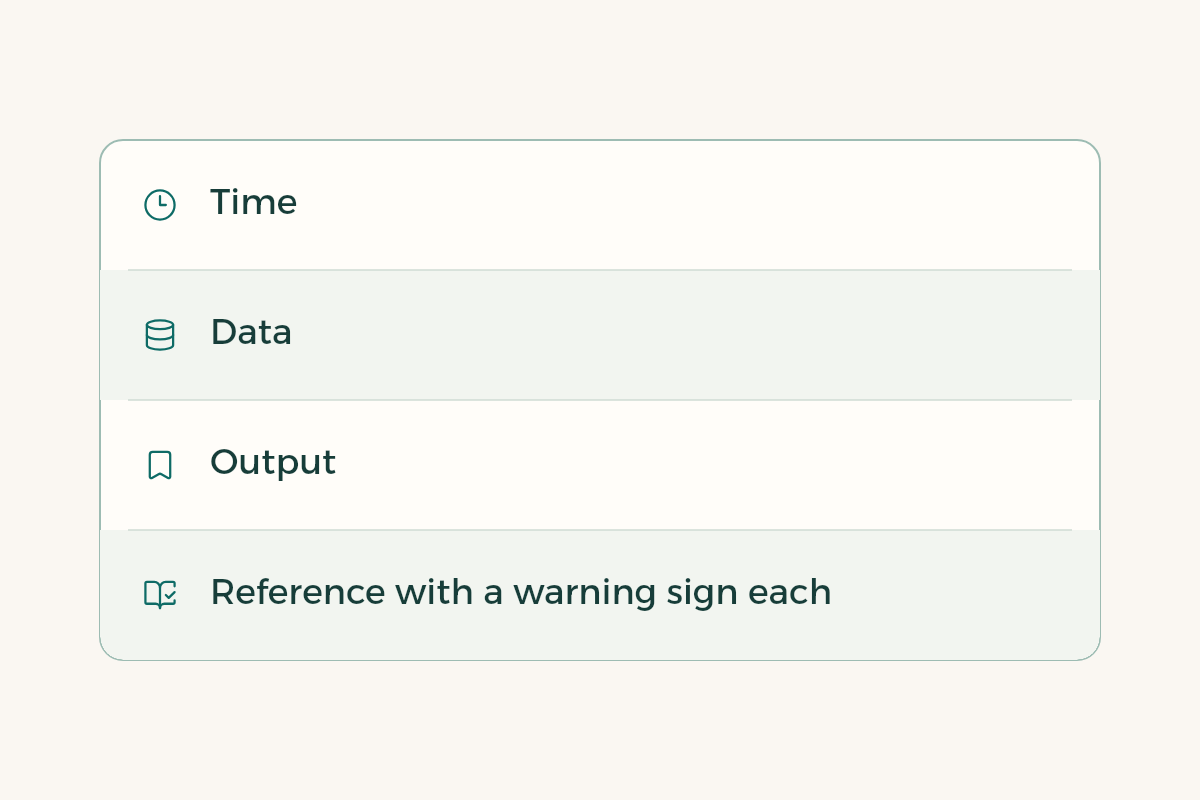
Set three limits before you write a title. The first is time: how many hours a week can you really give after your other courses? The second is data: what can you obtain without special permission? The third is output: what will you hand in, a report, a model, an analysis or a comparison? A project that passes all three can be finished. One that fails any of them gets smaller or gets replaced. Do not confuse this with choosing the topic itself, which has its own guide on the accounting graduation project question.
| Limit | Question to ask | Warning sign |
|---|---|---|
| Time | How many weekly hours do I own? | A plan that needs double what I have |
| Data | Can I open my data within a week? | Relying on a reply nobody promised |
| Output | Which pages and tables will I hand in? | Promising a result before seeing the data |
| Reference | Which standard or regulation am I using? | Leaning on an article instead of its source |
How do you spread semester hours across the project?
Draw the term in phases, not weeks: framing the question, collecting data, analysis, writing, review. Give each phase a share of your hours and keep at least a quarter of the time for review and changes after your supervisor responds. The figures below are illustrative, not a rule, and every student adjusts them to a real timetable. With three hundred hours in total you might spend seventy on data, ninety on analysis, a hundred on writing and the rest on review. If your plan seems to need more than your total, it is bigger than the term. Use the study plan template to place the hours in your weeks and an Excel sheet to log them.
Which graduation project ideas fit the data you have?
Start with what is published. Listed companies publish financial statements and announcements, and regulators publish standards and rules. SOCPA’s site carries an accounting standards section and a knowledge centre of standards.1 The IFRS Foundation publishes a list of its accounting standards, including one for small and medium-sized entities.2 These are open sources that spare you from data you do not own. Data from a client, or from a company where you trained, comes with conditions: written permission, removal of names and figures that identify it, and your supervisor’s approval before you start. If permission has not come by week two, move to published data and stop waiting.
How do you protect confidentiality in an accounting project?
Ask before you copy any figure: am I allowed to publish this? A private company’s numbers are not yours, even if you worked there during co-op. Leave the client’s name off the cover and the appendices, shift the figures by a fixed ratio if the company agrees, and state in the method that you did so. Our guide to accounting co-op skills says more about handling a training host’s data.
A project built on surveys or interviews needs participants’ consent and anonymity, and approval from your university’s ethics body if it has a form. Ask your supervisor about the process in week one, because it takes longer than you expect. Do not promise anyone a result. Participants take part to help, not to confirm your hypothesis.
What does a good scope statement look like?
A scope statement is a three-line paragraph at the top of the proposal. This one is an example and does not describe any real company: "The project compares how revenue is measured under one standard in three listed companies from one sector, using only their published statements, and delivers a comparison table and a thirty-page report." It fixes the standard, the sample, the source and the output. If you cannot write that sentence, the project is not yet defined.
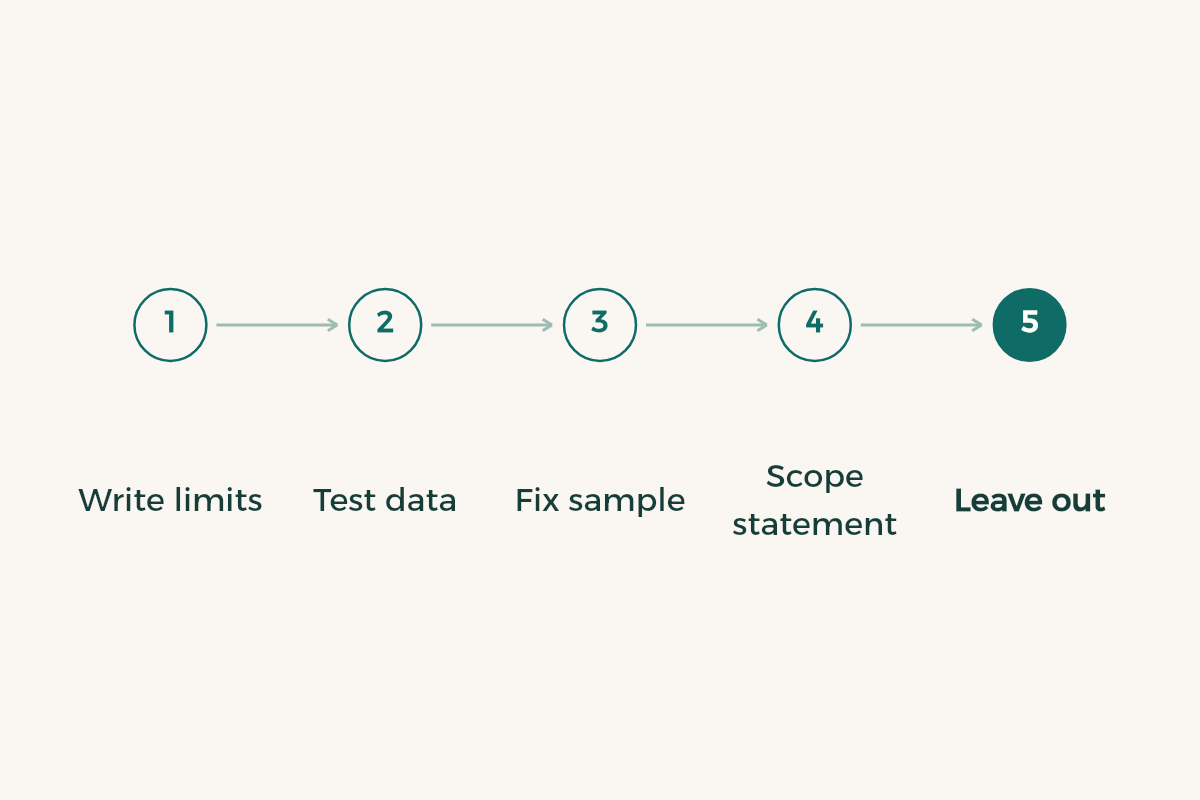
- Write the three limits
Your weekly hours, your available data and your output.
- Test the data
Open your data source in a spreadsheet and confirm you understand it.
- Fix the sample and the standard
One standard, one sector, a small set of companies.
- Write the scope statement
Three lines you show the supervisor at the first meeting.
- Agree what you will leave out
Write what the project will not cover, so it does not swell later.
Should you use AI to define the scope?
It helps with challenge questions: ask it to push back on your scope statement and to name what might be missing. It does not hold your data or your timetable, so never take an hours estimate from it. If you use it, document that as your course requires, and read our guide to AI for accounting students. Keep your source list close, because your supervisor will ask for it.
If the project needs accounting software, ask whether the university lab already has it before you commit. Our guide to accounting student software lists what students tend to need. When you must buy something, student card offers sit on the student deals page.