
By the tiswa editorial team, from the official sources listed at the end of this guide. How we write our guides
Admission to military colleges is different from ordinary university admission. It has its own authority, its own notice for each intake, and checks that most universities do not run. So asking for requirements in a forum is not reliable, because the official published notice is the only text that counts. This guide explains the general outline of what tends to appear in this route, and shows where to check the details. It does not state age, height or score limits, because we could not verify them from a source we could read in full.
First: the official notice is the reference
The Ministry of Defence recruitment portal is where application notices are published, and it links to a page of application conditions and a page of frequently asked questions. When we reviewed the portal's main page, the conditions text was not shown there, only the link to it. So we do not state a condition from our own reading. Open the conditions page directly before you plan.
The details of each intake, such as the number of places, dates and tests, are set out in that intake's own notice, so do not build your plan on details from an earlier one.
Second: what tends to repeat in notices
Notices for this route are not identical, and the figures change from one intake to the next. Without quoting numbers, the following elements commonly appear. Treat this list as an outline only, and confirm each item in the notice you are applying to.
- A secondary school certificate or an equivalent, with a graduation-timing condition if the notice sets one.
- A medical examination, whose result is decided by the competent medical committee.
- A fitness test under the standards in the notice.
- A personal interview at some stages.
- Academic or admission tests named in the notice.
- Nationality and personal record conditions, as the authority sets them.
Third: the medical and fitness checks
The medical and fitness stages are often the decisive ones, so give them early attention. The result of the medical check depends on the committee named in the notice, and a report from elsewhere may not replace it. Do not rely on an old report, and do not assume that good sports fitness replaces the exam.
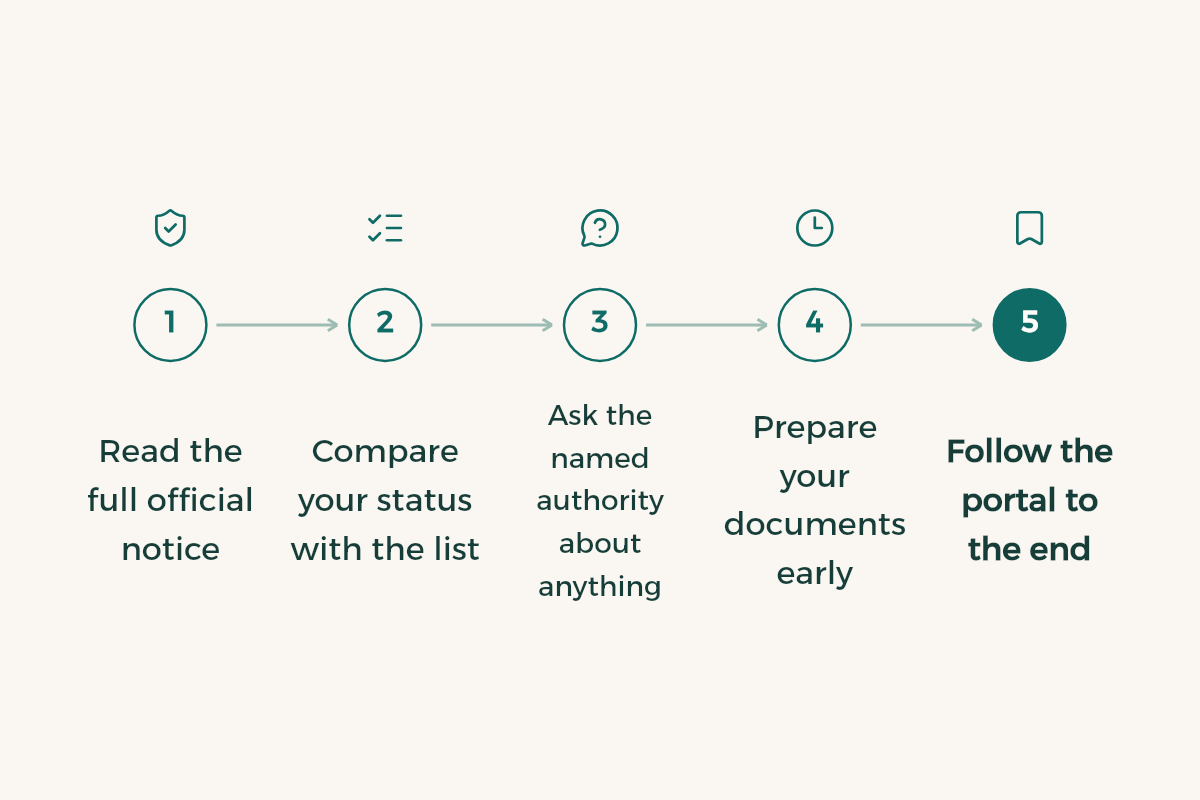
- Read the full official notice
Open it from the official portal and write the health and fitness conditions in a separate list.
- Compare your status with the list
Note what you meet and what you do not, and do not rely on what friends from a previous intake told you.
- Ask the named authority about anything unclear
The final reference for an unclear condition is the body that issued the notice, not a group chat.
- Prepare your documents early
Keep personal and school documents together, and make sure their names match your account.
- Follow the portal to the end
Stages can change between the notice, the tests and the medical check, so check notifications regularly.
Fourth: tests and preparation
Some notices require academic or language tests, and some set minimum scores in aptitude and achievement tests. The numbers change between intakes, so base your preparation on the notice for your intake, not on an old figure.
If an academic test is part of your notice, start early. Read our aptitude test guide and achievement test guide. Test scores also have a validity period, as the university admission pages state, so check the notice for how long a score counts.
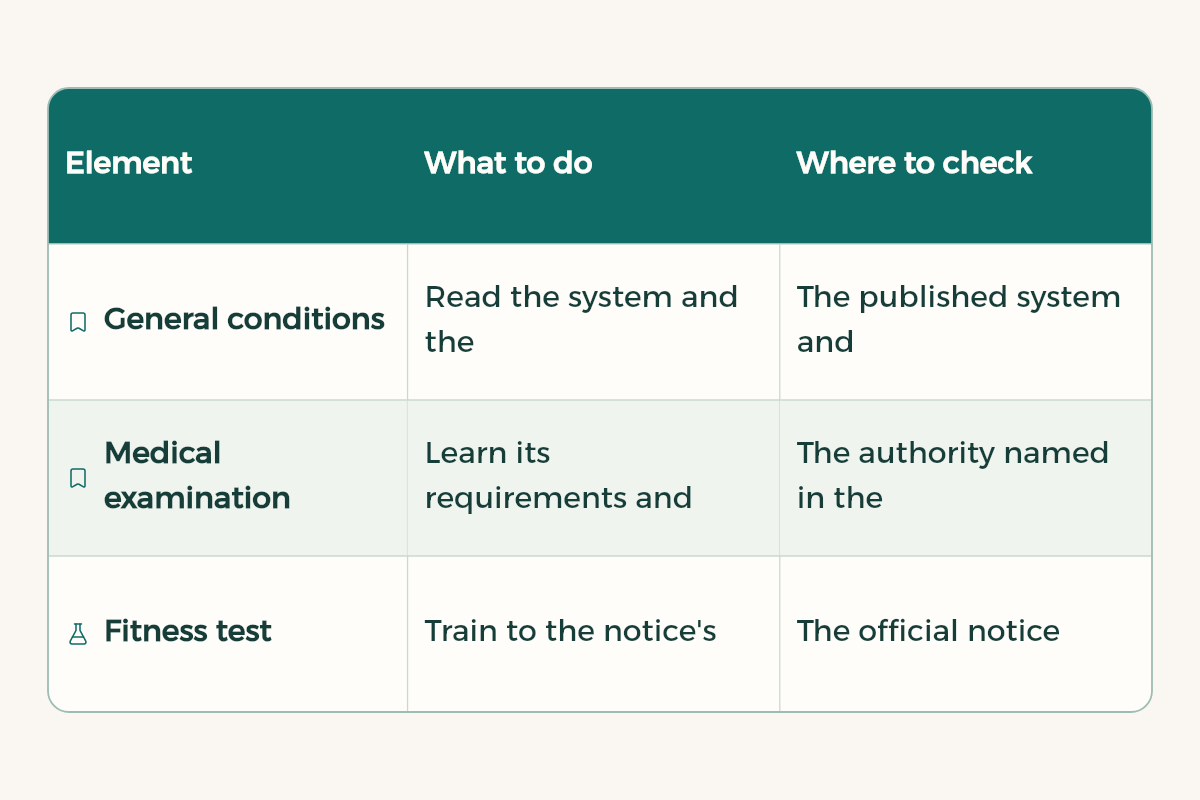
| Element | What to do | Where to check |
|---|---|---|
| General conditions | Read the system and the notice | The published system and the intake notice |
| Medical examination | Learn its requirements and book in the stated slots | The authority named in the notice |
| Fitness test | Train to the notice's standards | The official notice |
| Academic tests | Start preparation early | The notice and our test guides |
| Documents | Prepare them and check name matches | The document list in the notice |
Common mistakes among applicants
- Relying on the conditions of an earlier intake, because each intake has its own notice.
- Leaving the medical check to the last moment, then finding a problem that needs time to treat.
- Sending documents whose names do not match the account.
- Ignoring portal notifications, and missing a stage.
If you have not decided between a military college and a university, read what to do after high school to compare the routes. If you choose the university, see admission requirements at Saudi universities.
Planning while you wait for a notice
Waiting for a notice can take a long time, so give the student a weekly plan. Split time between academic preparation, physical training and personal study, and avoid putting all your hopes on one announcement. Regular exercise suited to your level helps both fitness and focus, and sleep and nutrition affect performance more than many people expect.
Choose one official reference and check it regularly: the official portal and its notifications. Be wary of rumours that circulate in group chats without an official link. If a notice is delayed or its dates change, do not read the silence as a refusal. Check with the named authority, and keep your university plan moving in the meantime.
If you need financial support while studying, read the scholarships guide for Saudi students and check each scholarship's conditions carefully.