By the tiswa editorial team, from the official sources listed at the end of this guide. How we write our guides
Sara, an invented second-year business student, opened LinkedIn for the first time on the night before an internship deadline. She typed her name and university, then stopped at the Experience box. No job, no formal volunteering. She closed the tab. The mistake in that moment is reading the empty box as a verdict, when the profile is built from several other parts she already has.
What does a recruiter read on a student profile with no experience?
LinkedIn’s own Help page says a good profile is complete and represents you, and lists the parts: a professional photo, a headline that stands out, a summary, education and work history, and relevant skills.1 Work history is one part among several. Someone reviewing internship applications does not expect years of employment. They want to know in about ten seconds what you study, what you have learned and whether you look serious.
The definition of an internship points the same way. NACE describes it as experiential learning that connects classroom knowledge to a professional workplace.2 An applicant is expected to be at the start of the road, so a profile without jobs does not contradict the application.
How do you take stock of what you have before writing a line?
Take a sheet of paper and draw four columns. In the first, courses you enjoyed or did well in. In the second, projects, reports and presentations you produced, even group assignments. In the third, activities: a student club, an event, volunteering, helping classmates. In the fourth, certificates and courses you actually finished. Ten minutes is enough. Whatever fits none of the columns stays off the profile.
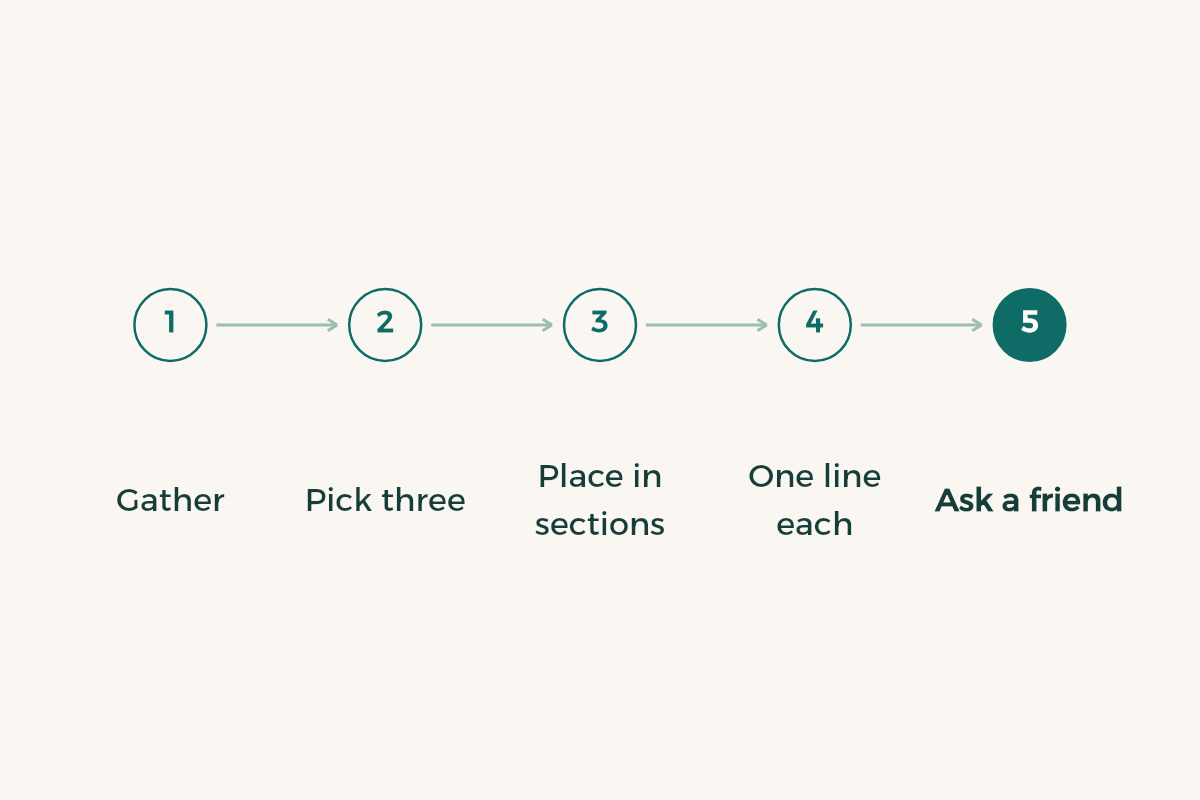
- Gather the evidence
Project files, certificate images, club names. Do not write from memory alone.
- Pick the strongest three
Three items tied to the opportunity you want. A long list buries the good ones.
- Place each in its section
The project goes under Projects, the club under Volunteering, the course under Education, the certificate under Licenses and certifications.
- Write one line per item
What you did and what came out of it. No numbers you did not measure.
- Ask a friend to review
Have them read the profile for thirty seconds, then tell you what they understood about you.
An invented example of a project line: “Analysed survey answers from seventy classmates and built a five-slide presentation.” If the numbers are real, keep them. If not, drop the numbers and keep the verb.
What do you write in a LinkedIn headline as a student with no experience?
The headline is the first thing shown in search results and connection requests, so do not leave it as “Student at X University”. Write your major, then what you want, then a field you lean towards. For instance: “Business administration student, looking for a co-op placement in marketing”. For more, read the guides to the LinkedIn headline and the LinkedIn summary.
How do you check your profile before applying?
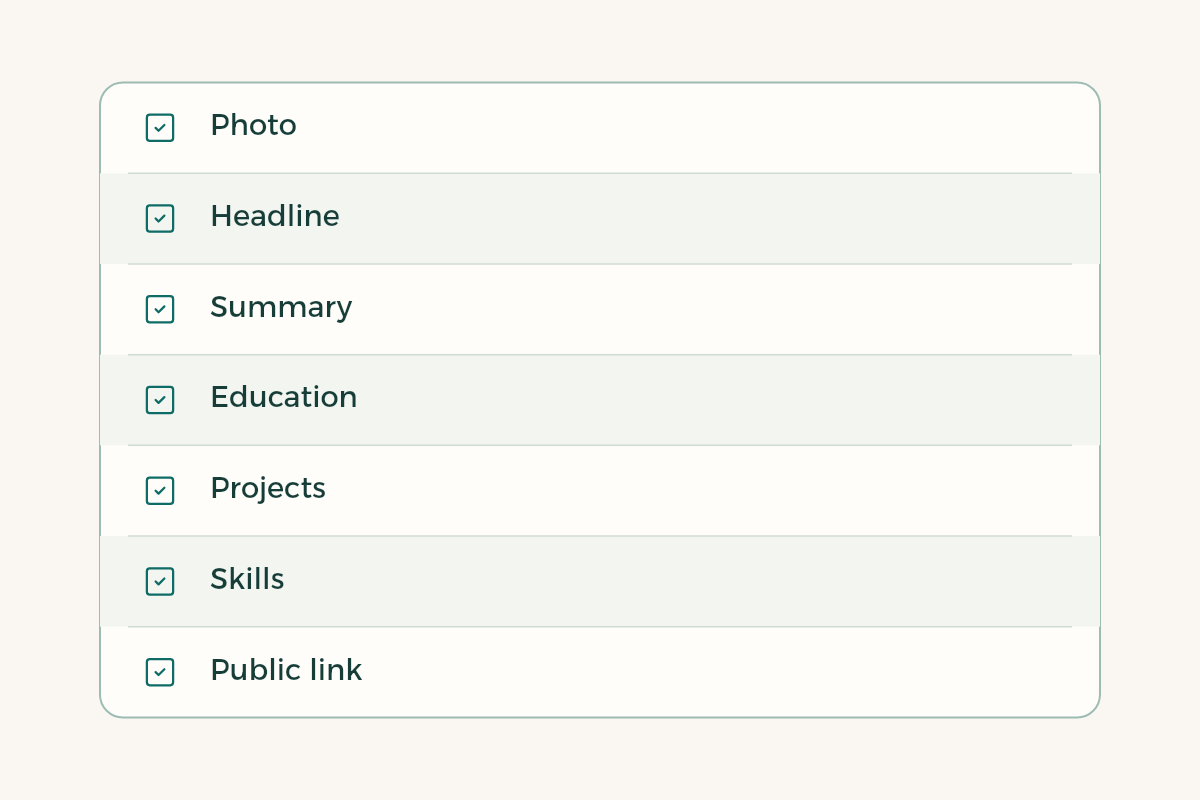
The table is a quick checklist. Go through each row, and if the answer is no, fix it before you send an application.
| Section | Ask yourself | Sign it is ready |
|---|---|---|
| Photo | Is my face clear against a quiet background? | Recent photo, good light |
| Headline | Does it name my major and what I want? | One phrase, no slogans |
| Summary | Does it say who I am and what I am after? | Three to four honest sentences |
| Education | Are my major and expected graduation visible? | Section complete |
| Projects | Is there one or two with a short description? | One action line, one result line |
| Skills | Are my skills tied to the opportunity? | Five to ten skills I can explain |
| Public link | Is the public URL tidy? | Short name, no random digits |
Should you add skills you do not have yet?
No. A recruiter will ask about them in the interview, and some employers check before hiring. Add a skill only if you can give an example in one minute. If you cannot, leave it for later. The guide to LinkedIn skills and endorsements shows how the list grows over time.
Does a profile with no experience actually help?
It does, because it opens two doors: people looking for students in your major can find you, and you can find people working in the field you want. Take a logistics student. The CSCMP glossary defines logistics management as the part of supply chain management that plans and controls the movement and storage of goods and information from origin to consumption.3 A student who keeps that definition in mind and adds a project touching movement or storage looks clearer than one who writes only “interested in supply”.
When the profile is done, carry it into your CV. The guide to the student CV shows how the same information fits on one page, and a good profile makes that easier because the items are already sorted.
What mistakes weaken a student profile?
The first is leaving the summary empty. The reviewer opens the profile and finds not one sentence about you. The second is copying a ready-made summary from the internet, so ten students share the same paragraph. The third is adding hundreds of connections with no message. Add your lecturer, classmates and club members first, then people in your field with a short, honest note.
The fourth is the photo. You do not need a photographer: a phone, window light and a plain wall will do. The fifth is dropping the profile after one night of enthusiasm. Set aside ten minutes a week to add a new course or a project you finished.
Student pricing for professional subscriptions has its own page, so you can compare before you pay: the student discount index.