By the tiswa editorial team, from the official sources listed at the end of this guide. How we write our guides
An organic chemistry practical ends at one in the afternoon, and the student walks out exhausted with a notebook full of scattered numbers. They decide to write the report on the night it is due. That night they cannot remember why they heated the sample for ten minutes instead of five, or which reading was the bad one. This is an example, but anyone who has taken a lab course in chemistry, biology, physics or medical laboratory science will know the scene. The problem is not intelligence. A practical course has a different rhythm from a theory course, and the study habits that suit one do not suit the other.
How to make a good study plan for a lab course between sessions?
In its biology study guidance, the University of North Carolina’s Learning Center explains that preparing for a class starts before it. If the course supplies guided reading questions, skim them first and then look for answers in the textbook. After reading, summarise what you remember in your own words or in a diagram, and note the questions you still have. Then check the learning objectives, which identify the key concepts and work as cue cards.2 That applies directly to a lab course: what you read before the session decides what you see in it.
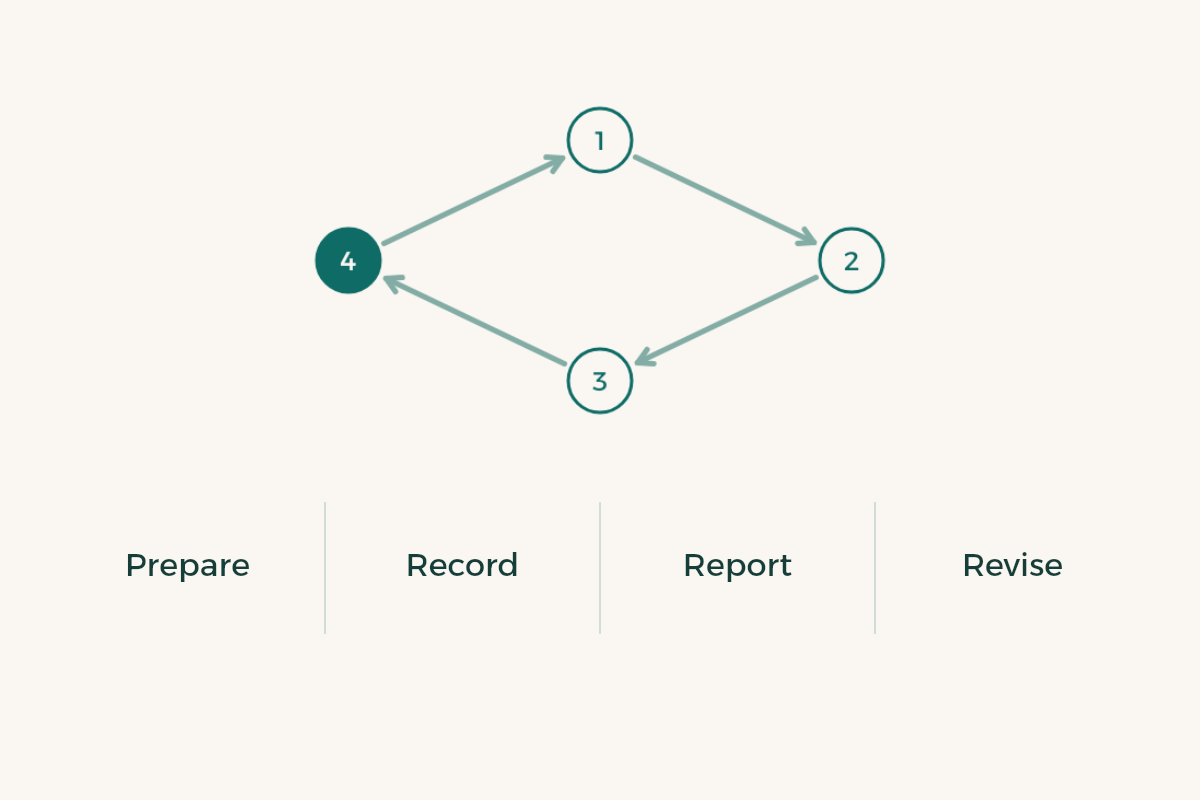
The same guidance advises distributing your practice over several focused, active sessions.2 So the whole cycle splits into three stops, as a fixed schedule you repeat for every experiment.
| Stop | When | What you do | Time |
|---|---|---|---|
| Prepare | The day before the session | Read the procedure, write the aim, your expected result and your questions | 30 minutes |
| Record | During the session | Write raw readings at once, with units and conditions | Whole session |
| Report | Within two days after | Write the report from the data while you still remember it | 60 to 90 minutes |
| Revise | Before the next session | Answer your questions without the notebook | 20 minutes |
How do you prepare for a lab session before walking in?
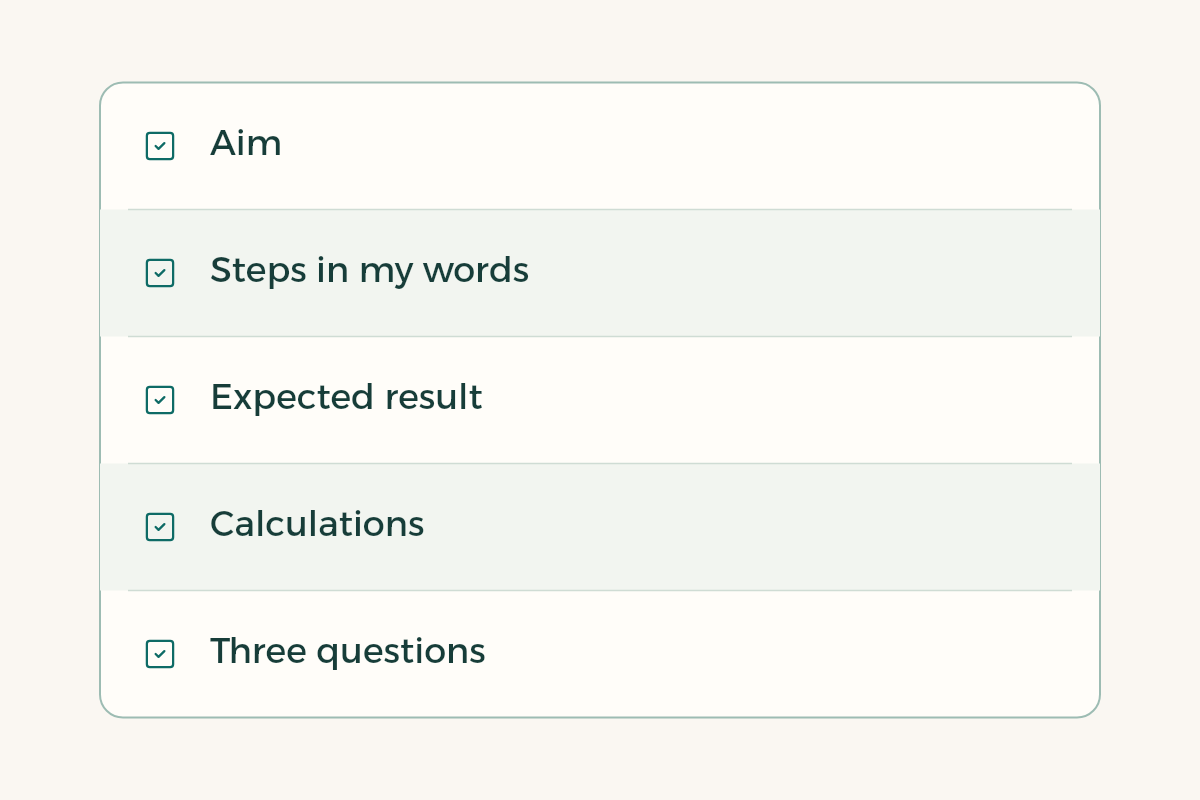
Preparation is the cheapest hour in the whole course. You read the lab manual or procedure the doctor hands out and write specific things for yourself, not a general summary.
- Write the aim in one sentence
What are you trying to find out or measure? If you cannot write the sentence, you have not understood the experiment yet.
- Write the procedure in your own words in seven points or fewer
Do not copy the manual. Rephrasing shows you which step you do not understand before you stand at the instrument.
- Write what you expect to see
A rough prediction of the direction of the result. When the result differs from your prediction, the best report questions begin.
- Do the calculations in advance
Solutions you will prepare, concentrations, conversions. Work them out before the session and check them with the teaching assistant if needed.
- Write three questions
About something you do not understand in the experiment. Take them with you and ask the assistant during the session.
An example from a titration experiment: your aim is “determine the concentration of an unknown acid by titration,” your expectation is that the end point will appear near a particular volume, and your question is “why do we add the indicator only a few drops at a time?” These three lines take five minutes and make the whole session clearer.
How do you record lab data cleanly?
The UNC Writing Center notes that readers of a scientific report want two things: to gather the information and to be sure the findings are legitimate. That is why a report separates raw, uninterpreted results from the discussion that interprets them.1 The same principle gives you a recording rule: write what you saw as it is, and interpret later. An odd reading stays on the page with a note, and is not erased.
Put the unit beside every number, note the conditions that might affect the result such as timing, heating and which instrument you used, and leave the right-hand page for comments. If something broke or you made a mistake in a step, record that honestly. A teaching assistant values honest data, and anyone who hides a slip loses a useful point for the discussion section.
How do you write the lab report without running late?
The Writing Center describes the standard science report format as following the steps of the scientific method: an introduction that states the hypothesis and why it was asked, methods and materials that explain how it was tested, results that present the raw data in text, table or figure, and a discussion that interprets.1 Names and order can differ from course to course, so your first reference is the doctor’s template and the course instructions.
Write the report within two days of the session, while the details are fresh. Start with the results because they are the easiest part, then the methods, then the discussion, and write the introduction last. The order you write in does not have to match the order you read in. In the discussion ask yourself: did the result match my expectation? If not, what is the nearest explanation, and where might my own method have gone wrong?
How to make a study plan for the practical exam or quiz?
A lab exam often comes as questions about procedures, calculations and reading results, or as stations you rotate through. The best material to revise is what you gathered all semester: your aims, expectations, mistakes and the assistant’s comments on your reports. Turn each comment into a question, such as: why do we rinse the pipette before use? What error follows if I read the curve from above? Then answer them without the notebook.
The Association for Psychological Science reports that a large review found self-testing and spaced review across days among the most useful techniques, with rereading and highlighting less useful.3 So do not just reread your reports. For building the final week before a practical exam, read the study plan for practical courses, and for tracking mistakes see the exam error log.
What mistakes trip up lab students?
The first is leaving preparation to ten minutes before the session, so the student stands at the bench reading the steps. The second is recording data on a loose sheet that then gets lost. The third is postponing the report to the night before it is due. The fourth is copying a classmate’s report with their results, so your data clashes with it or the calculations you needed to understand go missing. The fifth is ignoring the assistant’s comments on the last report and repeating the same mistake in the next.
If your major is medical laboratory science, see what a medical laboratory student needs for the first practical course. This plan assumes a course with instructions from the doctor, so where those differ from this guide, follow the doctor.