By the tiswa editorial team, from the official sources listed at the end of this guide. How we write our guides
Ask around a Riyadh or Jeddah high school and you will hear both verdicts: "paper is easier" and "computer is easier". ETEC says neither. Its FAQ states that the General Aptitude Test is delivered "on paper and digitally"2, one test in two formats. So the useful question is which format fits your admission dates and the way you solve.
Who can take the paper Qudrat test, and who sits the computer one?
The computer-based test is open all year to students in the second and third year of secondary school. The paper test is for third year students, in set periods, as ETEC's care account on X explains1. The ETEC site lists the digital GAT as "available all year", while paper has one registration date for girls, another for boys, then a late window2. A second year student only has the computer option.
What is the difference between the Qudrat paper and computer test?
| Paper | Computer (digital) | |
|---|---|---|
| Who can sit it | Third year secondary | Second and third year secondary |
| When | Set windows during the year | All year |
| Fee | SAR 100 early, SAR 150 late | SAR 150 |
| Results | About a month | 3 to 5 working days |
| Last chance to change or delete | 72 hours before | 48 hours before |
| Scratch space | Pages of the question booklet | An on-screen scratchpad |
| Answering | Shading a sheet inside the booklet | Clicking on screen |

Every figure in the table comes from the National Center for Assessment page2. The two formats share more than they differ: two hours and five minutes, multiple choice, and no calculator of any kind, including a watch with one built in.
When do Qudrat test results come out for each format?
Computer: 3 to 5 working days, and ETEC counts Sunday to Thursday2. Paper: roughly a month. For a student whose Unified Admission deadline is close, that gap decides it. Either way, your highest approved score goes to the Unified Admission platform automatically.
Is the computer test harder in the hall?
Not harder, but stricter about one thing. The digital centre rules say each section has its own time, you can answer and review only that section, and once you move on you cannot go back2. If your habit is to skip a question and return to it two sections later, that question is lost.
Paper has its own routine. Your seat number arrives by text the day before. The centre gives you a pencil and bans ink. You shade answers on the answer sheet inside the booklet, never on the booklet pages. About 20 minutes of form filling comes before the test, and your fingerprint is matched and a photo taken at entry2. Shading in the booklet instead of on the sheet is a mistake we hear about every year, and it cannot be fixed after you hand in.
Which is better for you, paper or computer?
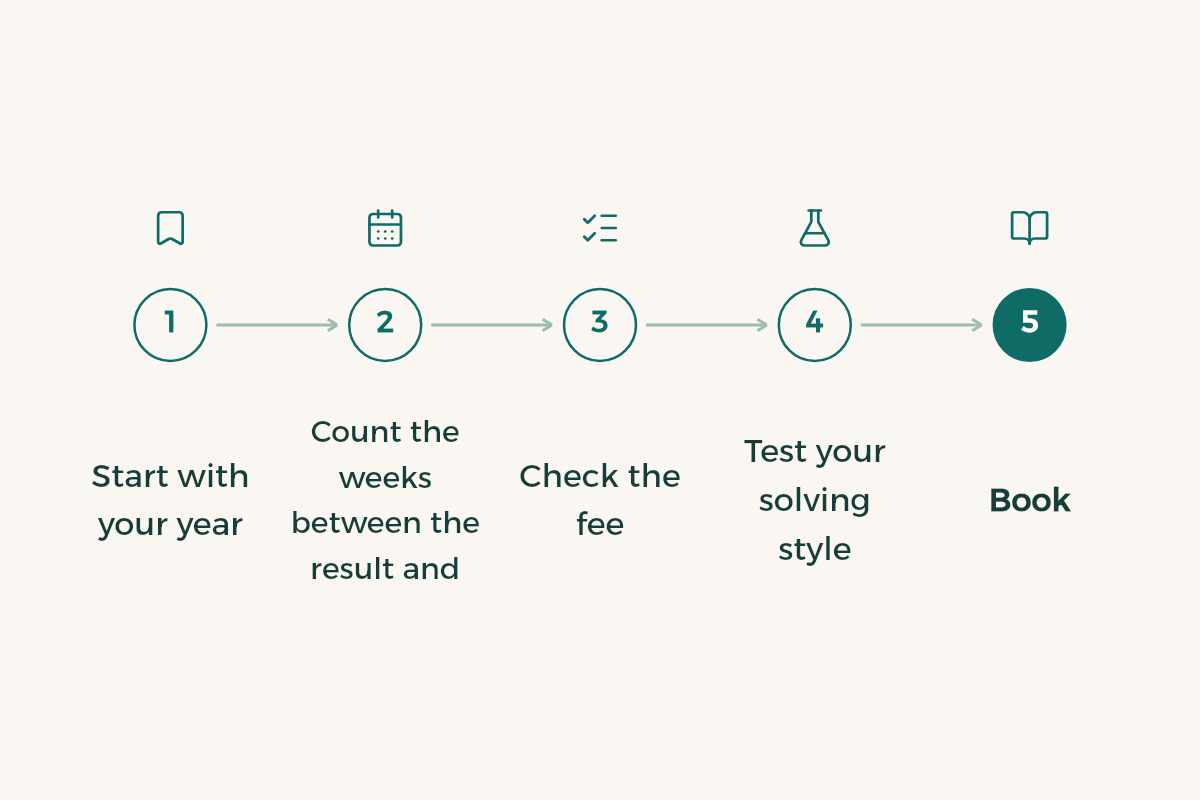
- Start with your year
Second year secondary? Computer only. Third year? Both are open.
- Count the weeks between the result and your deadline
Under a month? Choose computer. A paper score may arrive too late.
- Check the fee
Early paper registration costs 33% less than the computer test. Miss the early window and the advantage is gone, because late paper costs the same.
- Test your solving style
Do a timed mock on screen with locked sections. If you lose marks to that, train for it or choose paper.
- Book
The steps are in Qiyas registration and booking.
How should you practise for each format?
For paper: print the mock, put a clock on the desk, and shade your answers on a separate sheet. That one habit protects you from shading in the booklet on the day. Use the page margins as scratch space, because the booklet is the only scratch paper you get.
For computer: practise on a screen with a separate timer for each section, and never let yourself reopen a closed one. In week one you will lose the questions you left hanging. By week three you will be picking a provisional answer for every question before moving on. Try sketching geometry with a mouse too. It is slower than a pencil, and the on-screen scratchpad is what you will have.
Either way, no calculator. ETEC's reason is that the numbers in the questions are simple2, so drill fractions and ratios in your head now. Registration happens only through your Sadeed profile, and the score reaches the Unified Admission platform without you asking.
Mistakes we see every registration period
- A second year student hunting for a paper date that is not open to them.
- Training only from printed books, then sitting a computer test with locked sections.
- Waiting for paper because it is "cheaper", then registering late at the same fee.
- Shading answers in the question booklet.
- A smartwatch with a calculator, which is banned in the hall.
Sections and their weights are in the GAT guide, and mock tests are in Qudurat practice. Graduates who need the GAT for a job or postgraduate study take a different version, covered in Qudurat for graduates.