
By the tiswa editorial team, from the official sources listed at the end of this guide. How we write our guides
University admission season weighs on the whole household. Parents ask about grades, siblings compare notes, and the student may feel that every step decides everything. This guide is written for parents. It explains what official pages say, which rules repeat across universities, where your help makes a difference, and where it is better for your child to lead.
What decides your child's admission?
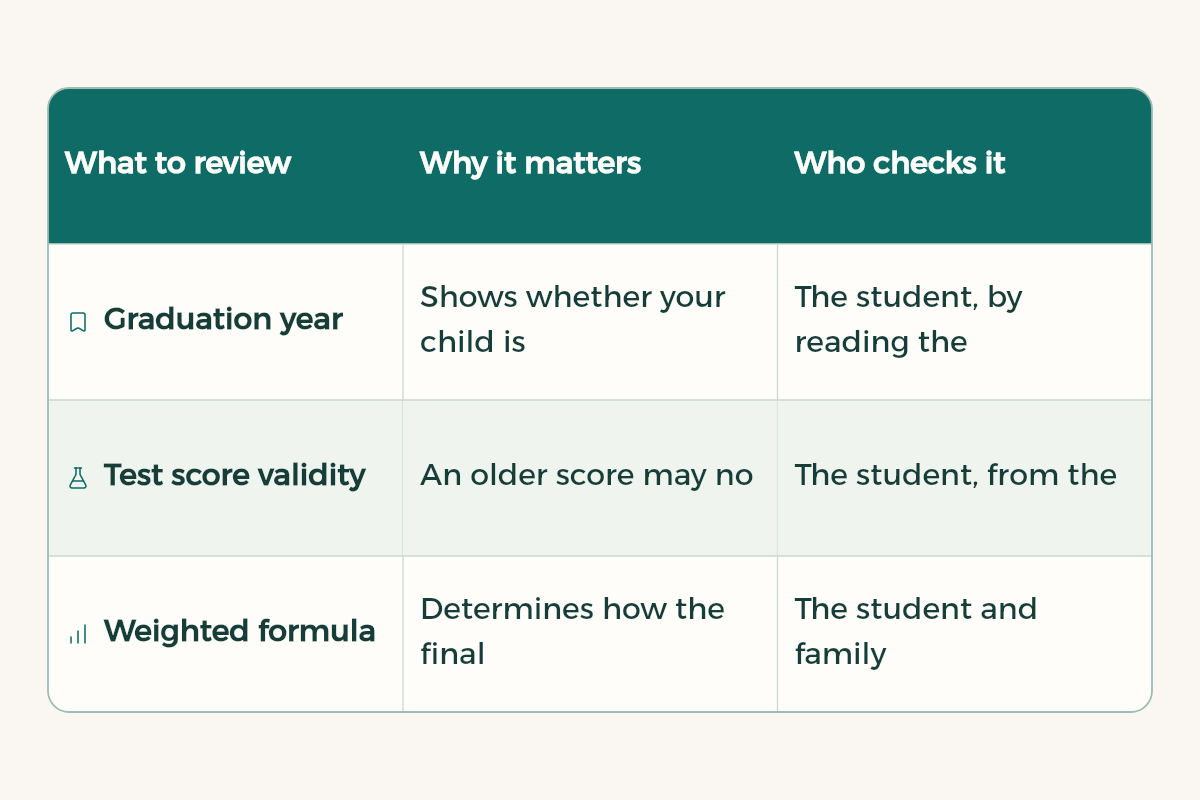
The admission page of Umm Al-Qura University states that a student must not have graduated from secondary school more than five years earlier, with a shorter limit for some medical programs. It also says aptitude and achievement test scores are valid for five years, and that the university calculates a weighted score from secondary school and the tests. Those three points are a good place to start, and you can review them together without memorising the rules of every university.
| What to review | Why it matters | Who checks it |
|---|---|---|
| Graduation year | Shows whether your child is within the published limit | The student, by reading the college notice |
| Test score validity | An older score may no longer count | The student, from the result date |
| Weighted formula | Determines how the final score is calculated | The student and family together |
| Program requirements | An interview, a language test or a health condition | The student, from the college notice |
| Confirmation deadline | If missed, the nomination can be lost | The student, with a reminder you agree on |
Your real role: following along without taking over
A family that does everything can deny a young person an important experience. A student who logs in, reads the rules and compares programs by themselves arrives at university better prepared for registration and deadlines. Your role is to ask the right questions, sit down together with a simple plan, and make sure nobody forgets an important date.
Some decisions remain the student's, including the major, the college and the order of preferences. You can offer your view and your experience, but the choice should be theirs, because they are the one who will study and work in that field.
A checklist for the family
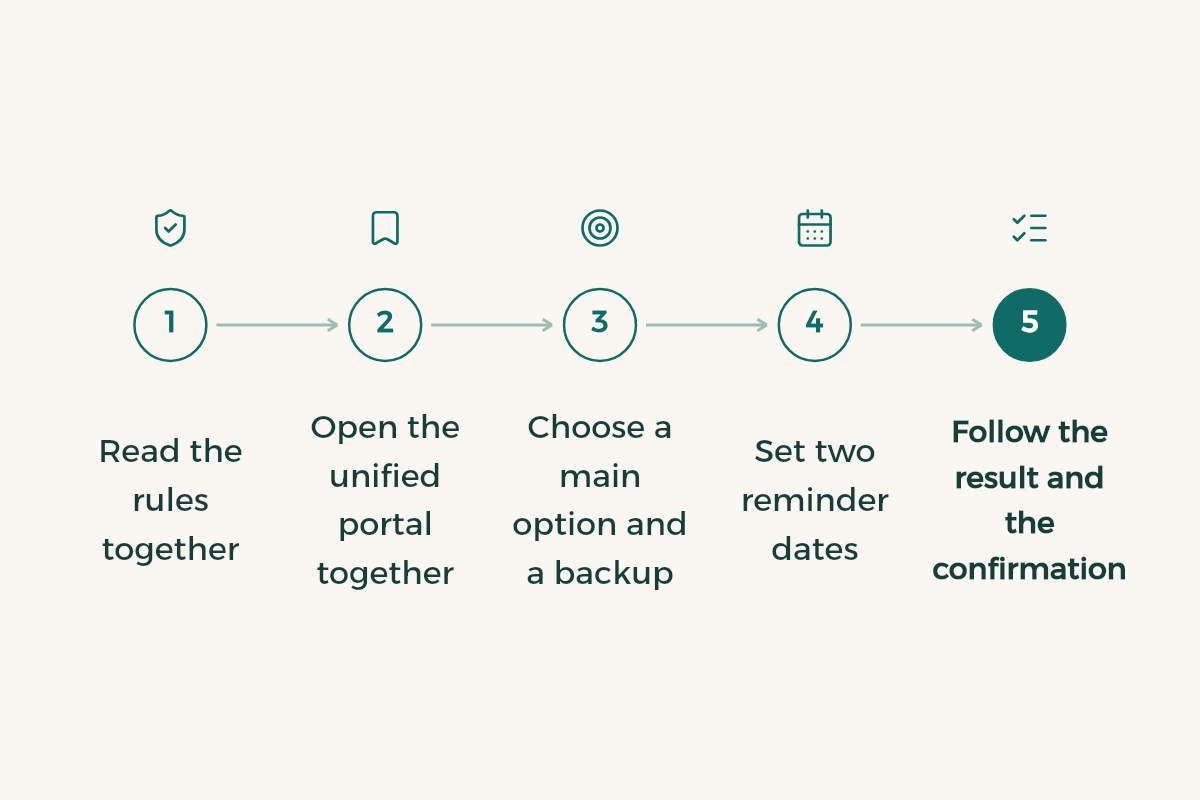
- Read the rules together
Go through the graduation-year rule and test validity on the university page, and write each condition next to the other.
- Open the unified portal together
Check the account details and recover the password well before any deadline, not on the last day.
- Choose a main option and a backup
Discuss the programs available, pick one that fits current scores, and keep a second option.
- Set two reminder dates
One to review the application, and one to confirm after results appear.
- Follow the result and the confirmation step
When results come out, the student confirms in the portal, because the Ministry page says that not confirming removes the right to be nominated.
Mistakes families often make
- Relying on a relative's or friend's score, because each university calculates its formula differently.
- Pressing the student to apply to a major they have not thought about, which can lead to a rough first year.
- Leaving the confirmation step unchecked, then finding the nomination lost because the date passed.
- Accepting information from group chats without checking the official notice.
Where to start this season
Begin with admission requirements at Saudi universities, which explains the general rules and the weighted formula. If your child has not started on the tests, see the aptitude test guide and the achievement test guide. If they are still comparing university with other routes, read what to do after high school to see the whole picture.
Between results and registration there can be a busy stretch. Read the first week at university guide together, since it covers the questions about registration, attendance and timetables that come up quickly.
What your child needs from you
Many students ask for a particular kind of help without saying it clearly. Some need someone to listen without judging, some need help keeping papers in order, and some need a gentle reminder of a date without feeling rushed. Ask directly: what would you like me to do, and what would you like to handle yourself? The answer saves a lot of guessing and makes your support closer to what they actually need.
A student who feels that their decisions are respected usually takes responsibility more seriously. If they choose a major you are unsure about, ask about their reasons and listen before you give your view. If you believe the choice needs another look, suggest they speak with an academic adviser or someone who studied that field. That is usually more effective than stating your opinion as a verdict from the start. Trust in this stage matters more than any timetable, and it is worth keeping the conversation going through the whole season, not only on results day.
A sample family conversation
Try this before the season gets busy. Sit down together for a short while, with the official notices open, and ask three questions: what do you already know about the process, what worries you most, and what do you want me to handle this month? Write the answers down. Most families find that the student is stuck on one specific step, such as a missing document or an unclear deadline, rather than on the whole process. That single step is where a parent can help most.
Keep the check-ins weekly rather than daily. A short weekly conversation lets your child report progress without feeling watched, and gives you a calm moment to notice whether stress is growing. If you see a change in mood or sleep, offer support, but leave the decisions with your child.
Signs you are helping, and signs you are taking over
- You ask what the notice says, then let your child explain it back to you.
- You offer to sit beside your child while they read the official conditions.
- You log in to the portal, fill in their details, or answer questions addressed to them.
- You choose the major for them, then ask them to find reasons for it.
Helping means your child understands the process and makes the decisions. Taking over means the process runs through you. If you notice the second pattern, talk about it calmly and agree on what each of you will handle.
If funding is a concern, read the scholarships guide for Saudi students with your child, and check each scholarship's conditions before assuming they qualify.